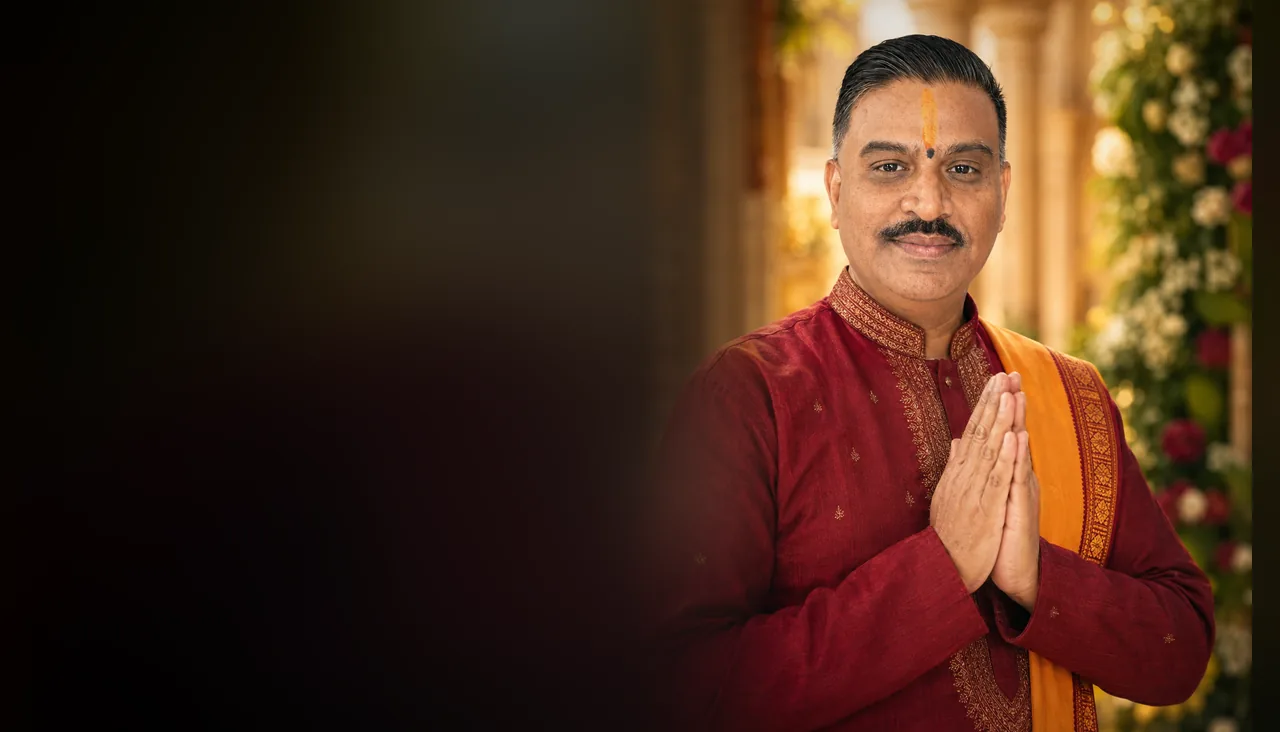
Tradition, understood
About Shastri Ji Manishbhai Pandya
Meet the priest at the heart of UK Hindu Priest Ltd — shaped by generations of seva, grounded in Sanatan Dharma, and committed to helping every family understand the ceremony they are keeping.
At a glance
The facts, in one place
Everything on this page is confirmed by Manishbhai himself. Nothing is estimated or embellished.
- Priest
- Shastri Ji Manishbhai Pandya
- Company
- UK Hindu Priest Ltd
- Tradition
- Sanatan Dharma; Gujarati Vedic ceremonies and vidhi
- Training
- From childhood by his grandfather, Jivram Ji, and at Shiva Krishna Ashram
- Practice
- Learning from age eight; professional practice from sixteen
- Experience
- Over 35 years across India, Africa and the United Kingdom
- Languages
- English, Gujarati, Hindi and Punjabi; mantras in Sanskrit
- Family traditions
- Gujarati, and experienced with North Indian and South Indian family traditions
- Where
- Families across the United Kingdom, and abroad where a ceremony is held overseas
How he works
A conversation first, then the ceremony
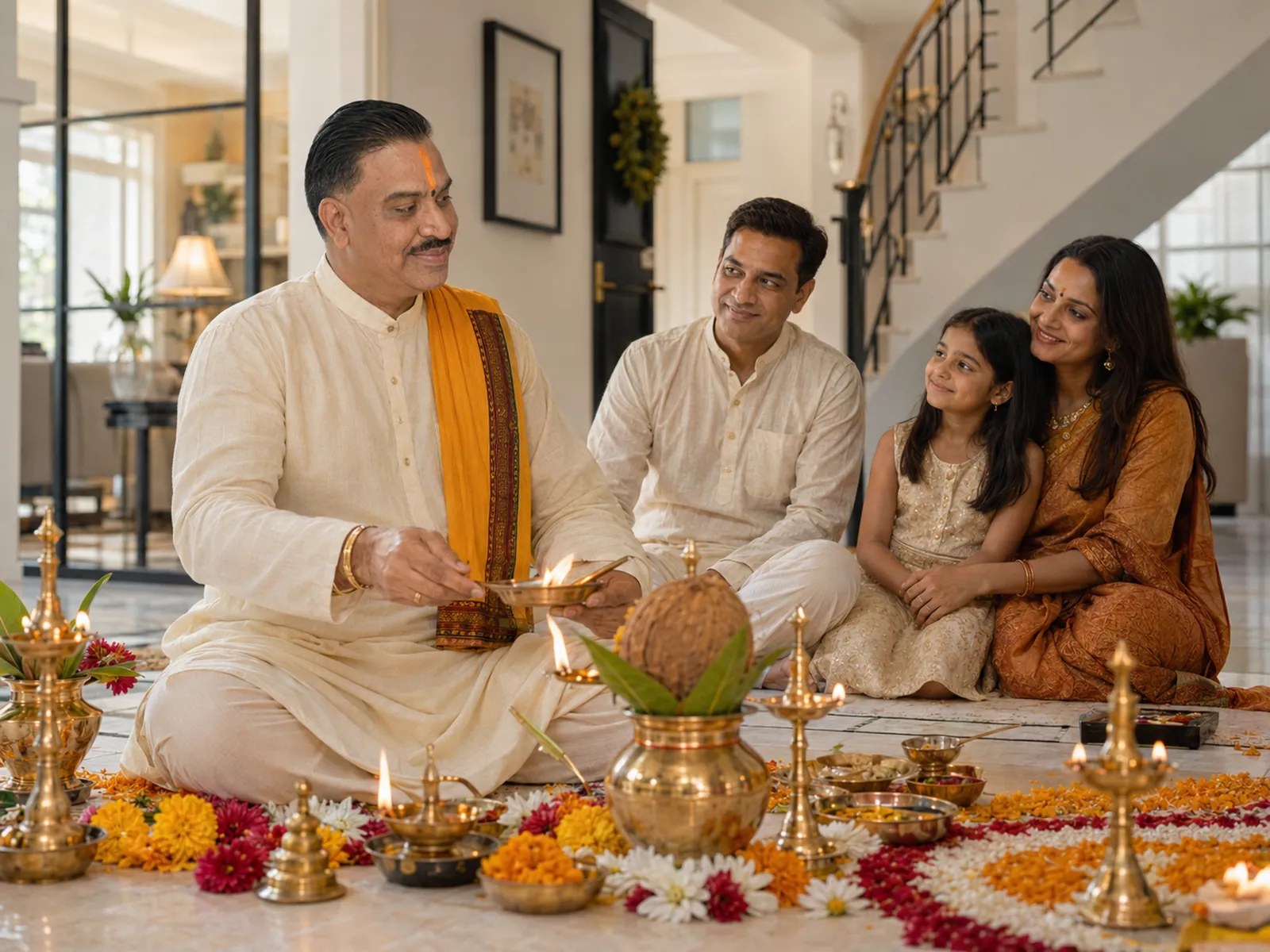
Before any rite begins, Manishbhai sits with the family. He asks which customs they keep, who will be present, and what they would like explained as the ceremony moves — so that nothing is performed without the family knowing why.
That approach does not shorten or simplify the rite. Mantras remain in Sanskrit and the sequence is the one your family recognises; the explanation sits alongside it, in English, Gujarati, Hindi or Punjabi, wherever it helps.
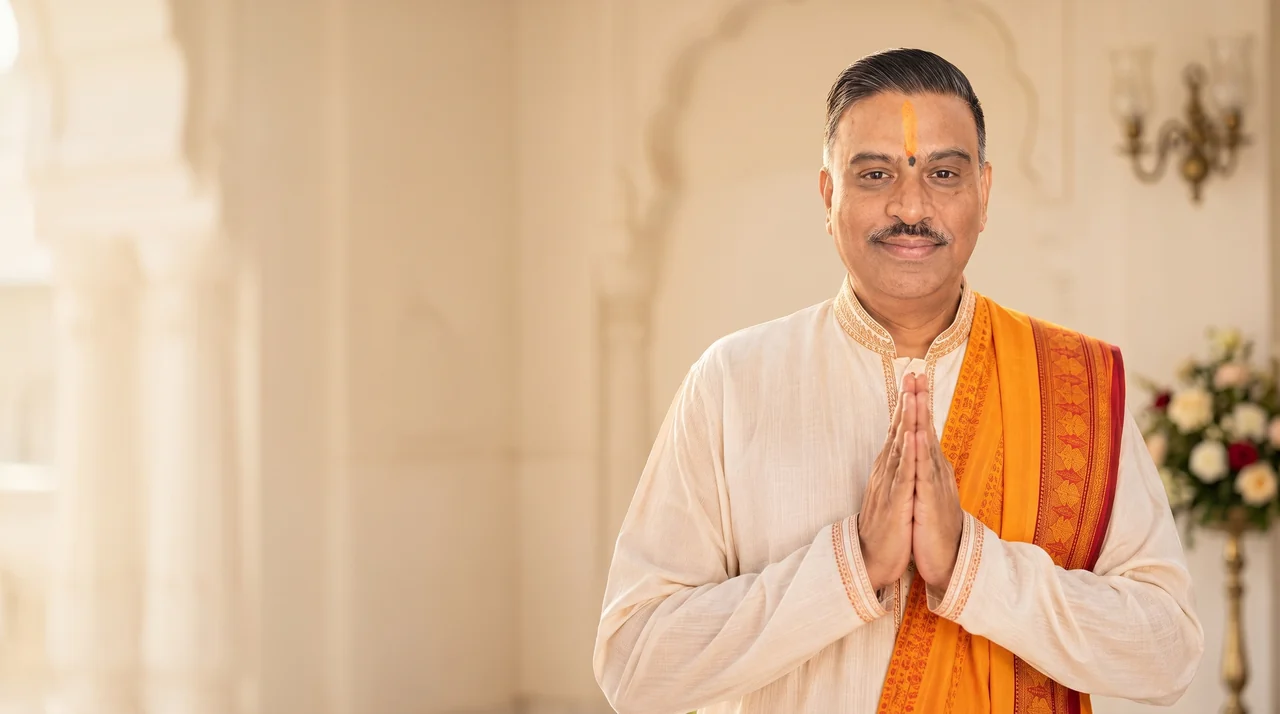
About Shastri Ji Manishbhai Pandya
Manishbhai Pandya was born into a Brahmin family in which the men have served as priests for generations. His training began at home: from childhood his grandfather, Jivram Ji, taught him the rites, the mantras and the discipline that sits behind them, and that teaching was continued at Shiva Krishna Ashram. He was learning the ceremonies by the age of eight and conducting them professionally by sixteen.
In the more than 35 years since, he has served Hindu families in India, in Africa and in the United Kingdom — weddings, the sanskaras of childhood, household pujas and havans, blessings for homes and businesses, and the funeral and ancestral rites. His work is rooted in Sanatan Dharma and his specialism is traditional Gujarati Vedic ceremony and vidhi, performed as a family’s own community keeps it rather than to a single standard version.
He recites mantras in Sanskrit, as tradition requires, and can communicate in English, Gujarati, Hindi and Punjabi. He is experienced in conducting and explaining ceremonies for families whose traditions are North Indian or South Indian, and for mixed-heritage and interfaith families for whom a clear explanation matters as much as the rite itself. The title Shastri Ji is the respectful form by which families address him.
His own account of that upbringing, and of how he works with a family from the first conversation to the closing aarti, is on the Meet Shastri Ji page.
About UK Hindu Priest Ltd
UK Hindu Priest Ltd is the organisation behind the ceremonies. It exists to handle the practical side — the enquiry, the planning, the ceremony materials and the travel — so that the ceremony itself is given the attention it deserves. The company is centred on Manishbhai’s work; it is not a directory of priests or an agency.
An enquiry begins with a conversation rather than a quotation. You are asked what you are planning, when, where and which customs your family keeps, and then told plainly what the ceremony involves and what genuinely needs preparing. Where a ceremony is large enough to need additional priest support, that is discussed with the family before anything is confirmed — nobody arrives on the day unannounced.
Ceremonies are arranged for families across the United Kingdom, and abroad where a family is holding a ceremony overseas. Availability for a specific date and location is confirmed honestly, and nothing is committed to before then. Costs are discussed once the ceremony requirements and location are understood.
How we work
Four things we hold to
Not a policy document. Simply how families are treated, from first conversation to the closing aarti.
Tradition first
Ceremonies are performed properly, in the form your family keeps. Nothing is shortened for convenience, and nothing is invented to fill a gap.
Explained, not diluted
Mantras remain in Sanskrit. Their meaning is offered in plain English where that helps a family or a guest understand what is taking place.
Honest about what is possible
If a venue will not allow a sacred fire, or a date cannot be served properly, you are told plainly rather than reassured and disappointed later.
Seva, not sales
Enquiries are conversations. Bereaved families are never placed into marketing follow-ups of any kind.
How an enquiry works
What happens when you get in touch
Four straightforward steps, in whatever order suits you.
Step 1: Tell us what you are planning
The occasion, the date if you have one, and the customs your family keeps. There is no need to know the name of the rite before you ask.
Step 2: We explain plainly what is involved
What the ceremony includes, what needs preparing, and what genuinely is not possible for the date or venue you have in mind.
Step 3: Nothing is confirmed until you are ready
You are never rushed into a booking. Questions are welcome at every stage, before and after a ceremony is agreed.
Step 4: Support continues through to the day
Materials, timings and any practical questions for a venue are worked through with you as the date approaches.
Ready to start? Get in touch and tell us what you are planning.
In their own words
One family, over the years
Shared with each family’s permission, in their own words. No ratings are collected, so none are shown.
Read more family experiences“You have been there for some of the most important occasions in our family, and we are always grateful for the care and affection with which you conduct every ceremony. You never make it feel like ‘just another puja’. You remember the family, involve everyone, and somehow make each occasion feel personal. Thank you for all the blessings and beautiful memories over the years.”
VinabenFamily ceremonies
Quick answer
In brief
What does UK Hindu Priest Ltd do?
It is the organisation supporting the ceremonies led by Shastri Ji Manishbhai Pandya: handling enquiries, planning, ceremony materials and travel for weddings, pujas and sanskaras, family milestones, business and property blessings, funeral rites and remembrance. Every ceremony is listed in the ceremony directory.
How do we get in touch?
Telephone +44 (0) 7717 154 215 or email Manishbhai@ukhindupriest.co.uk. For a bereavement, please telephone rather than send a message — funeral rites are time-sensitive and a short conversation is far more useful.
Questions
About Shastri Ji and the company
Continue reading
- Meet Shastri JiHis own story, his family’s tradition and how he works with families.
- Every ceremony, by occasionThe master directory of pujas, sanskaras, weddings and rites.
- CeremoniesThe six principal service groups, with their dedicated pages.
- Speak with usTell us what you are planning and we will talk it through.
A personal invitation
Tell us what you are planning
Every family is different. Share a few details and we will talk through the ceremony, your customs and what is needed — before anything is confirmed.