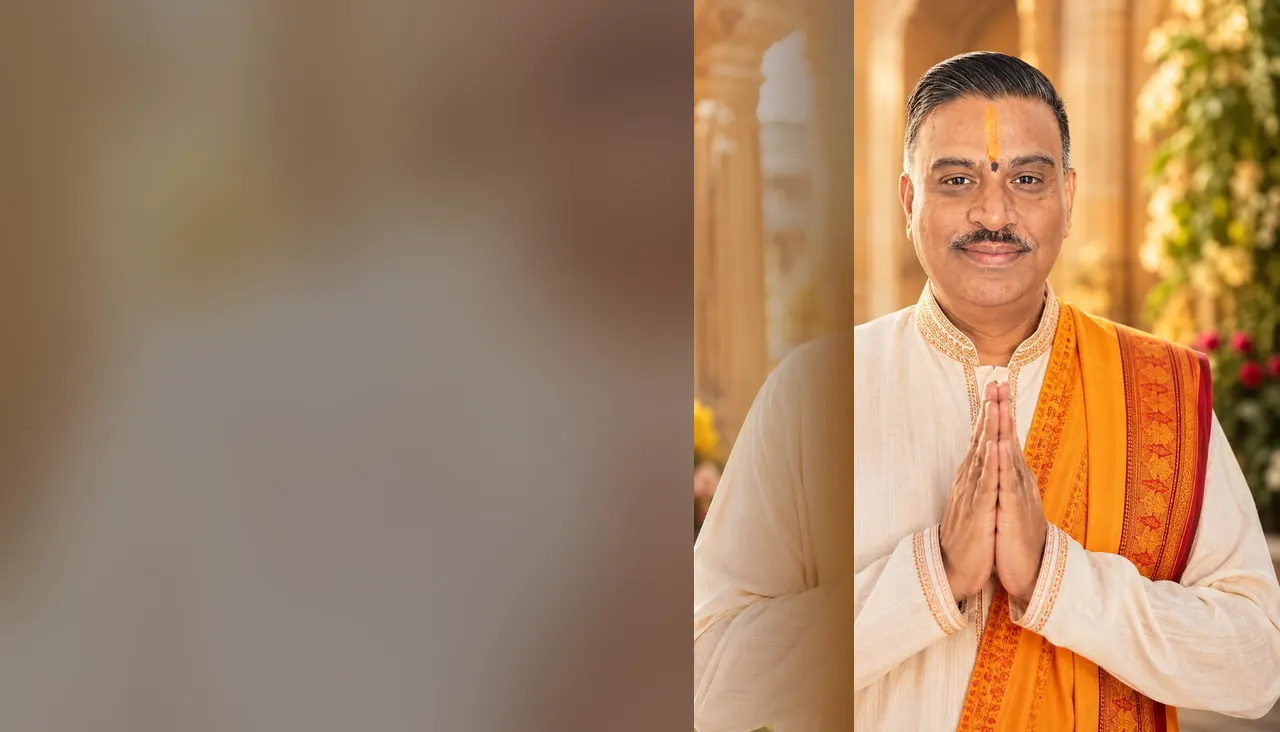
Hindu weddings & destination weddings
Traditional, explained and interfaith ceremonies in the UK and abroad.
Learn moreMeet Shastri Ji
A Hindu priest families can turn to for life's important moments — weddings and pujas, blessings for a home or a business, the rites that follow a bereavement, and simply asking what to do next.
Your enquiry is read and answered by Manishbhai himself, whatever support your family is seeking.
Your family customs are asked about first, rather than assumed.
Rites are recited in Sanskrit; the meaning can be explained in English.
Materials, timings and practical questions can be worked through with you.
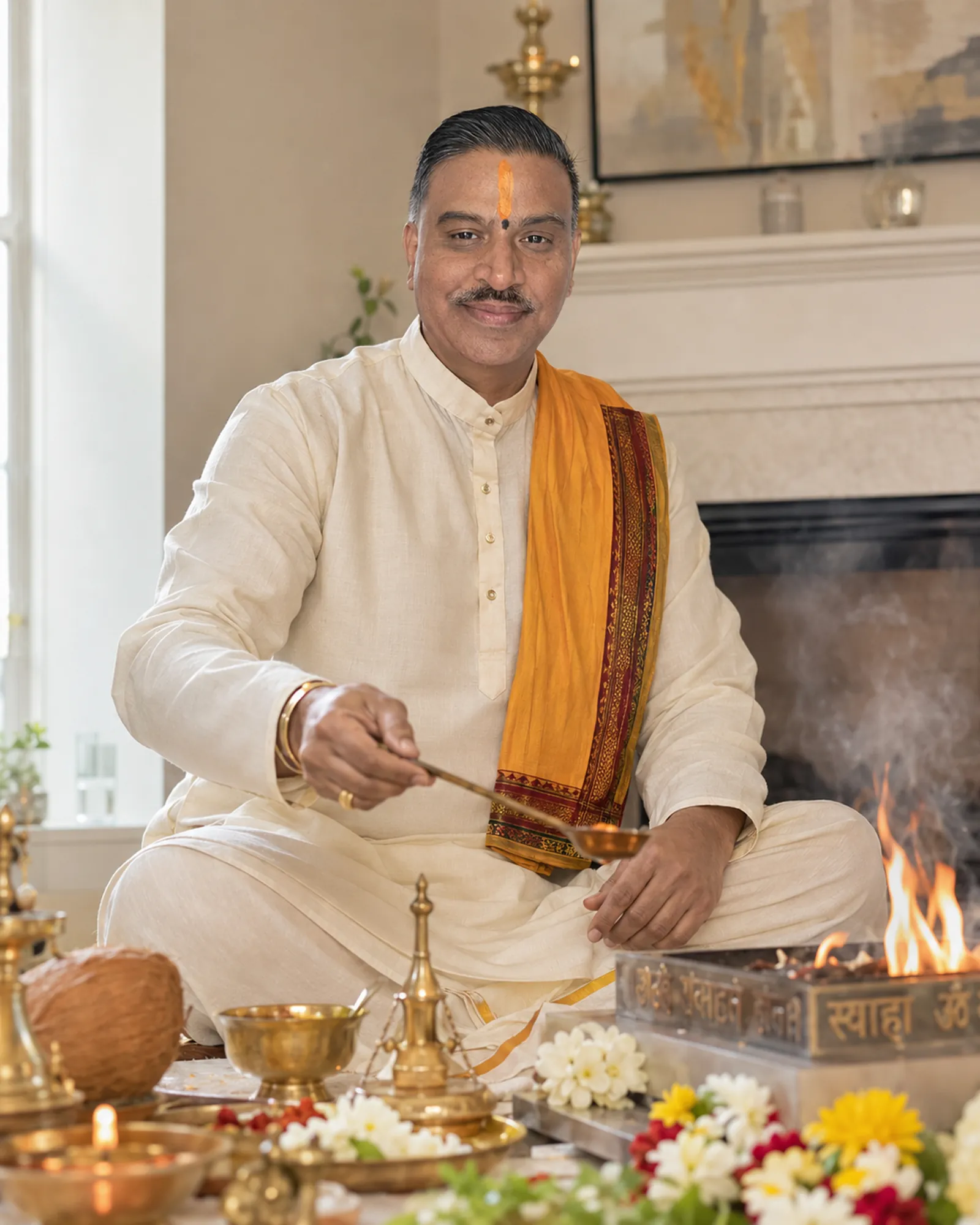
In his own words
A marriage, a first blessing for a child, the opening of a business, the final rites for someone deeply loved. That invitation is a responsibility, and I treat it as seva — service to the family in front of me.
So I ask about your family before I ask about the date. Customs vary, and I would rather understand yours than impose one. Explanation is part of that: when younger guests, or guests from another background, understand why the fire is lit, the ceremony has been received and not just performed.
My work is rooted in Sanatan Dharma, and I specialise in traditional Gujarati Vedic ceremonies and vidhi. Families keep Vaishnav, Swaminarayan and Shaiv customs, Jain-influenced Gujarati family customs, and Patel, Lohana and Vanik community traditions, alongside other regional Gujarati practices. These are customs a family may keep, and I respect whichever yours follows. Families of other backgrounds are equally welcome. I trained at Shiva Krishna Ashram and work independently for families across the UK and abroad. Mantras are recited in Sanskrit, as tradition requires, and I can communicate in English, Gujarati, Hindi and Punjabi so that every step is understood. I am experienced in conducting and explaining ceremonies for families from North Indian and South Indian traditions.
And where practical support is needed — the materials, the timings, a conversation with a venue — I would rather carry some of that weight than leave it with you.
Seva in practice
Not only weddings. Families come with a ceremony in mind, and just as often with a question about what should be done next.
Traditional, explained and interfaith ceremonies in the UK and abroad.
Learn moreHome and venue pujas, havan and the traditional rites of life.
Learn moreNaming, first rites and the moments families mark together.
Learn moreGriha pravesh, new premises and blessings before a venture begins.
Learn moreCalm, practical support for families during a bereavement.
Learn moreYou can ask before you know the name of the rite. Start with a conversation.
Learn moreGenerations of Seva
Manishbhai comes from a Brahmin family that has served as priests for generations, and was trained from childhood by his grandfather, Jivram Ji. He began learning the rites at the age of eight and began practising professionally at sixteen, with over 35 years of practice across India, Africa and the United Kingdom. That inheritance is understood here as seva — service to families and community — never as superiority over anyone.
Beyond the ceremony
For weddings and celebrations, the aim is a smoother, better-organised occasion your family can actually enjoy. Where a bereavement is involved, support stays calm and practical. Introductions to associated trusted partners are optional, subject to suitability and availability, and any booking or contract remains directly between your family and that supplier.
Timings and the order of the day settled with you well in advance.
The ceremonial materials an agreed rite needs, arranged rather than left to you.
Space, seating and the sacred-fire question raised early with your venue.
Where helpful, introductions to suppliers used to Hindu ceremonies.
Practical categories families often ask about for larger occasions.
What to expect
Your family, your tradition and what the occasion means to you come before assumptions are made.
What happens, in what order, and why — in plain English alongside the Sanskrit.
The rites, materials and practical details are prepared as early as the circumstances allow.
Practical questions are welcome while the arrangements are being made.
Common questions
Continue reading
You do not need to know the name of the ceremony
Tell Manishbhai what is happening, what you are planning, and anything you are unsure about. The right next step can be worked out with you.
Start a Conversation