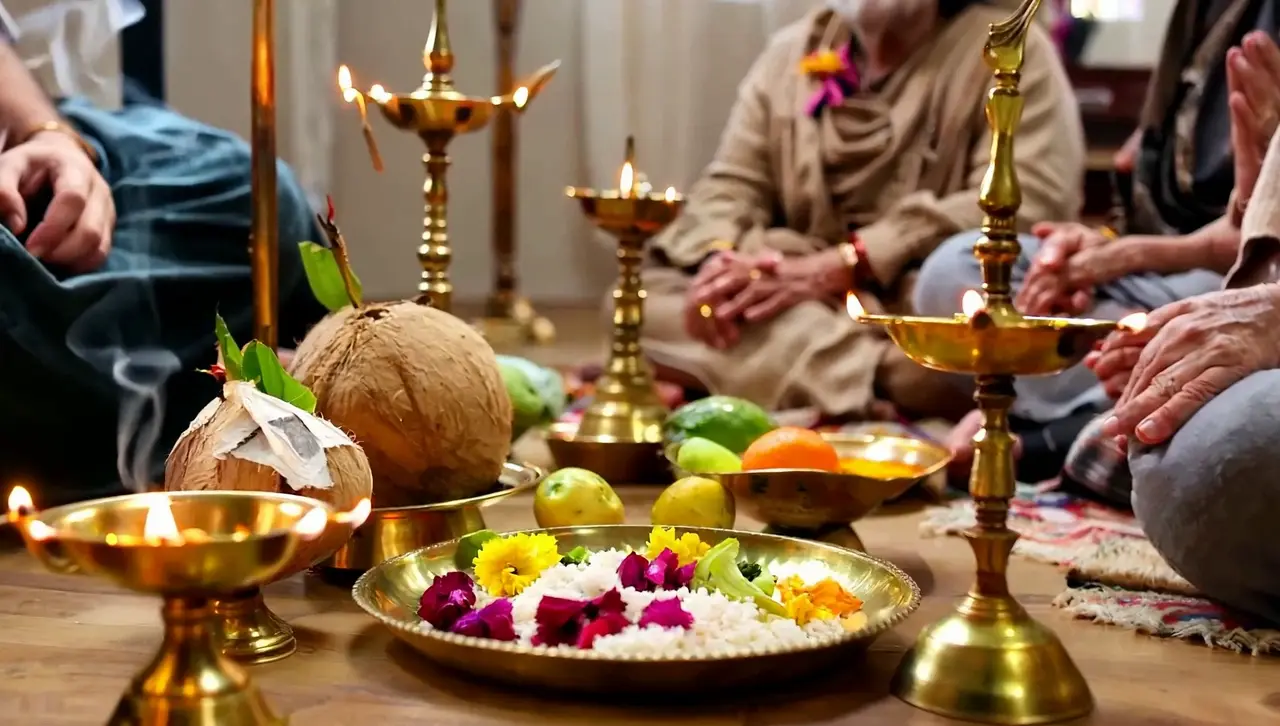
Pujas & Sanskaras
Sacred moments, understood and prepared with you.
Families come to us giving thanks, moving into a new home, welcoming a child, marking a life stage, honouring a deity or remembering those who came before — and sometimes simply asking what prayer would be appropriate. Manishbhai helps you identify the right ceremony and prepare it with care, according to the tradition your family follows.
Your family tradition first
Established family traditions differ. The rite is prepared around the customs your household follows rather than assumed in advance.
Explained in plain English
Sanskrit and the mantras are retained as appropriate, with short explanations so everyone present can follow.
Samagri can be arranged
The materials needed for the agreed ceremony can be prepared for you, with the practical details confirmed beforehand.
At home or the right setting
Many ceremonies suit a family home. Others are better held at a temple or another suitable place, depending on the rite.
What they mean
Puja and sanskara are not the same thing — both give meaning to important moments.
Established traditions differ in sequence and custom, so neither word describes one fixed ceremony.
What a Hindu puja means
An act of devotion and worship, offered with prayer, mantra and offerings. A puja may express gratitude, devotion or remembrance, mark a new beginning, or keep a festival in the household. At its heart is sincerity and attention rather than scale — the same intention can be carried by something simple or something elaborate, and the form varies between families and traditions.
What a Hindu sanskara means
A rite that marks a transition or a stage in life. Examples can include naming a child, a first solid food, the beginning of learning, initiation and the sacred thread in traditions that observe it, and marriage. Different Hindu traditions enumerate the samskaras differently; a group of sixteen major life-stage rites is commonly described, but families do not all observe the same set.
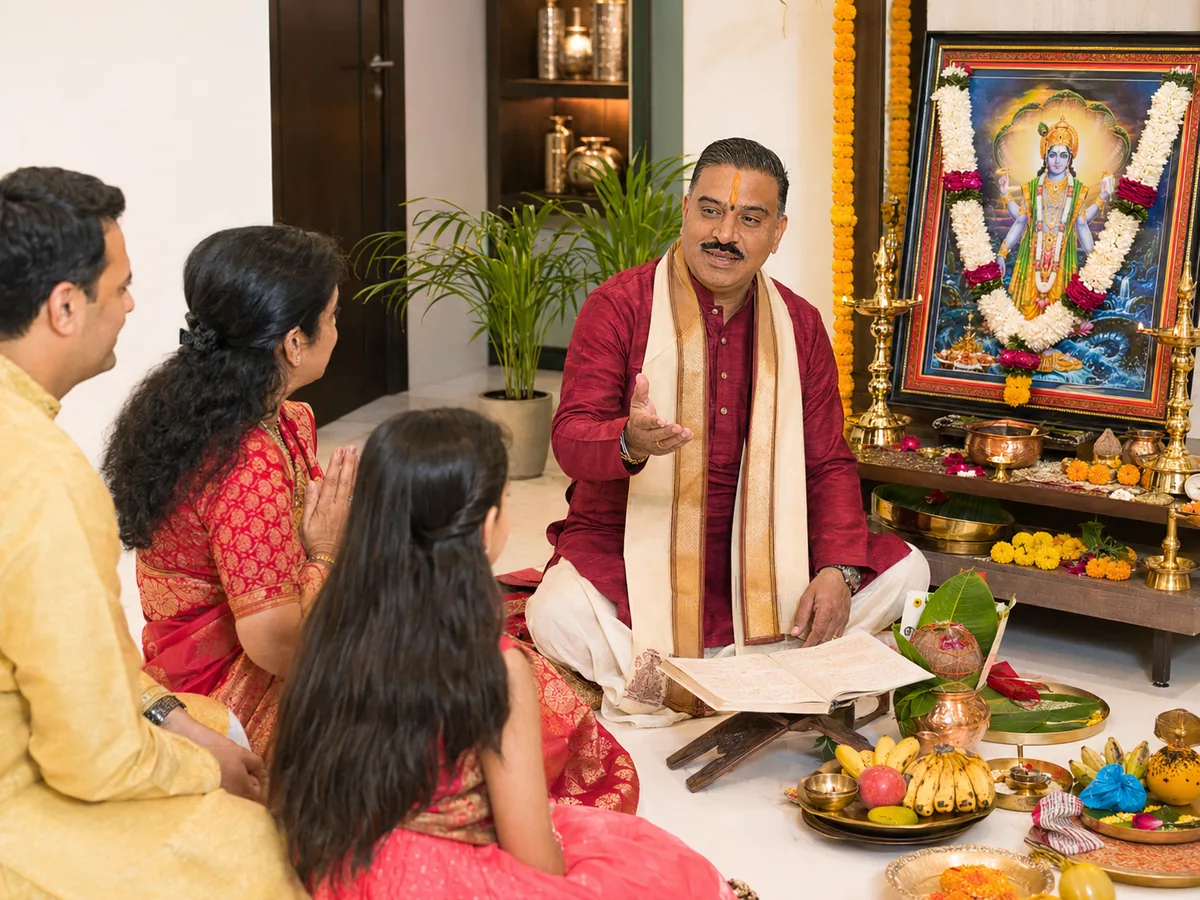
Understanding as it happens
A ceremony your family can follow.
A priest should do more than recite. You should know what is taking place, what you need to have ready, and the moments where you or your children take part.
Preparation is talked through before the day, and the ceremony itself moves at a pace everyone in the room can keep up with — including relatives and guests who are new to Hindu tradition.
Ceremonies we are asked for
Common pujas & observances
A short guide rather than a full catalogue. If what you are marking is not listed, it can still be discussed.
Entering a new home
Griha Pravesh
A prayer offered before a family settles into a new house or flat.
A prayer of gratitude
Satyanarayan Puja
Often offered when a family wishes to give thanks or gather everyone around something sacred.
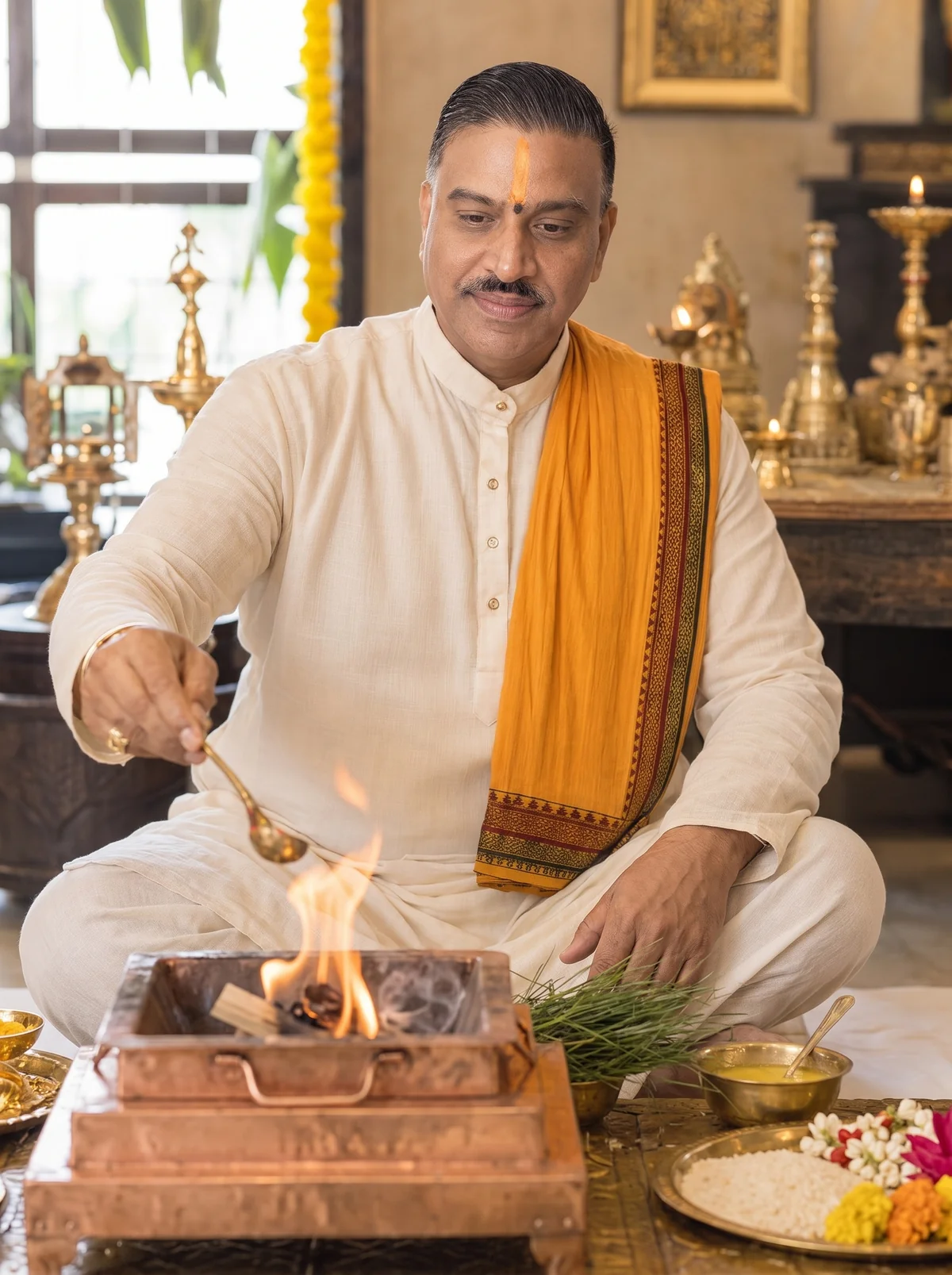
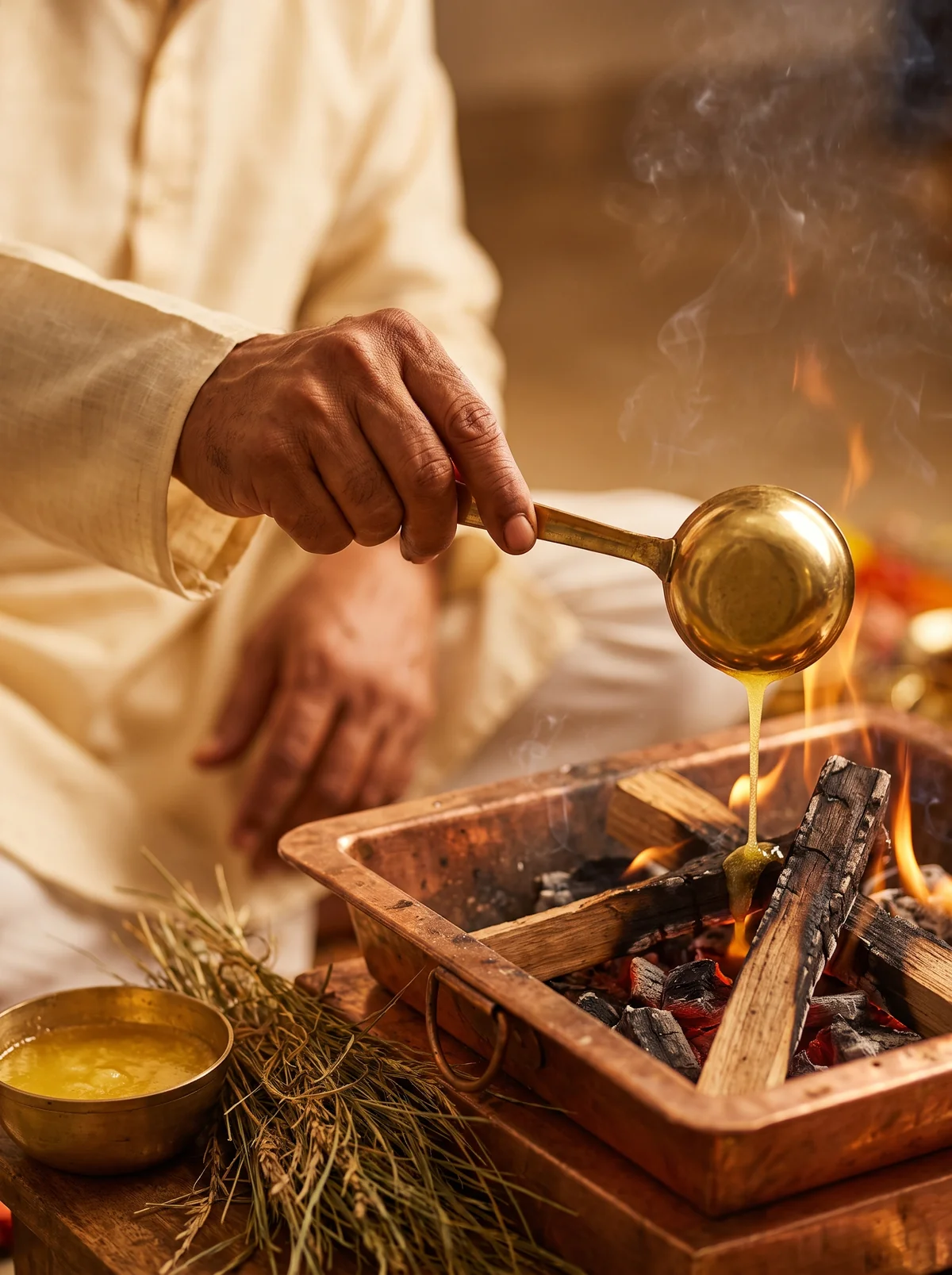
The sacred fire ritual
Havan / Yagna
Offerings made into a consecrated fire with mantras recited. A distinct ritual form in its own right, sometimes held alongside a puja rather than as part of one.
Devotional worship of Lord Shiva
Rudrabhishek & Shiva pujas
An abhishek performed with the sequence and mantras the family tradition follows.
A traditional devotional observance
Navagraha puja
Performed in the traditional manner as an act of faith and observance. It is never presented as a guaranteed outcome of any kind.
Honouring those who came before
Shraddha & ancestral remembrance
Rites of remembrance for a parent or grandparent, held gently and treated differently from an everyday household puja.
Families also ask about Navagraha Puja and Havan, Shiv Puja and Rudrabhishek, Mata Ji or Devi Puja, and prayers for a home or premises; these can be discussed according to the occasion and family tradition.
Life-stage sanskaras
Different Hindu traditions enumerate the samskaras differently; a group of sixteen major life-stage rites is commonly described, but families do not all observe the same set.
Naamkaran
Naming a child.
Annaprashan
A baby’s first solid food.
Mundan / Chudakarana
First haircut.
Vidyarambh
Beginning of learning.
Janoi / Upanayana
Sacred thread, where observed.
Vivah
Marriage, covered in full on the wedding pages.
How it works
Four simple steps, starting from wherever you are
- 01
Tell us what is happening
A new home, a new baby, a thank you, a milestone or a remembrance. You do not need the Sanskrit name.
- 02
Family custom & rite discussed
We talk about what your household observes, and which ceremony fits the occasion in your tradition.
- 03
Timing, setting & samagri confirmed
A suitable day and time, where the ceremony is best held, and what materials are needed.
- 04
Ceremony conducted & explained
The agreed rites are conducted, with explanation woven in for anyone who would like to follow along.
Ceremony materials, taken off your list
The materials needed for the agreed ceremony can be arranged. What is supplied and any cost are confirmed clearly before the booking, so there are no surprises and no last-minute searching for items.
Questions
Pujas and sanskaras
Continue reading
- Griha PraveshPrayers before a family settles into a new home.
- Satyanarayan PujaA household puja of gratitude, prepared with you.
- Family & Children MilestonesNaming, first rites and coming of age.
- SamagriCeremony materials arranged for the rite you have agreed.
- All Pujas, Ceremonies & SanskarasThe full directory of ceremonies, grouped into six categories.
- Sankalp — how every rite beginsThe statement of intention, and why it matters.
- Prasad, explainedWhat it is, why it is shared, and how to receive it.
Not sure which ceremony you need?
Tell us what your family is marking.
You do not need to know the Sanskrit name. Tell Manishbhai what is happening and the right next step can be discussed with you.
Discuss Your Puja or Sanskara