A guide for every occasion
Hindu Pujas, Ceremonies & Sanskaras
Find the rite that fits your occasion — from weddings and childhood Sanskaras to home blessings, devotional pujas, business prayers and remembrance — with each tradition introduced clearly before you enquire.
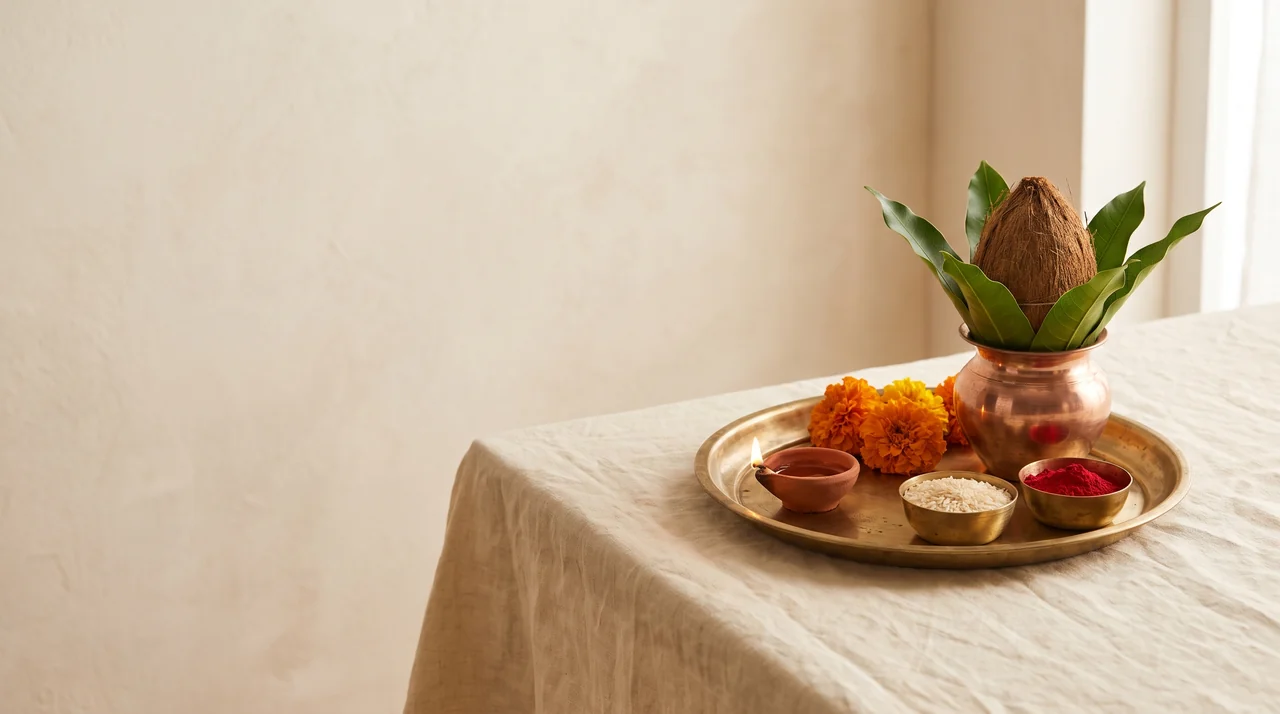
Illustrative, digitally created image. No client, venue, date or occasion is implied.
One directory, every ceremony
Families rarely search for a ceremony by its category. They search for the thing itself — a Naamkaran for a new baby, a Griha Pravesh before the keys are handed over, a Chopda Pujan for the shop’s new books, a Shraddha on the anniversary of a death. This page exists so that every one of those rites can be found by name, read in a sentence or two, and followed to a fuller explanation or straight to an enquiry.
The six groups follow the shape of a Hindu life rather than a price list: the wedding and the household rites around it; the sanskaras that mark childhood and family milestones; blessings for a home or a property; the devotional pujas, havans and festival observances; prayers for a business or a new beginning; and the funeral and ancestral rites, written more gently than the rest. Within each group the ceremony is named as families recognise it — Puja, Havan, Naamkaran, Janoi, Rudrabhishek — with the traditional or English alternative alongside where that helps.
All of these are conducted by Shastri Ji Manishbhai Pandya in the vidhi your own family keeps, and explained in English, Gujarati, Hindi or Punjabi as the ceremony unfolds. Where the services overview introduces the six groups, this page lists what is inside them.
Quick answer
Ceremonies, briefly
What can be arranged?
Hindu weddings and pre-wedding ceremonies, family and children’s Sanskaras, home and property blessings, Pujas and Havans, prayers for a business or premises, and funeral and ancestral rites — throughout the United Kingdom, and abroad where required.
How is each one prepared?
Around the tradition your own family keeps. The vidhi, its likely length and the samagri required are agreed with you beforehand, and the meaning is explained as the ceremony unfolds so nobody present is left guessing.
What if the ceremony is not listed?
Ask. The directory lists what is regularly conducted, not the limit of what can be. A regional or community-specific vidhi, or a rite combined with another, is discussed with you before anything is confirmed.
01
Weddings & Pre-Wedding Ceremonies
The Vivah Sanskar and the observances that lead up to it, performed traditionally and explained as they happen.
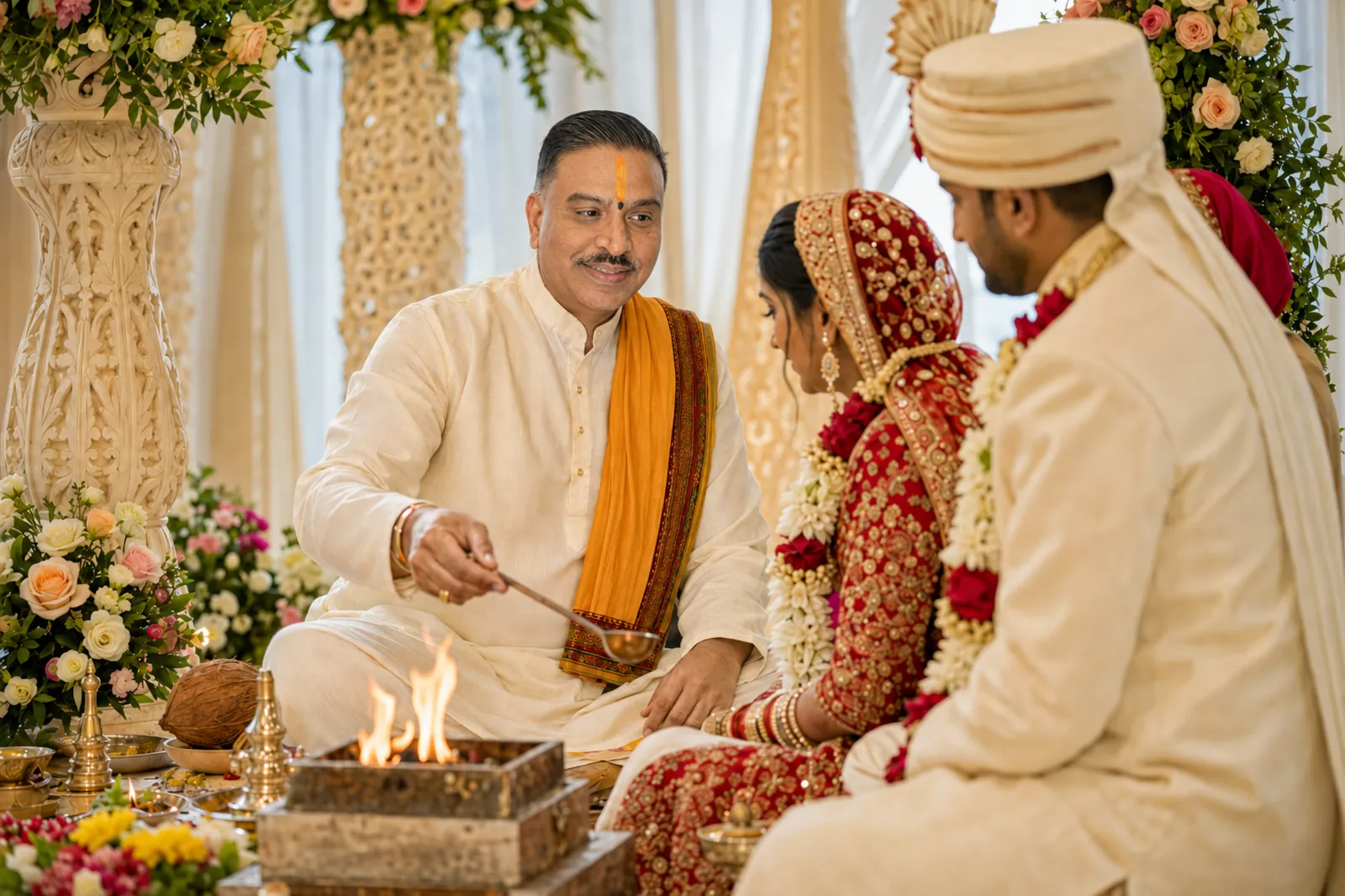
Hindu Wedding Ceremony
Vivah Sanskar
The full wedding rite around the sacred fire, from Kanya Aagaman to Saptapadi, prepared with your family and explained clearly for every guest present.
Learn moreDestination Hindu Weddings
Vivah Sanskar abroad
A Hindu wedding held outside the United Kingdom, planned around travel, the venue’s fire and smoke arrangements, and the ritual sequence your family keeps.
Learn moreGanesh Puja
Wedding blessing before the rites begin
Prayer to Lord Ganesha before the wedding rites open, so the ceremony begins in the traditional order. Often held at home with close family present.
Enquire about this ceremonyGrah Shanti Puja & Havan
Pre-wedding prayers for the household
Prayers with the sacred fire for the wellbeing of the household before a wedding. Observed by many families in the days beforehand, and by others not at all.
Enquire about this ceremonyGujarati Mandavo Ceremony
Mandap Muhurat
The prayer held before the mandap is raised, kept in the Gujarati tradition. Timing, setting and the vidhi are agreed with the family in advance.
Learn moreRoka / Sagai / Engagement Ceremony
Sagai Vidhi, Gol Dhana or Chandlo Matli in some families
Prayers as two families formally agree a marriage. Which of these customs a family keeps varies considerably, so what you observe is discussed rather than assumed.
Enquire about this ceremonyRandal Mata na Lota
Randal Mata observance
The Randal Mata vidhi kept by many Gujarati families around a wedding or a family vow, prepared in the form your own household observes.
Enquire about this ceremony
02
Family & Children’s Sanskaras
The rites that mark pregnancy, birth, early life and growing up, together with the family milestones households mark with prayer.
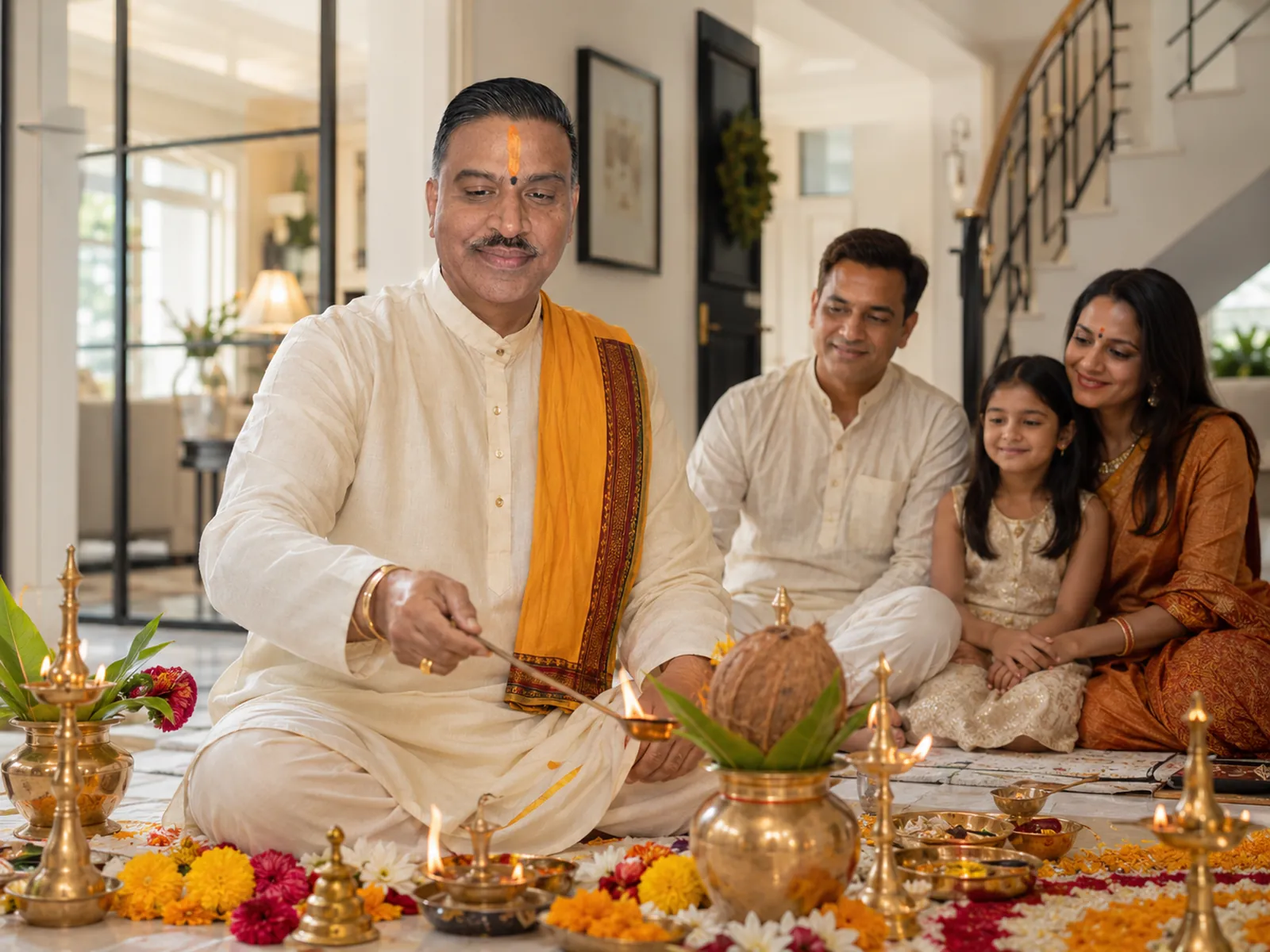
Simant / Shrimant Sanskar
Godh Bharai — blessings during pregnancy
Prayers and blessings for a mother during pregnancy, held in the form your family keeps, with the meaning of each step explained gently to everyone present.
Enquire about this ceremonyJatakarma
Prayers at the birth of a child
The traditional welcome given to a newborn, with prayers offered for the child’s health and wellbeing. Kept short and quiet, around mother and baby.
Enquire about this ceremonyNaamkaran
Baby naming ceremony
The naming of a child with prayers for their wellbeing, held at home or at a temple, with the meaning of each step explained to those present.
Enquire about this ceremonyAnnaprashan
First feeding ceremony
The occasion on which a child is given solid food for the first time, marked with a short prayer and kept as gentle as a baby allows.
Enquire about this ceremonyKarnavedha
Ear-piercing Sanskar
The traditional ear-piercing rite for a young child, with prayers offered beforehand and the practical arrangements agreed with you so the day stays calm.
Enquire about this ceremonyMundan
First haircut ceremony — Chudakarana
The child’s first ceremonial haircut, with prayers offered beforehand. Arranged around the child, whether at home, at a temple or elsewhere.
Enquire about this ceremonyVidyarambh
Vidya Aarambh — beginning of education
Prayers as a child begins learning, traditionally with the first letters written under blessing. A short observance, usually held with close family.
Enquire about this ceremonyJanoi Ceremony
Upanayana / Yagnopavit Sanskar
The sacred thread ceremony, with the havan and the mantra given in the traditional manner. Preparation and the family’s own customs are talked through first.
Enquire about this ceremonyBirthday / Ayushya Havan
Ayushya Havan for long life and wellbeing
A havan held on a birthday, with prayers for health and long life. Observed by many families for a child, and by others at any age.
Enquire about this ceremonyWedding Anniversary Puja
Prayers marking a marriage anniversary
A prayer of gratitude on a wedding anniversary, held at home or at a temple with family present, and kept as brief or as full as you wish.
Enquire about this ceremony
03
Home & Property Blessings
Prayer when a family breaks ground, takes on a home, or returns to one after work is done.
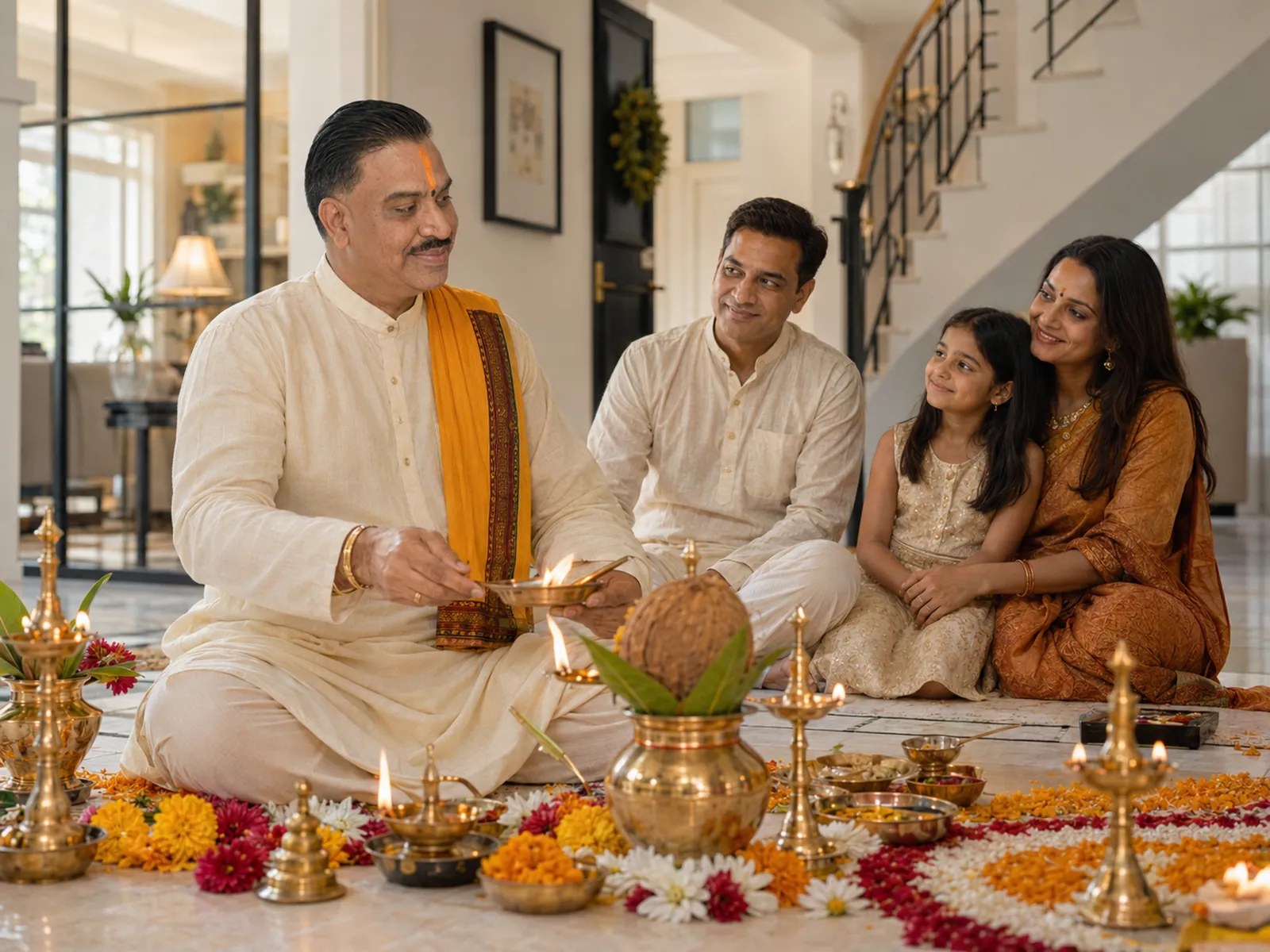
Bhoomi Pujan
Bhumi Puja — ground-breaking prayers
Prayers offered to the earth before building or groundwork begins, for a family home, an extension or a commercial development, arranged around your site and start date.
Enquire about this ceremonyGriha Pravesh Puja & Havan
Entering a new home
A blessing on first entering a new home, adapted honestly to the property, whether a house, a flat or a rented address, and to what the building allows.
Learn moreVastu Shanti Puja & Havan
Prayers for peace in a dwelling
Prayers for peace and wellbeing in a home, observed by some families when moving in or after building work, and following the tradition you keep.
Enquire about this ceremonyShuddhi Karan Puja
Purification observance
A purification observance for a home or a family setting, prepared in the traditional form and explained plainly before the day itself.
Enquire about this ceremony
04
Pujas, Havans & Festivals
Household and temple prayers, with or without the sacred fire, prepared for the occasion your family is marking.
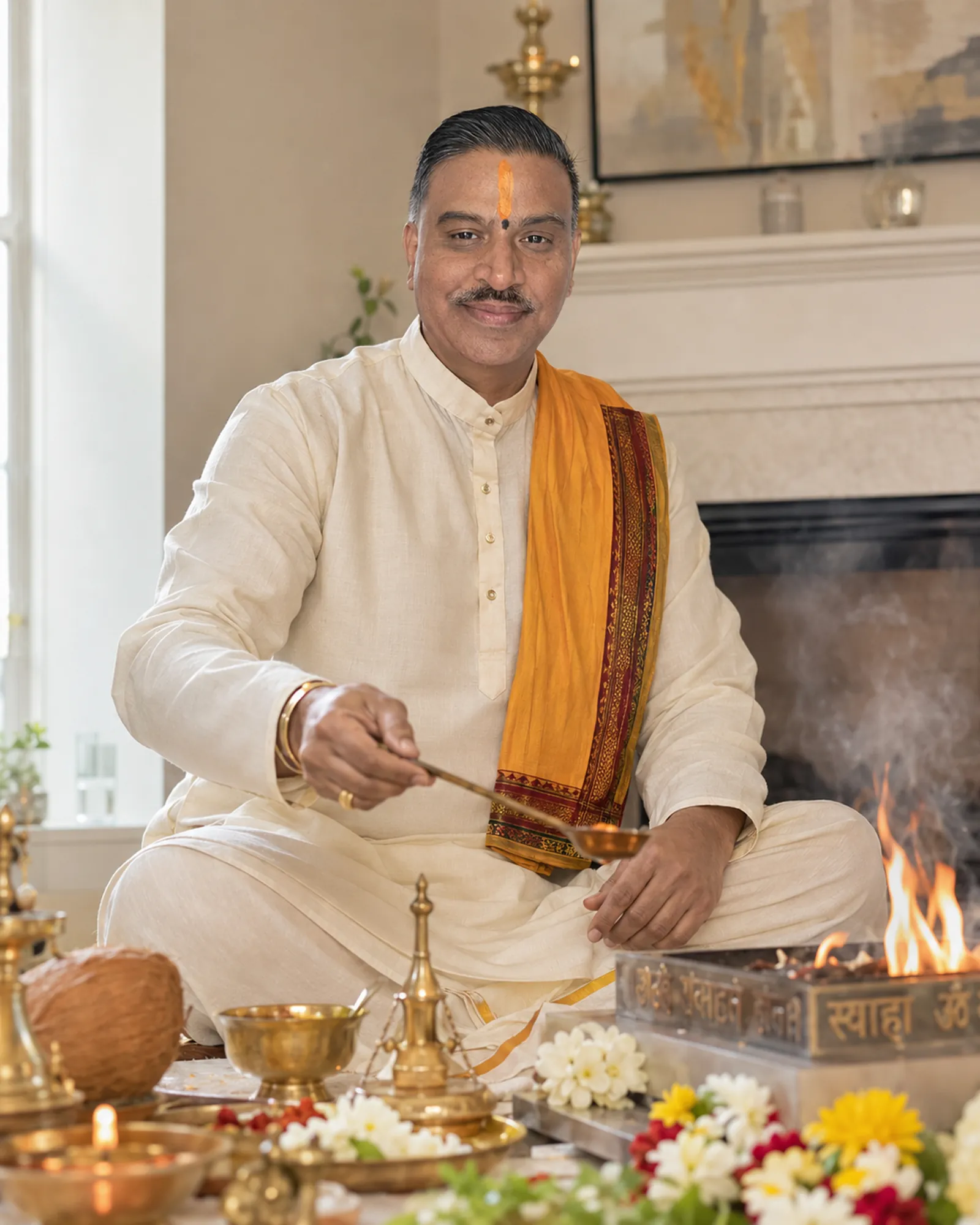
Satyanarayan Puja & Katha
Household prayer of gratitude
A prayer of gratitude including the katha, held for a family occasion or simply for the household, with the reading explained as it goes along.
Learn moreNavagraha Puja & Havan
Prayers to the nine planetary deities
Prayers to the nine grahas in the traditional sequence, with a havan where the family observes one. Described as devotional observance, not prediction.
Learn moreShiv Puja & Rudrabhishek
Abhishek of the Shiv Ling
Abhishek of the Shiv Ling with Vedic mantras, arranged at home or at a temple and explained step by step for everyone taking part.
Learn moreMaha Shivaratri Puja
The night of Shiva
Prayers observed on Maha Shivaratri, at home or at a temple, in the form your family keeps and within the timings the setting allows.
Enquire about this ceremonyHanuman Ji Puja & Hanuman Chalisa
Devotional prayer and recitation
Devotional prayer to Hanuman Ji with recitation of the Hanuman Chalisa, held for a household or a wider family gathering.
Enquire about this ceremonyMata Ji / Devi Puja & Havan
Devi observance
Prayers to the Devi in the tradition your family follows, with a havan where that is kept, prepared around the setting and those attending.
Enquire about this ceremonyNavaratri Puja & Havan
The nine nights
Observances held during Navaratri, arranged for a household or a community setting, with the vidhi agreed beforehand rather than assumed.
Enquire about this ceremonyGanesh Puja
Prayer to Lord Ganesha
Prayer to Lord Ganesha before a new undertaking or as a household observance in its own right, kept short or fuller as your family prefers.
Enquire about this ceremonyLakshmi Puja
Prayers to Mata Lakshmi
Devotional prayers to Mata Lakshmi, held at home or at a business, offered in the traditional spirit of gratitude rather than as a promise of any outcome.
Enquire about this ceremonyLakshmi Ganesh / Diwali Puja
Diwali and Nutan Varsh observance
The Diwali prayers to Lakshmi and Ganesha, held at home or at a place of work, arranged around the muhurat and the timings the setting allows.
Enquire about this ceremonySaraswati Puja
Prayers to Mata Saraswati — Vasant Panchami
Prayers to Mata Saraswati for learning and study, often held at Vasant Panchami or as a child begins schooling, prepared in the tradition you keep.
Enquire about this ceremonyGayatri Havan
Havan with the Gayatri Mantra
A havan centred on the Gayatri Mantra, held for a household or a wider gathering, with the number of recitations agreed with your family beforehand.
Learn moreGanga Loti Puja
Ganga Jal observance
The Ganga Loti vidhi kept by many families, with Ganga Jal offered in the traditional manner and each step explained plainly as it is performed.
Enquire about this ceremonySundar Kand Path
Recitation from the Ramcharitmanas
The recitation of Sundar Kand at home or in a hall, with the passages explained in plain English so younger guests follow what is being read.
Learn moreBhagavad Gita Path
Reading of the Bhagavad Gita
A reading of the Bhagavad Gita for a household or a family occasion, arranged as a single sitting or across several days as your family prefers.
Learn moreRamayan Path
Reading of the Ramayan
A reading of the Ramayan, held over one sitting or several, with the narrative explained as it unfolds so everyone present can follow it.
Learn moreBhagwat Katha
Shrimad Bhagwat Katha
The Bhagwat Katha told over the days your family observes, at home, in a hall or at a temple, with the meaning drawn out in plain English.
Learn more
05
Business & New Beginnings
Prayers as a business begins, moves or takes on premises.
New Business Opening Puja
Prayers as a venture begins
Prayers of gratitude and intention as a business or partnership begins, held with family or colleagues present and planned around your opening date.
Learn moreOffice / Shop / Commercial Premises Puja
Prayers at a place of work
A puja held at a shop, office, restaurant, clinic, salon or warehouse before trading begins, arranged around building rules and working hours.
Learn moreChopda Pujan
Sharda Pujan — blessing of the account books
The Diwali blessing of account books and ledgers as a trading year closes and the new one opens, held at business premises or at home with colleagues.
Enquire about this ceremonyBhoomi Pujan for commercial developments
Ground-breaking prayers at a site
The same ground-breaking prayers described under home and property blessings, arranged for a commercial site around access, safety and your programme of works.
Enquire about this ceremony
06
Funeral & Ancestral Rites
Handled quietly and without any sales tone. For a bereavement, please telephone rather than completing a form.
Hindu Funeral Ceremony
Antyeshti / Antim Sanskar
The last rites performed at home and at the crematorium, guided step by step, with timings coordinated alongside your chosen funeral director.
Learn moreCremation Prayers & Last Rites
Prayers at the crematorium
Prayers and mantras at the crematorium within the time the chapel allows, prepared so the family knows what happens and when.
Learn morePost-Funeral Rites
Observances in the days that follow
The prayers held at home in the days after a cremation, observed as your family keeps them and explained gently as they are performed.
Learn morePind Daan Puja
Offerings for the departed
Rice and barley offerings shaped by hand and offered for the departed, performed at home in the traditional manner where a family cannot travel.
Learn moreBarmu Puja / Barmu Shraddha
Barma in some families
The observance held on the twelfth day after a death, kept in the form your family follows, with what is needed explained beforehand.
Enquire about this ceremonyPitru Shanti Puja
Prayers for the ancestors
Prayers offered for peace for the ancestors, understood in tradition as an act of gratitude and duty rather than a request for anything in return.
Enquire about this ceremonyShraddha / Shraadh Ceremony
Remembrance for the departed
Remembrance rites with offerings made in the name of someone who has died, observed as your family keeps them and explained without any pressure.
Learn moreTithi / Annual Shraddha
Remembrance on the yearly tithi
The remembrance observed each year on the tithi of a death, held quietly at home in the form your family keeps, whenever you feel ready to mark it.
Learn moreGarud Puran Path
Reading in the days after a death
The reading many families observe in the days following a death, offered gently and at the family’s own pace, with the passages explained if that helps.
Learn moreAsthi Visarjan
Hindu ashes ceremony
Prayers for the respectful immersion or scattering of ashes, in the United Kingdom or before ashes travel to India, held quietly with the family.
Learn more
In practice
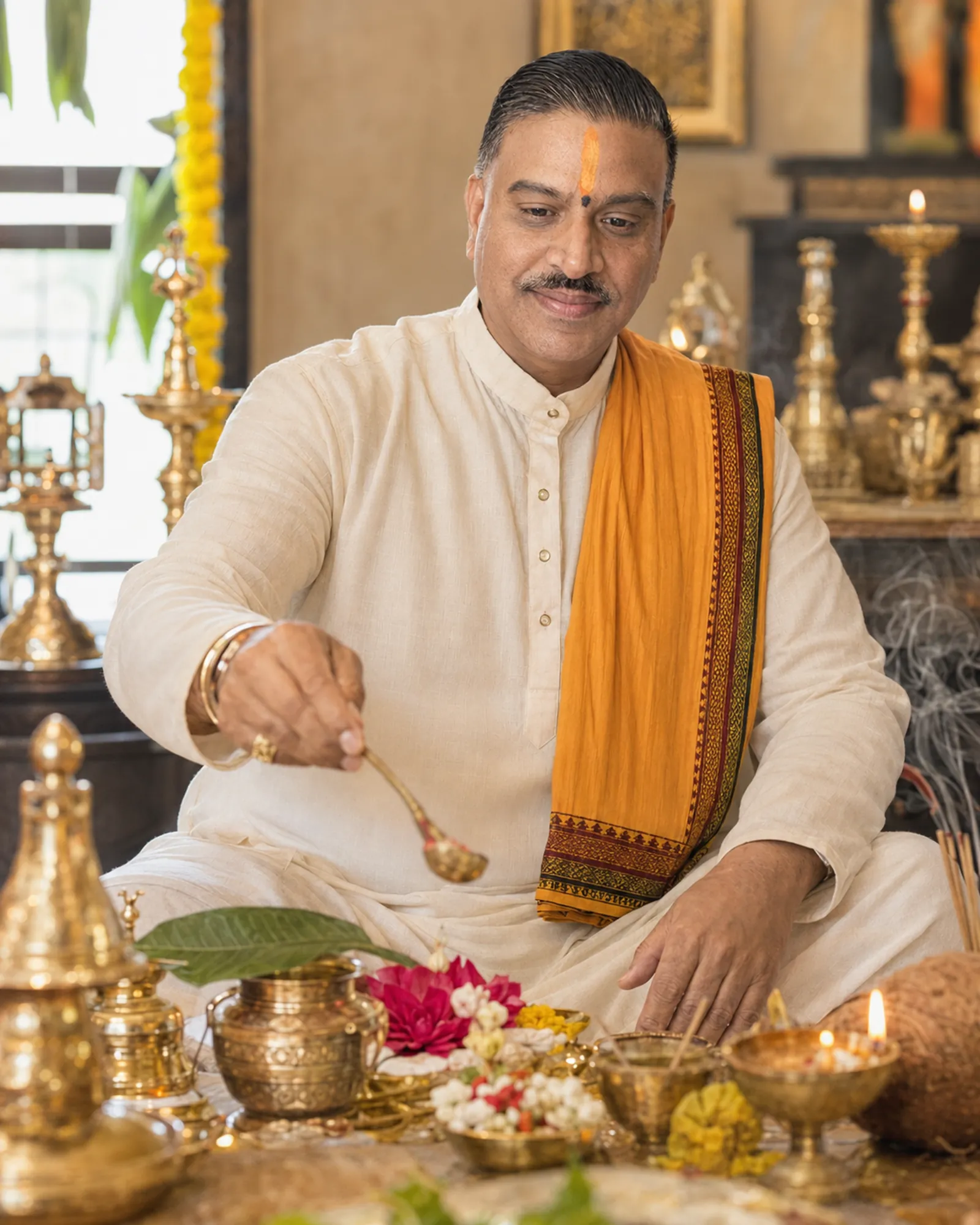
Every offering has a meaning, and it is explained
Whichever rite you choose from this directory, it is performed in the form your family keeps — the sequence, the mantras and the offerings as tradition sets them out — and explained as it moves, so that everyone present understands what is being done and why.
You are given an itemised samagri list for the ceremony you are holding. Items you already have at home are welcome; anything else can be sourced and prepared for you if you would like.
Alongside the ceremony
Support and guides
Practical help families ask for once the ceremony itself is agreed.
Katha, Path & devotional readings
Bhagwat Katha, Ramayan Path, Bhagavad Gita Path, Sundar Kand and Garud Puran, explained in one place.
Puja samagri
A ceremony-specific list, with materials sourced and prepared for you if requested.
Vedic Wisdom
Guides and explanations of Hindu ceremonies in plain English.
Trusted partners
Independent professionals who may be introduced where suitable and available.
Questions
Arranging a ceremony
Continue
- How much does a Hindu priest cost?What shapes the cost of a ceremony, and what to ask before booking.
- Hindu wedding ceremoniesThe Vivah Sanskar, prepared and explained.
- Pujas & SanskarasHousehold prayers and life-stage rites.
- Ceremonies by categoryThe same six categories, with the dedicated pages.
- Sankalp — how every rite beginsThe statement of intention, and why it matters.
If you are not sure
Tell us what you are planning
If you cannot see the ceremony you need, or you are not certain which one applies, send a short message and we will talk it through.