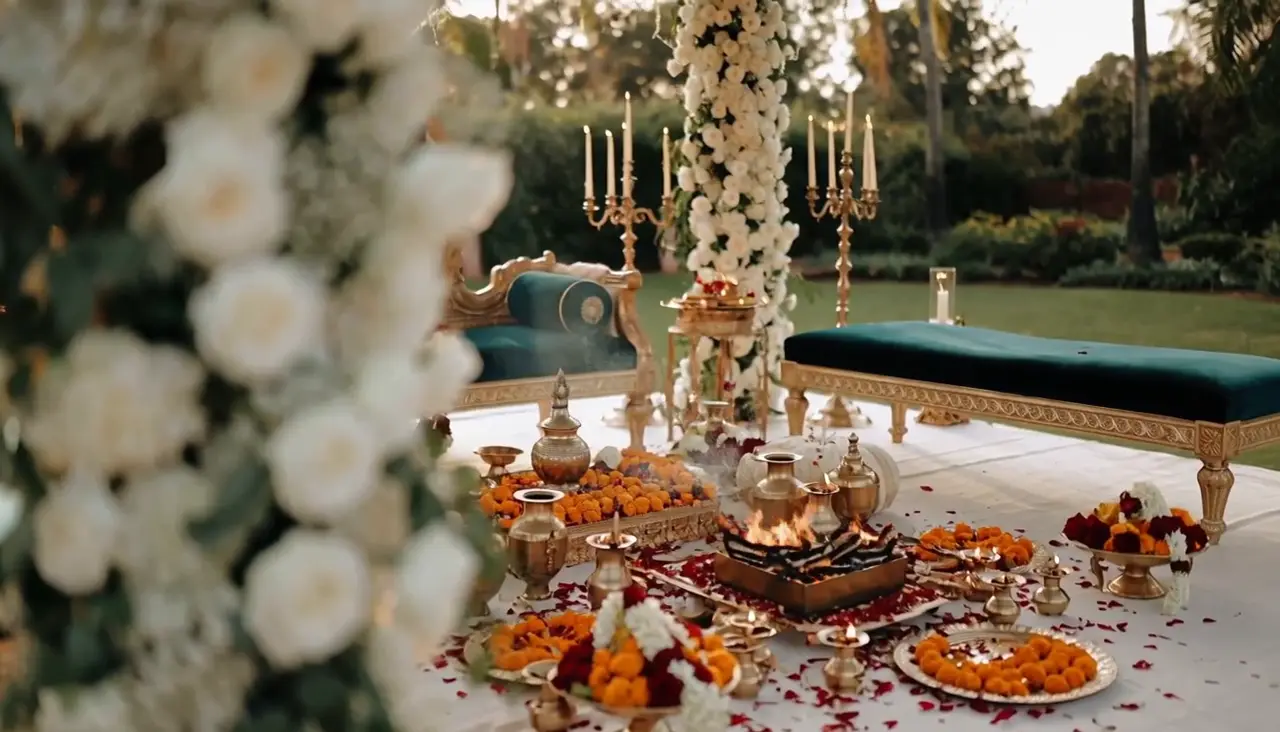
Ceremony consultation in advance
Before the day, the rites, their order, the explanations and a realistic ceremony window are settled with you — so the wedding is built around the ceremony rather than squeezed into it.
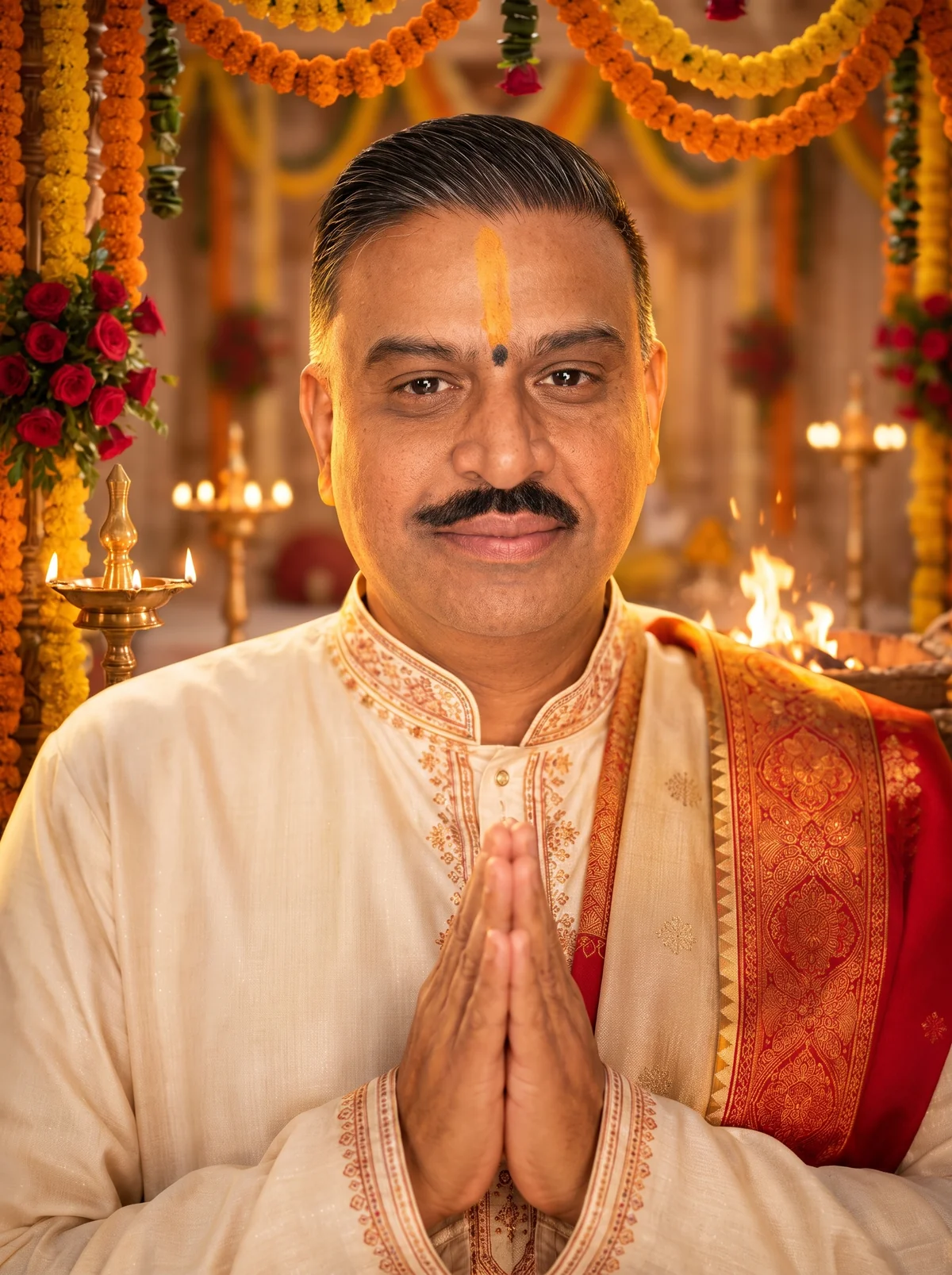
Hindu Wedding Priest UK
From the ceremony and samagri to venue coordination and trusted partners, Manishbhai helps take much of the stress and worry out of planning your Hindu wedding — so you and both families can enjoy the experience.
The ceremony is worked through in advance with the couple and both families.
The ceremonial materials for the agreed rites are arranged as part of the service.
Mandap space, timings, microphones and the sacred-fire question raised early.
The established tradition your families follow decides the rites, not a template.
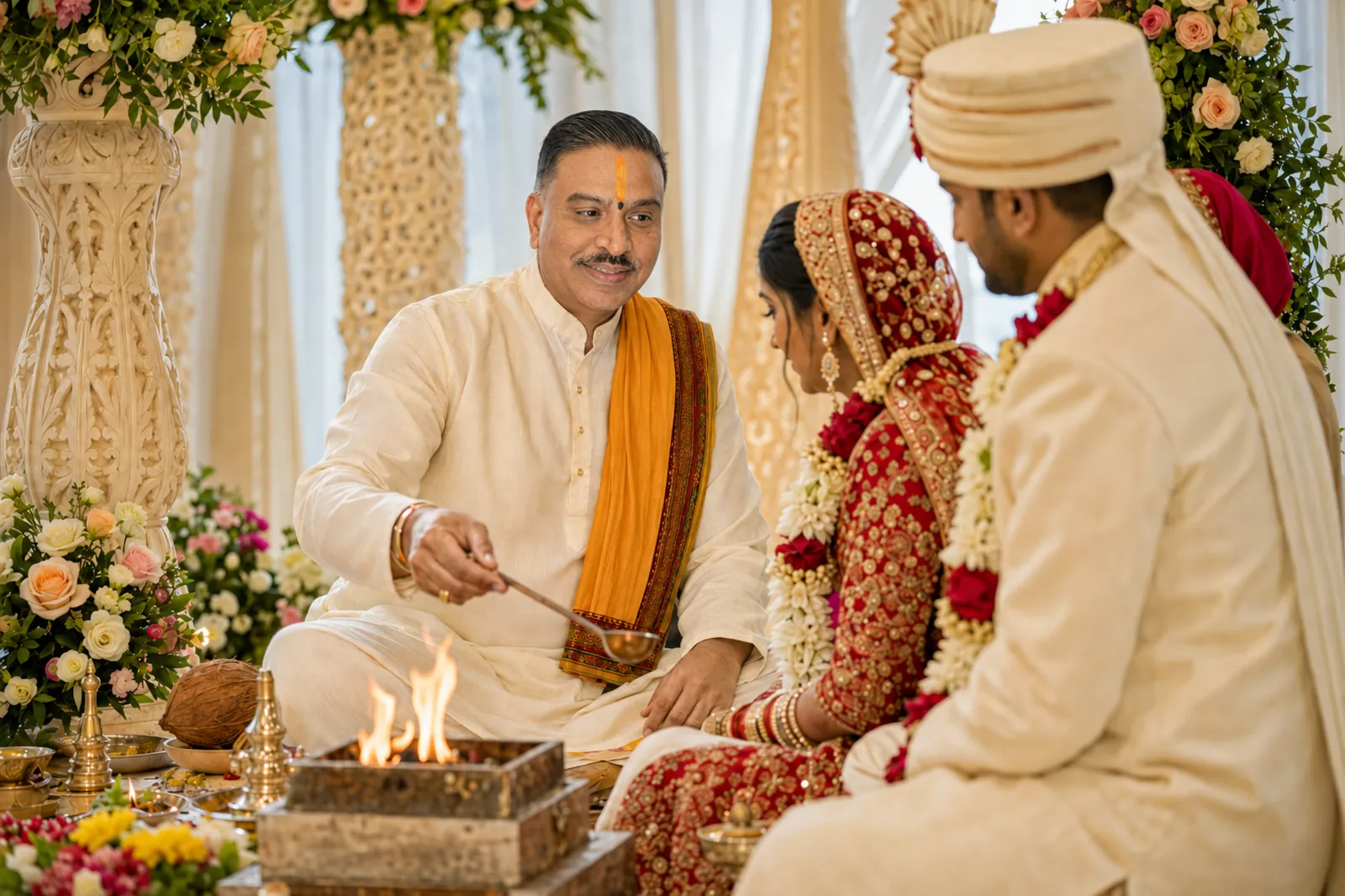
Why couples ask him
Most couples are holding a lot at once: two families with their own expectations, a venue, a planner, photographers, catering and a timeline that keeps moving — while trying to protect the sacred part of the day.
Manishbhai works through the ceremony with you well before the wedding, so you are not coordinating every religious detail yourself. The rites, the timing, the materials and the practical questions are settled in advance — which is usually what makes the day feel calm and organised rather than rushed.
Included
Six things settled in advance, so the wedding day itself needs no improvising.
Before the day, the rites, their order, the explanations and a realistic ceremony window are settled with you — so the wedding is built around the ceremony rather than squeezed into it.
Hindu weddings differ by family, community and region. Manishbhai asks what your families expect, and the established tradition you follow decides what is performed.
The ceremonial samagri required for the agreed wedding rites is planned and arranged as part of the wedding service, so it is one less thing on your list.
Mandap space and position, seating and sight-lines, microphones, access and timings — and whether an open sacred fire is permitted, which is always the venue’s decision.
Where guests are attending a Hindu ceremony for the first time, the meaning can be explained gently in English around the appropriate moments. The rites and mantras remain as the tradition requires.
Your planner, venue coordinator and photography or film team can be briefed in advance. Where suitable and available, trusted associated partners can be introduced.
Ceremony style
Whichever suits your families, the established tradition you follow decides the rites.
The Vivah Sanskar performed as the tradition your family follows requires, at a pace that lets each stage breathe. Regional and household variation is the starting point, not an afterthought.
The Hindu wedding rites agreed for your family, with short introductions in English around the significant moments. Explanation sits alongside the rites; it does not replace, shorten or rewrite them.
For couples bringing two traditions together. What can sit alongside the Hindu rites, and what is better honoured separately, is discussed openly and early.
Interfaith weddings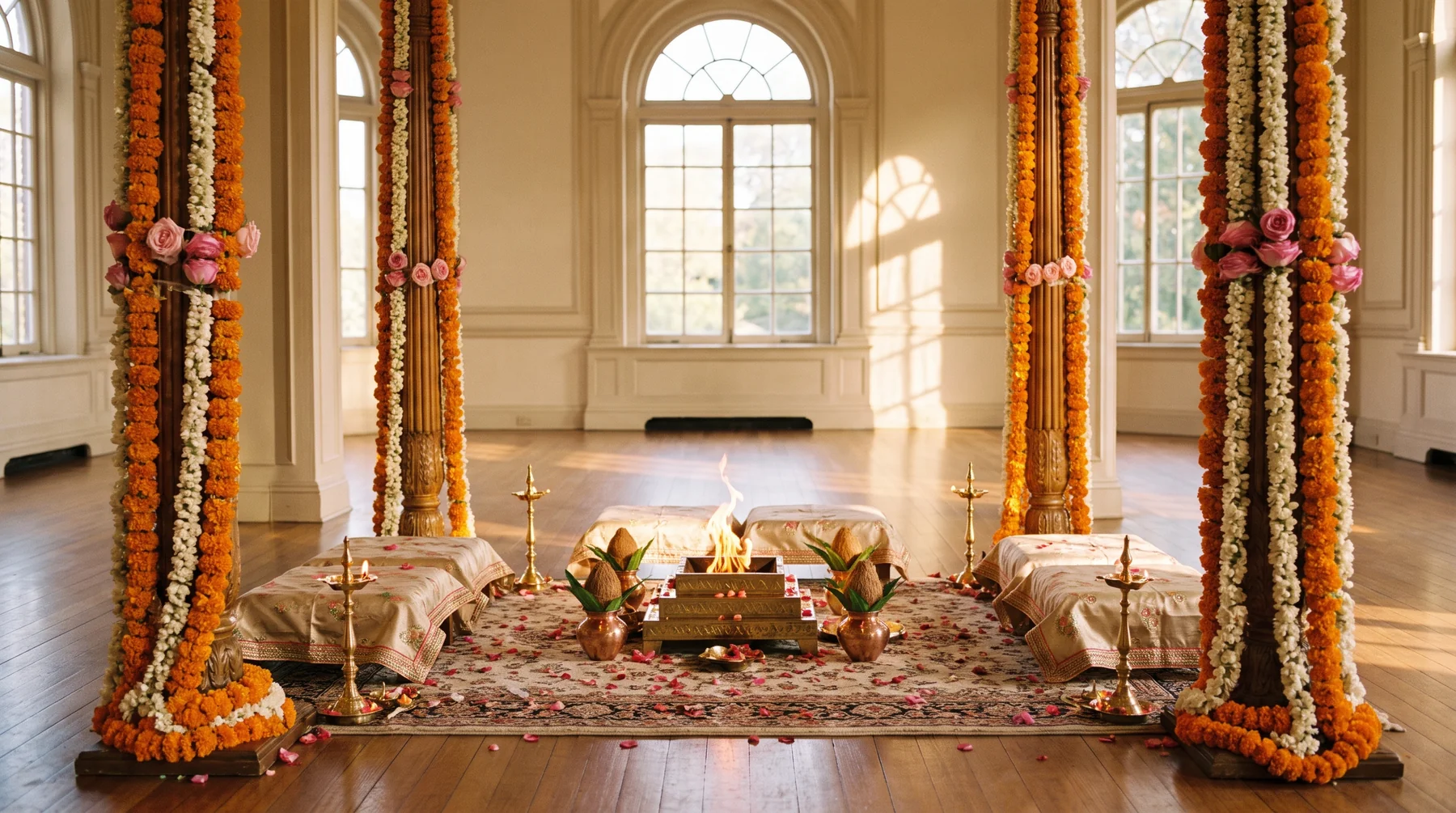
How it works
Your date, and the venue or location if you have chosen one.
Family tradition, which rites are included, explanations and a realistic timing.
Mandap, fire rules, the ceremony window, microphones and sight-lines, with your planner and photography team.
The required materials arranged, plus any pre-wedding rites and trusted partner introductions where suitable.
Arrangements understood beforehand, so Manishbhai can give his attention to the ceremony and to both families.
Wider support
Where it is suitable and partners are available, Manishbhai can introduce associated suppliers who understand Hindu weddings. It is entirely optional, bookings and contracts remain directly with the supplier, and many couples simply keep their own team.
See Trusted PartnersThe wedding experience
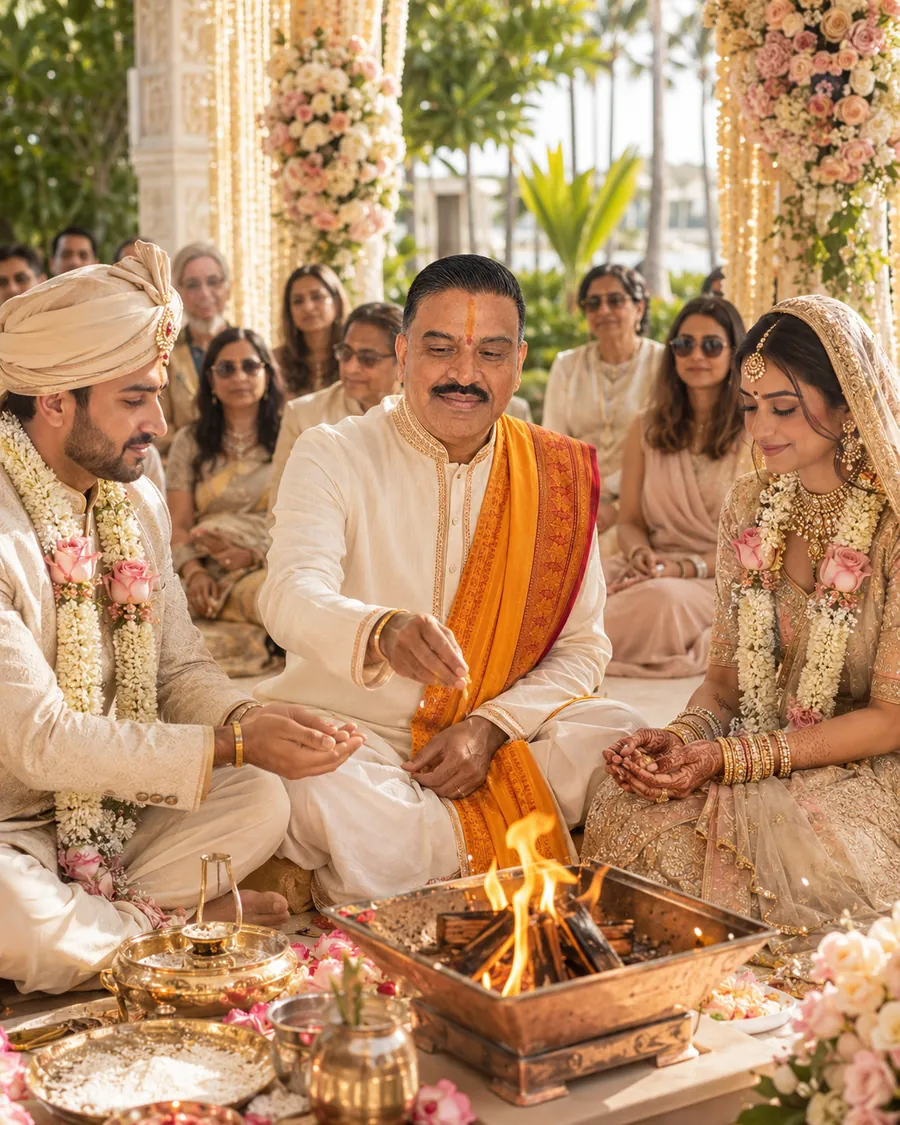
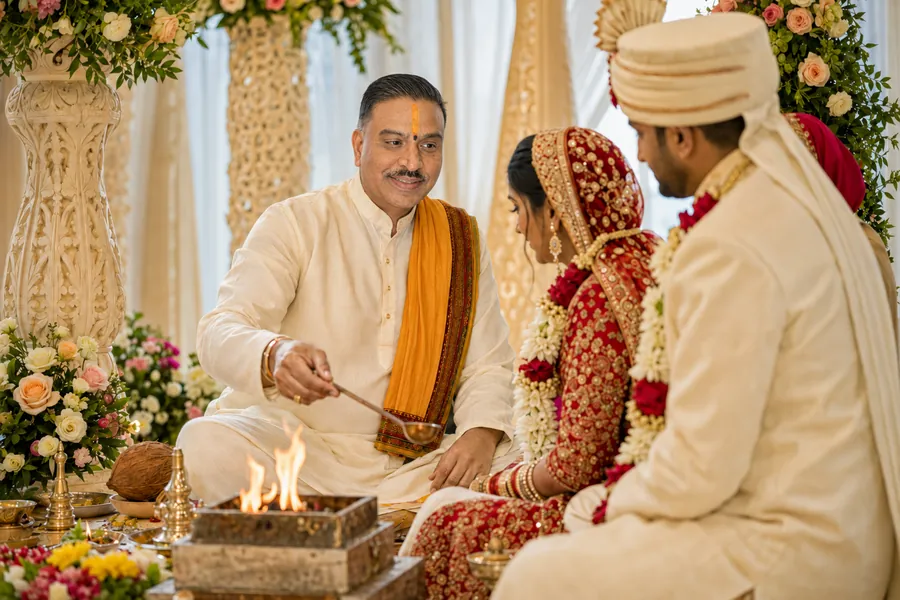
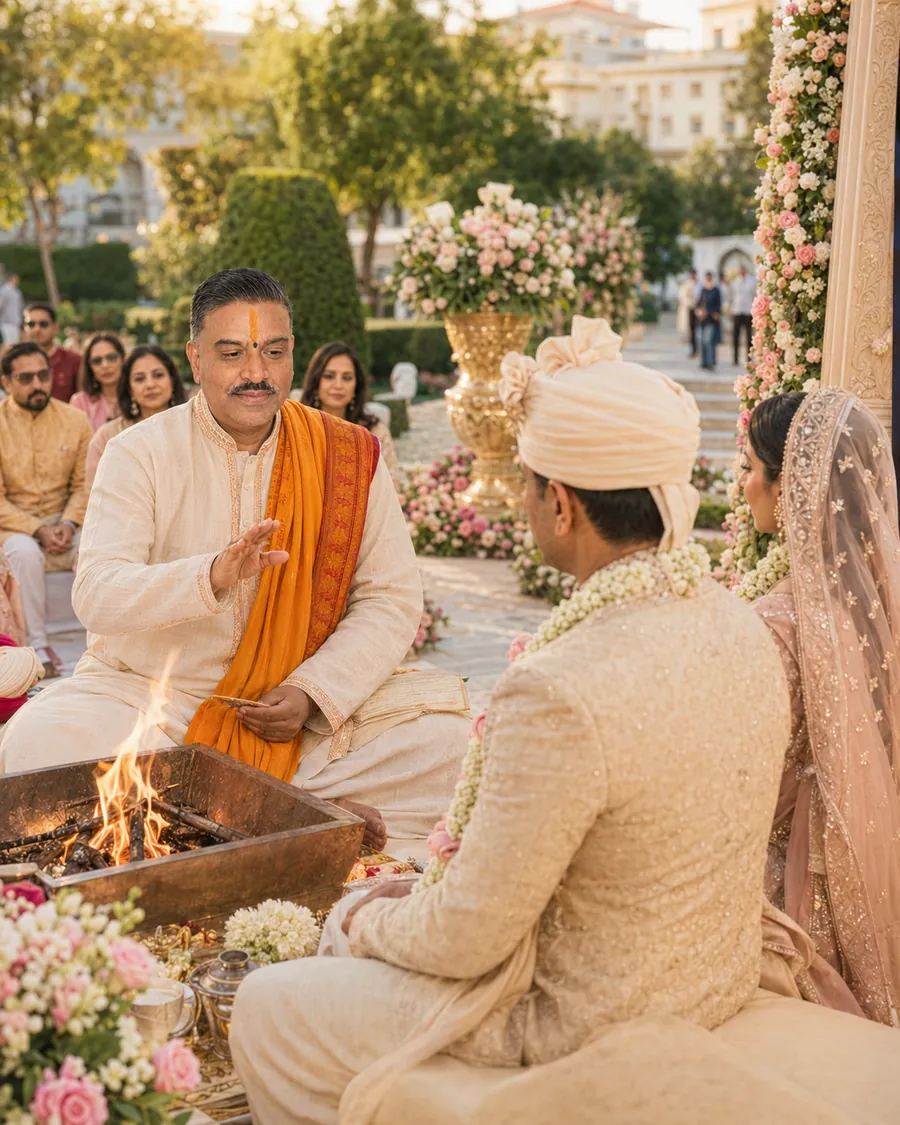
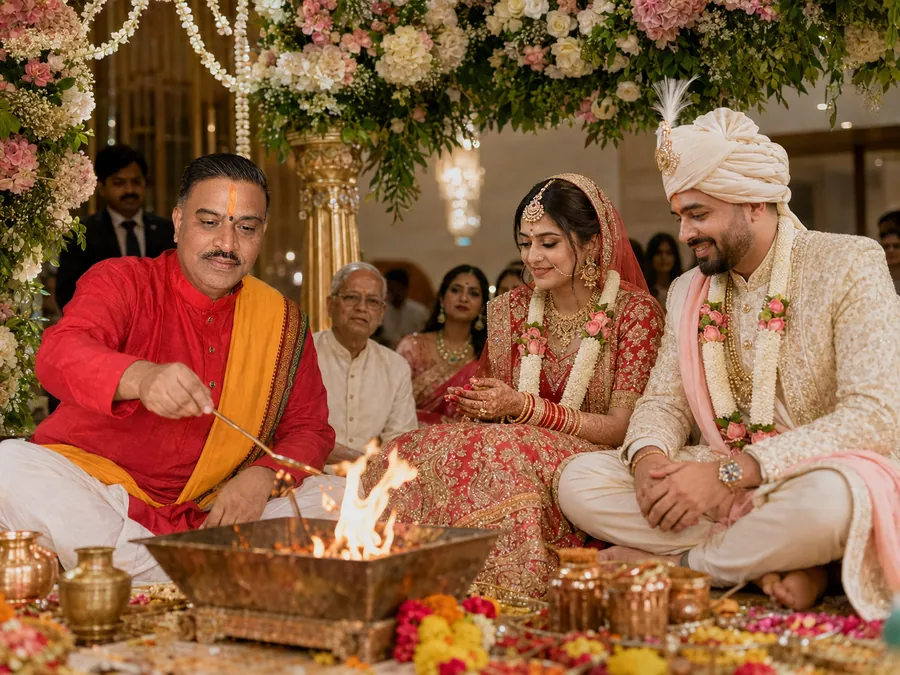
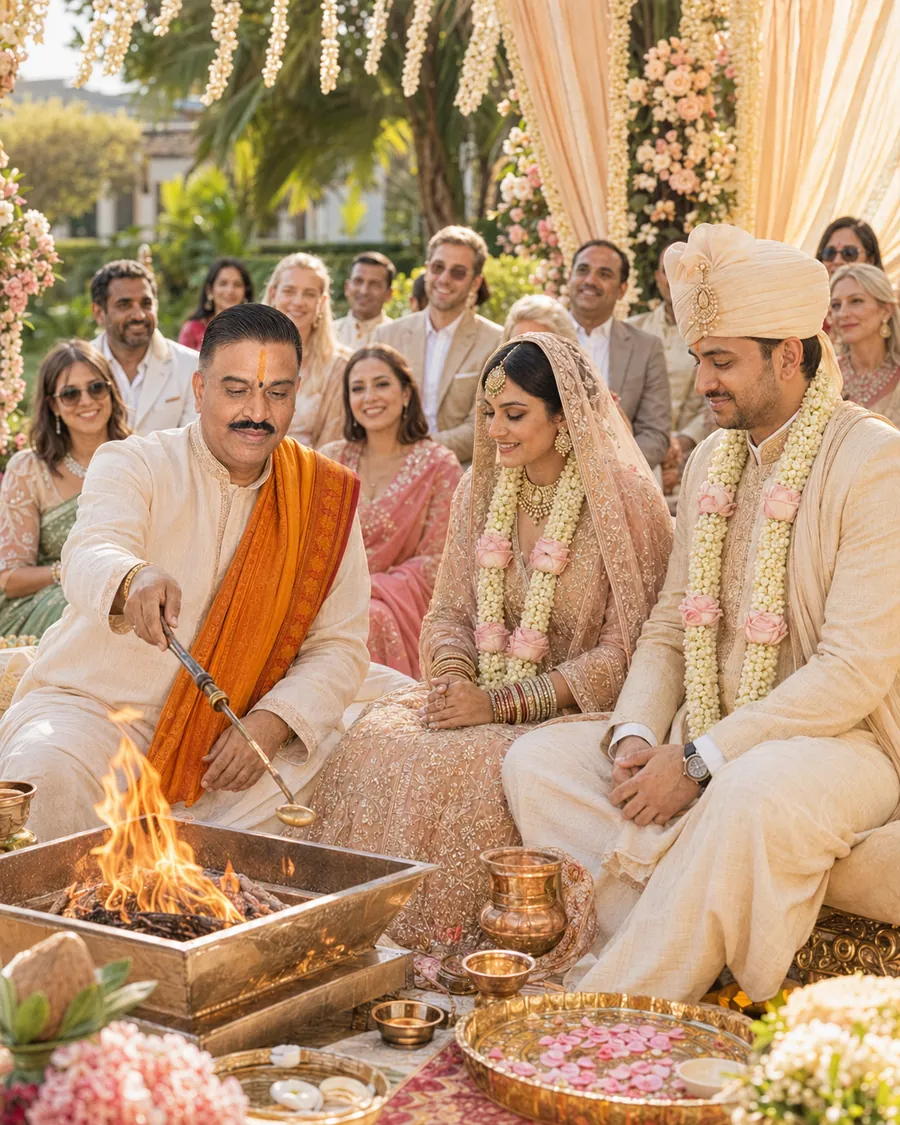
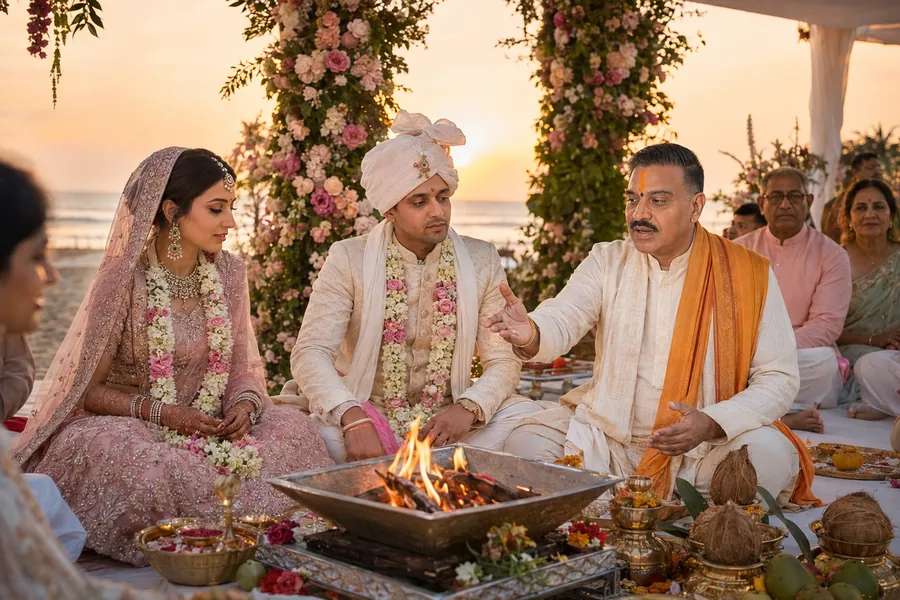
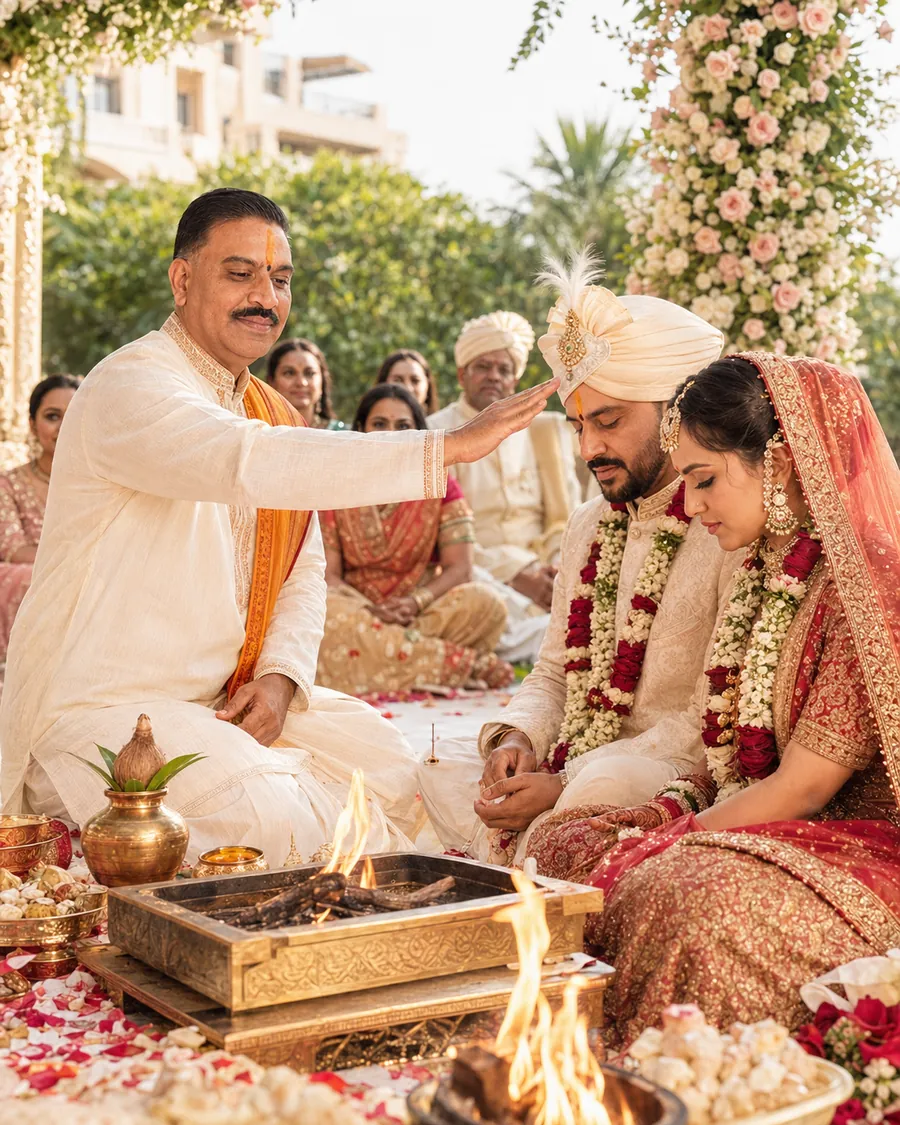
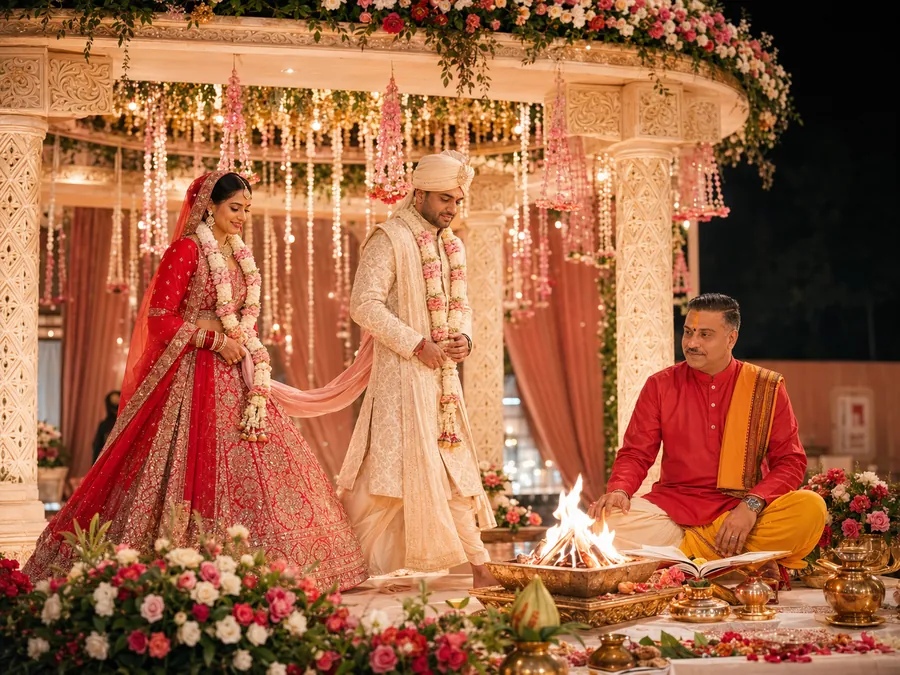
Familiar rites, performed properly, at a pace both families can follow.
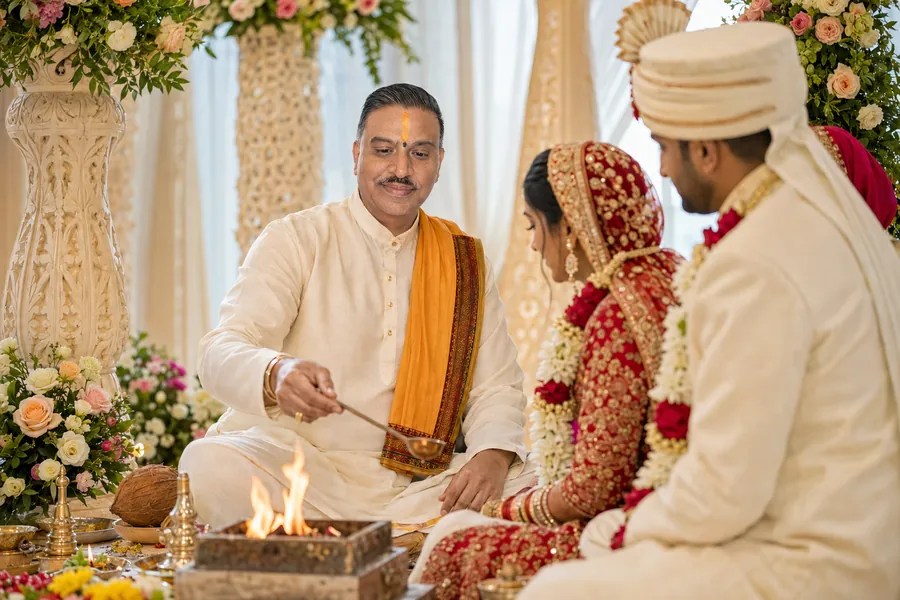
Practical note
In England and Wales a religious wedding can take place at a registered religious building, with an authorised person or a registrar attending to the marriage document and the legal requirements met. Civil ceremonies at approved premises cannot include religious content. If you are marrying at a hotel, marquee or garden, please do not assume the Hindu ceremony alone creates the legal marriage — check the arrangements with your venue and register office, and see the GOV.UK guidance on planning your ceremony alongside our guide for Hindu couples. This is general information, not legal advice.
Whether an open sacred fire is permitted depends on the venue and the rules that apply there, never on us. The question is raised early so a respectful approach can be agreed together. Our sacred fire and venue guide sets out the questions to ask.
Where your family observes ceremonies in the days beforehand, they can be planned as part of the same conversation. Pujas & Sanskaras
Prayers before the wedding rites begin, where observed by the family.
Rites for peace in the household, where observed by the family.
The blessing associated with raising the mandap, where observed by the family.
Households keep their own additional ceremonies. Where yours does, we can plan them with you as part of the same conversation.
In their own words
Shared with each family’s permission, in their own words. No ratings are collected, so none are shown.
Read more family experiences“Thank you so much for being part of our wedding day. You made everything feel relaxed and easy, while still keeping all the traditions and rituals meaningful. Our families really appreciated the way you explained what was happening along the way. It felt personal, happy, and never rushed. We couldn’t have asked for better.”
“A sincere thank you for conducting our son’s wedding ceremony so peacefully. Your approach, professionalism and ability to guide both crazy, disorganised families throughout the ceremony were exceptional. Good communication; the timing was handled extremely well, and you brought a wonderful sense of dignity and warmth to such an important occasion for our family. Jsk.”
Questions
Continue reading
Start with your date
Share your proposed date, venue or location, and anything you already know about the traditions your families follow. We will take it from there, one clear step at a time.
Check Your Proposed Wedding Date