Family & Children
Traditions they can grow up understanding.
Naming, first food, first lessons and other family milestones — prepared around your family tradition, held at a pace a child can manage, and explained so everyone in the room can follow.
Led at a child’s pace
Ceremonies for young children are kept to a length a child can manage, with pauses where they are needed.
Your family tradition first
Established customs differ between families, regions and traditions. What your household observes is discussed rather than assumed.
Explained in plain English
Sanskrit and the mantras are retained as appropriate, with short explanations so children and guests can follow along.
Help organising your samagri
The materials needed for the agreed ceremony can be arranged. What is supplied and any cost are confirmed beforehand.
Why it matters
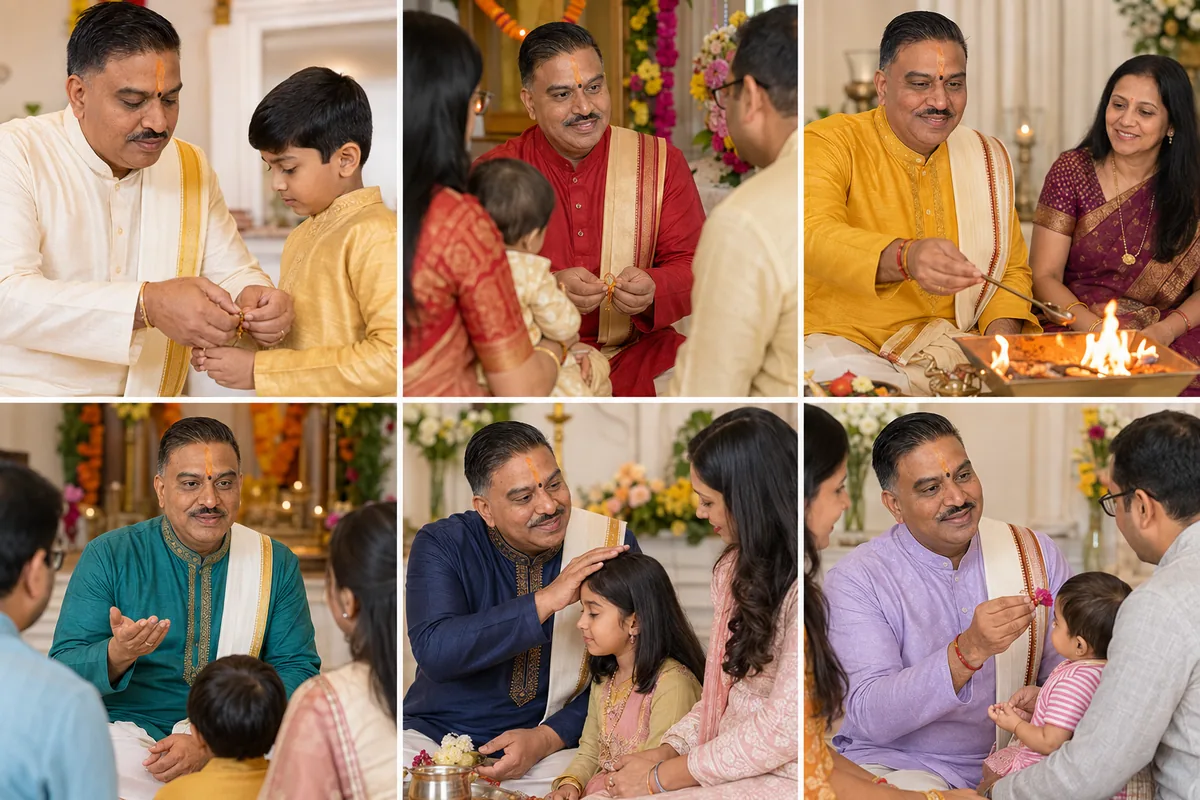
Children remember the feeling of a ceremony long before its name.
So these occasions are kept unhurried but never long, warm rather than solemn, and explained in simple language children and teenagers can follow and remember.
British Hindu families often say they would like their children to grow up knowing why these rites are kept, not only that they are. That understanding is the point of every ceremony on this page.
Milestones
Ceremonies families ask about
Families observe different rites at different stages, and not every household keeps the same set. These are the ones asked for most often.
Naming a child
Naamkaran
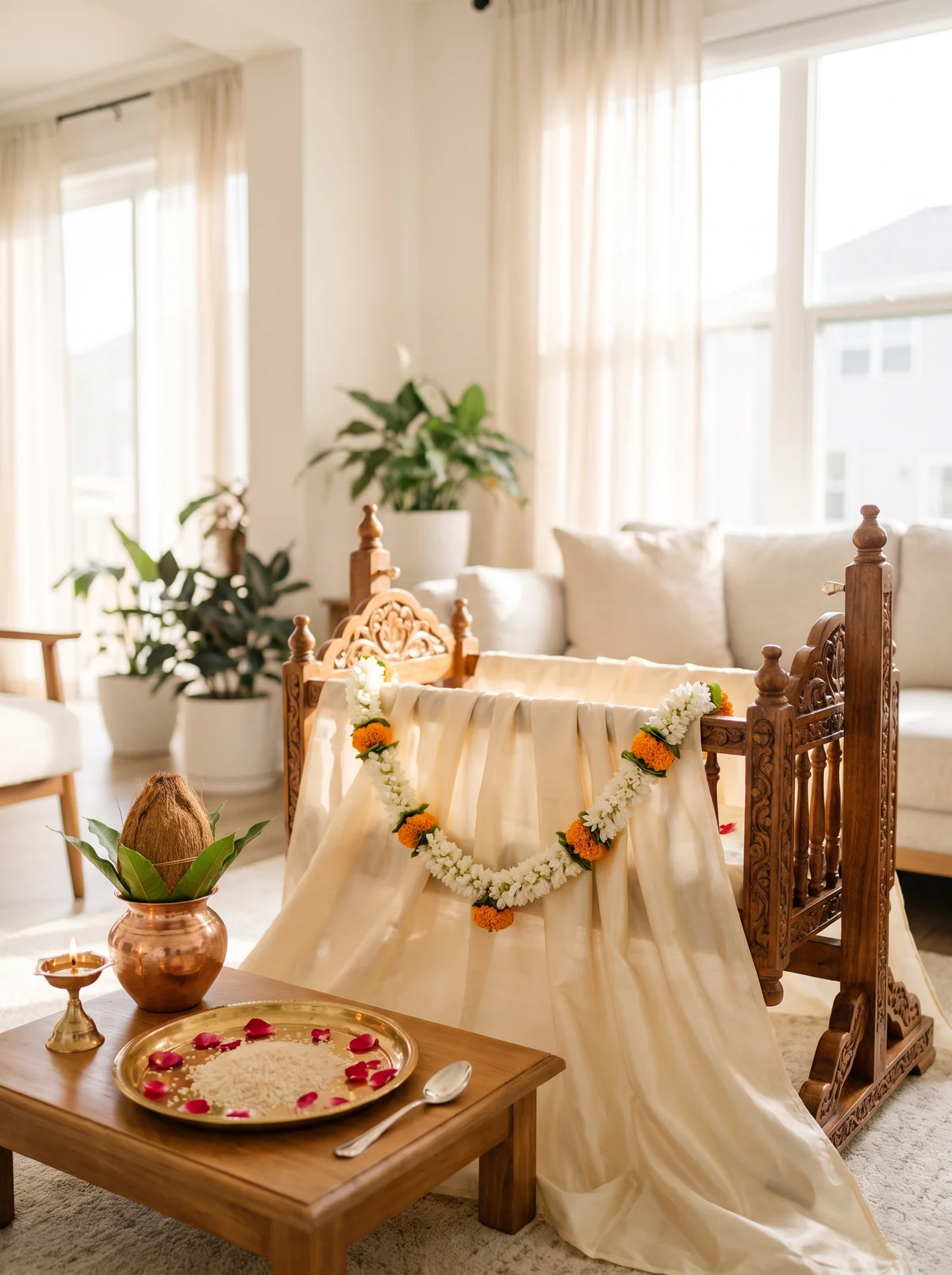
The child’s name is formally given within the family. Where you would like it, the meaning of the name is explained aloud so everyone present understands the choice.
First solid food
Annaprashan
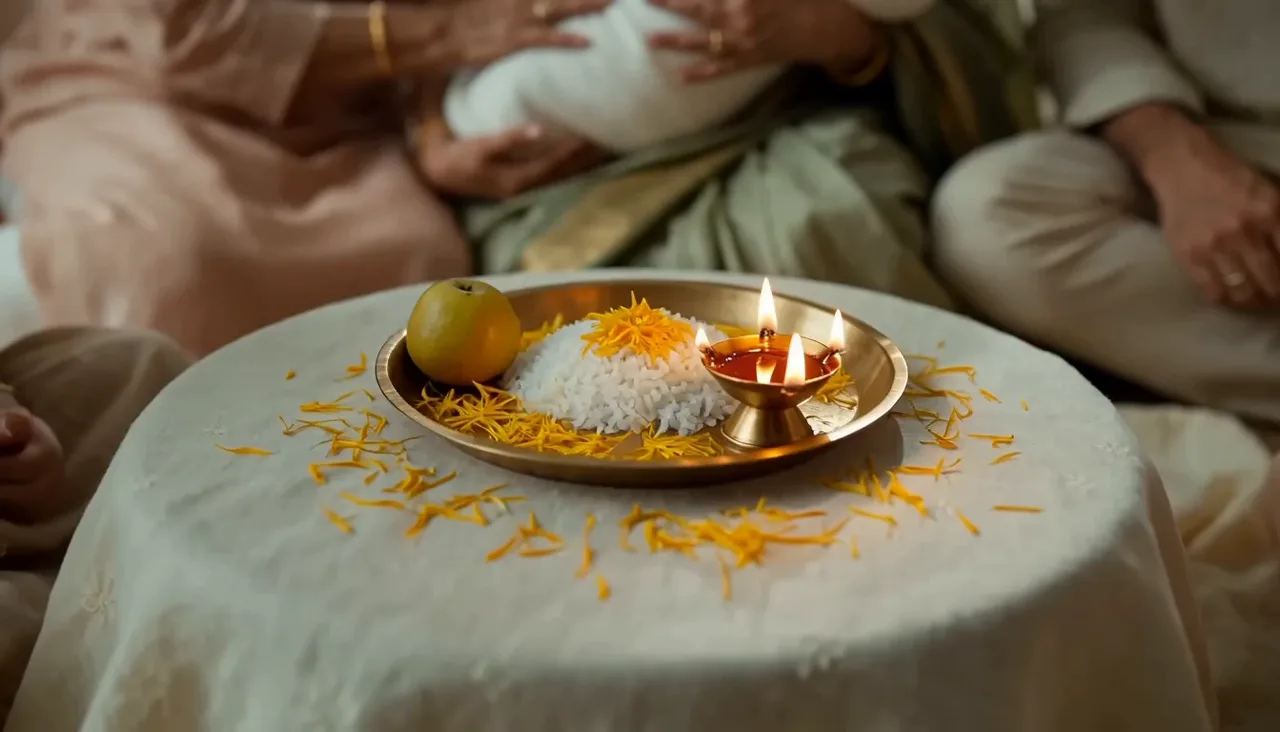
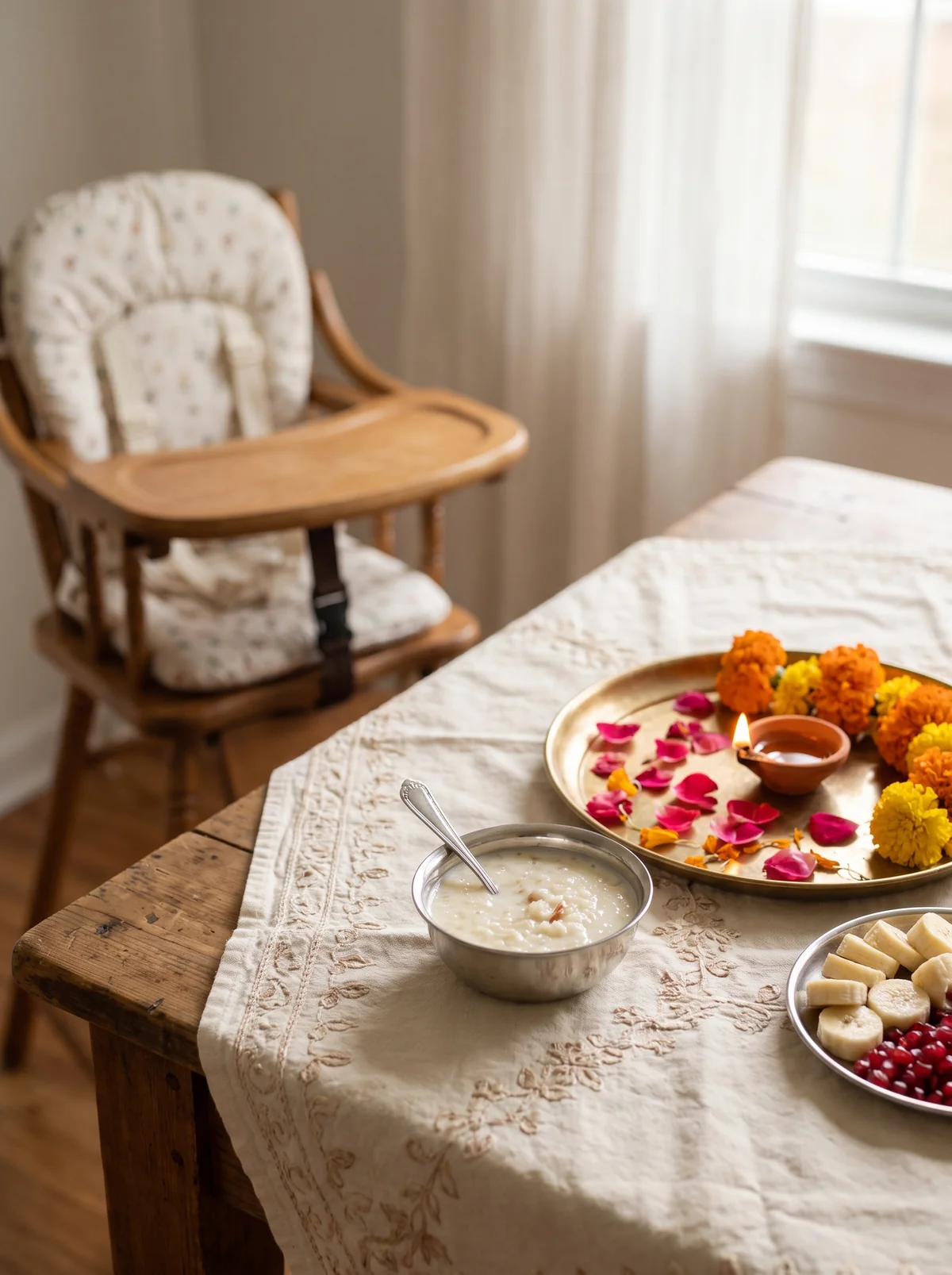
A short, warm observance marking a baby’s first food beyond milk, shaped around the baby rather than a schedule.
First haircut
Mundan / Chudakarana
An early-childhood rite held at home or at a temple, prepared with the child’s comfort in mind.
Beginning of learning
Vidyarambh
Marking the start of a child’s learning, traditionally with the writing of a first letter. Families observe it at different stages.
Sacred thread, where observed
Janoi / Upanayana
A coming-of-age rite observed in particular traditions and communities rather than by all Hindu families. The young person is prepared beforehand so they understand what they are taking on.
For marriage rites, see Hindu weddings.
With children in the room
How these ceremonies are handled
A ceremony with a toddler present is a different occasion to one without. It is planned that way from the start.
- The likely length is agreed in advance, and a young child can step away and return without the ceremony being disturbed.
- Explanation is offered in plain English, pitched so children and teenagers can genuinely follow it.
- Young family members can be given a small role, agreed with you rather than sprung on them.
- Where a child feels anxious about something unfamiliar, it can be talked through with them first.
- Relatives who are not Hindu are included, with brief introductions before each stage.
How it works
Four simple steps, starting from wherever you are
- 01
Tell us about the occasion
The ceremony you have in mind, the age of your child, and the date or window you are working towards.
- 02
Family custom discussed
What your household observes, and whether your family follows auspicious timing, is talked through before anything is fixed.
- 03
Setting & samagri confirmed
Home, hall or temple, where the ceremony is best held, and which materials are needed for the rites agreed.
- 04
Ceremony conducted & explained
The agreed rites are conducted, with explanation woven in for children and for anyone attending for the first time.
Questions
Family and children ceremonies
In their own words
One family, many occasions
Shared with each family’s permission, in their own words. No ratings are collected, so none are shown.
Read more family experiences“You have been there for some of the most important occasions in our family, and we are always grateful for the care and affection with which you conduct every ceremony. You never make it feel like ‘just another puja’. You remember the family, involve everyone, and somehow make each occasion feel personal. Thank you for all the blessings and beautiful memories over the years.”
VinabenFamily ceremonies
A milestone coming up?
Tell us about the occasion.
Share the ceremony you have in mind, your child’s age and anything your family traditionally observes. Manishbhai can talk you through the right next step.
Discuss Your Family Ceremony