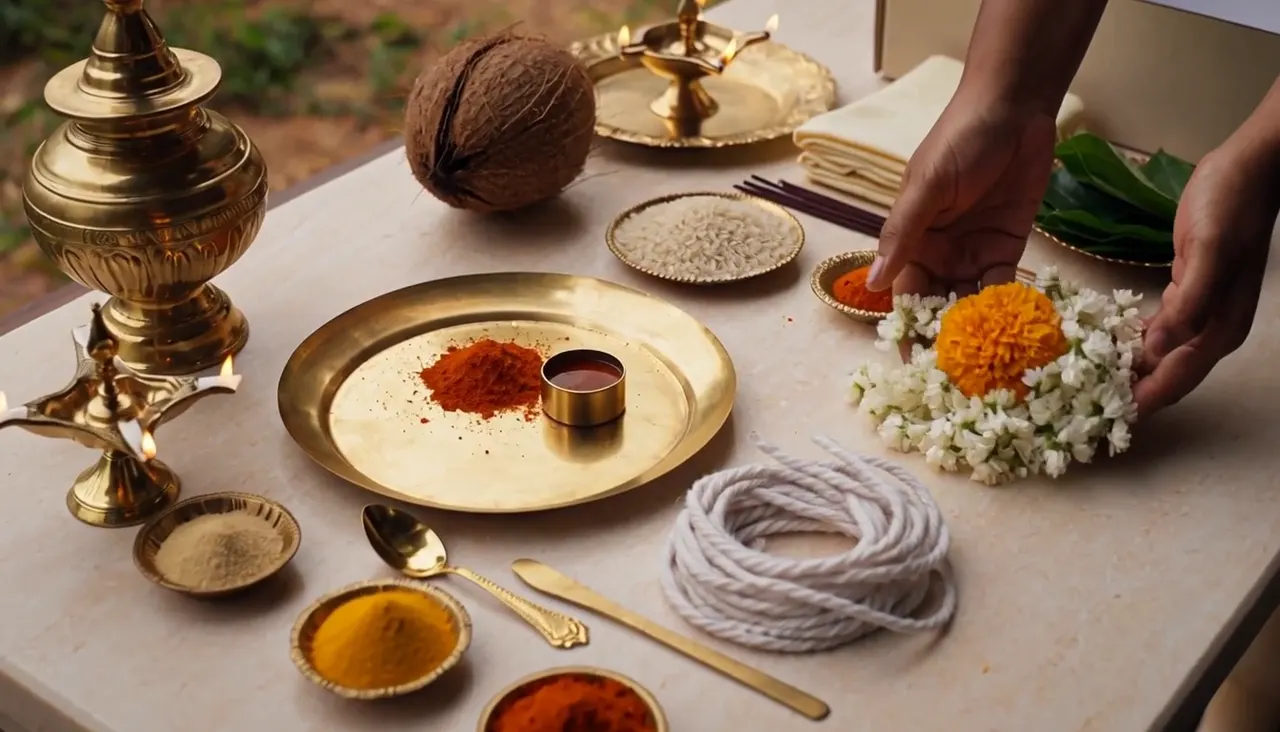
Puja Samagri
The right samagri, ready before your ceremony begins.
A clear, ceremony-specific list for your puja, sanskara or Hindu wedding — with the option to have the materials sourced and prepared for you.
Ceremony-specific list
The list is written for the rite you are actually holding, not copied from a general template.
Family tradition respected
Customs differ between families, regions and sampradayas. What your family observes is asked about rather than assumed.
Materials can be sourced for you
If you would rather not gather everything yourself, the materials can be sourced and prepared on your behalf.
Home & venue requirements considered
Where a lamp, camphor, incense or a sacred fire is planned, the rules of your home or venue are checked first.
Samagri is more than a shopping list.
The materials are part of the ceremony itself — the offerings that are made, the lamp that is lit, the vessels that hold water, the markings, the prasad that is shared afterwards. What is needed follows from the rite you are holding and from the way your family has always kept it.
With the materials checked beforehand, the ceremony can begin calmly and the sequence remains unhurried.
What is included
What a samagri list may contain
Not every ceremony needs every item below. Your list is prepared for the puja you are actually holding.
Sacred markings & dry offerings
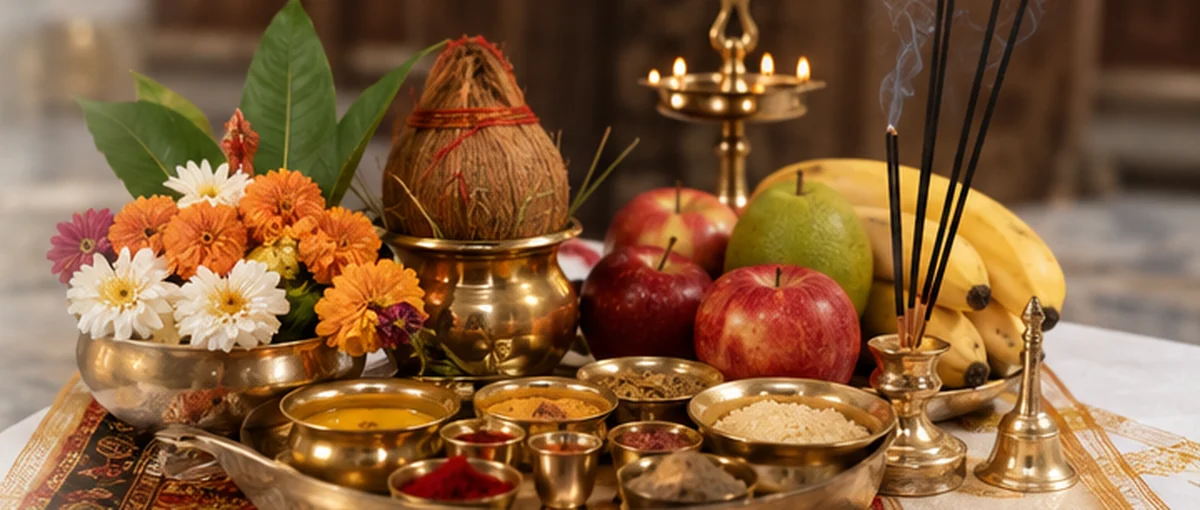
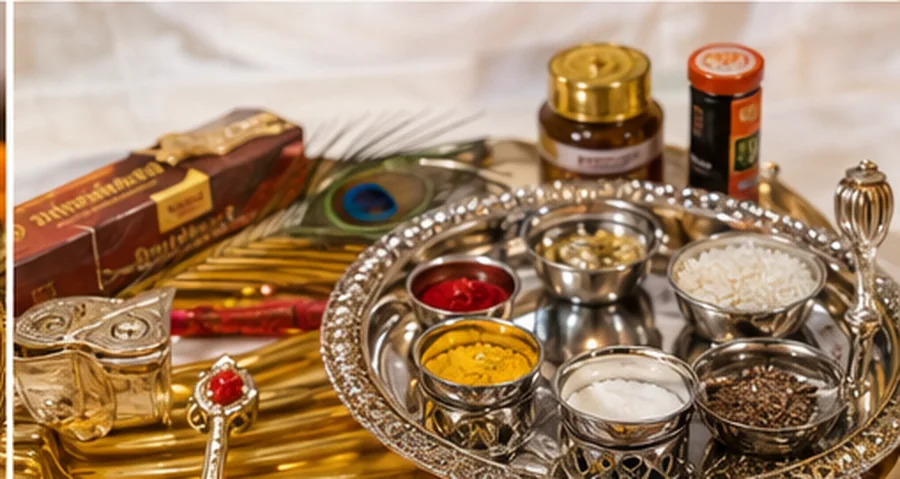
Kumkum, haldi, chandan and akshata (unbroken rice) where the rite uses them, along with other dry offerings your tradition includes.
Flowers, leaves, fruit & coconut
Fresh offerings vary by ceremony and deity — flowers, particular leaves, seasonal fruit, coconut, betel leaf and nut, and ingredients for naivedya or prasad where used.
Diya, incense & fragrance
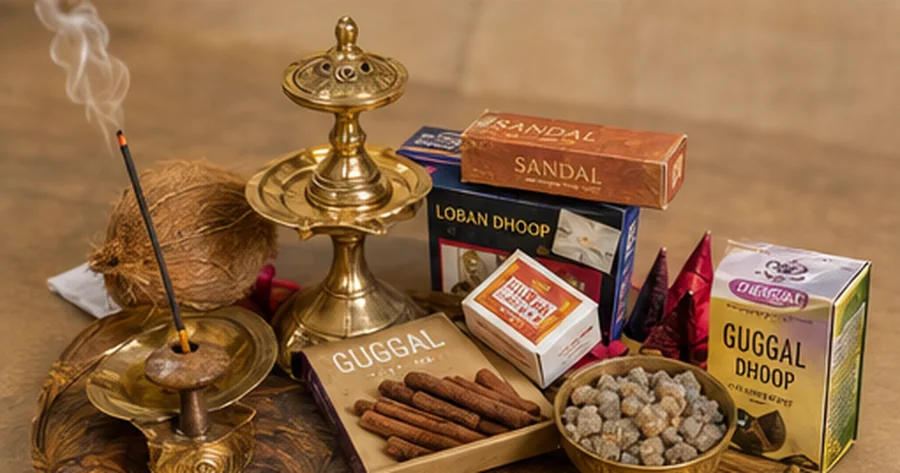
Cotton wicks, ghee or oil, incense and camphor where the ceremony calls for light and fragrance.
Kalash, vessels & altar cloths
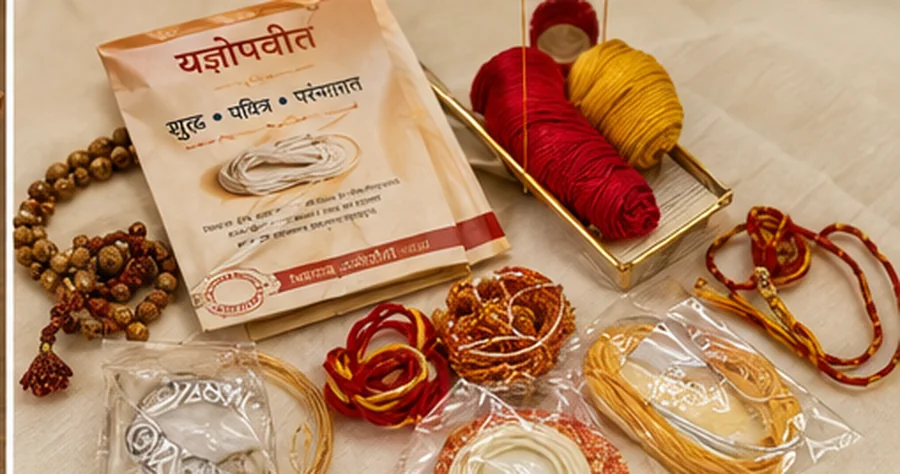
Lota, kalash, thali, small bowls and spoons, cloth and thread where the rite requires them.
Havan materials
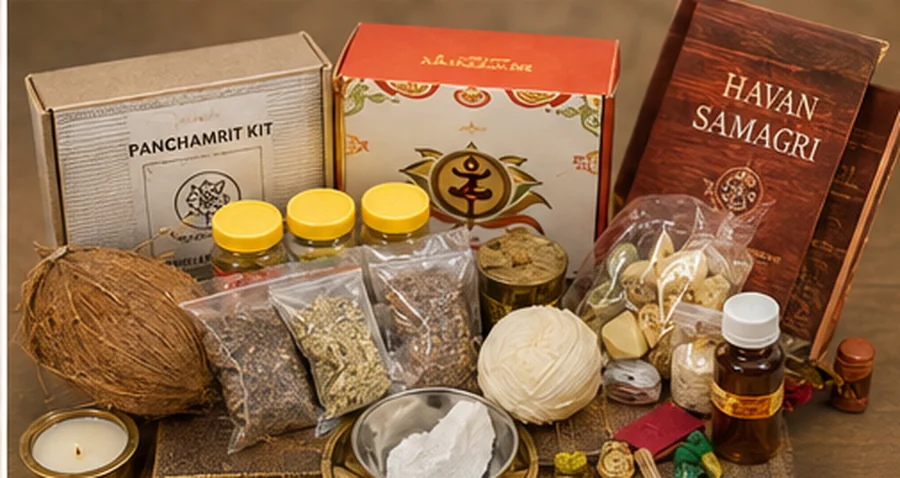
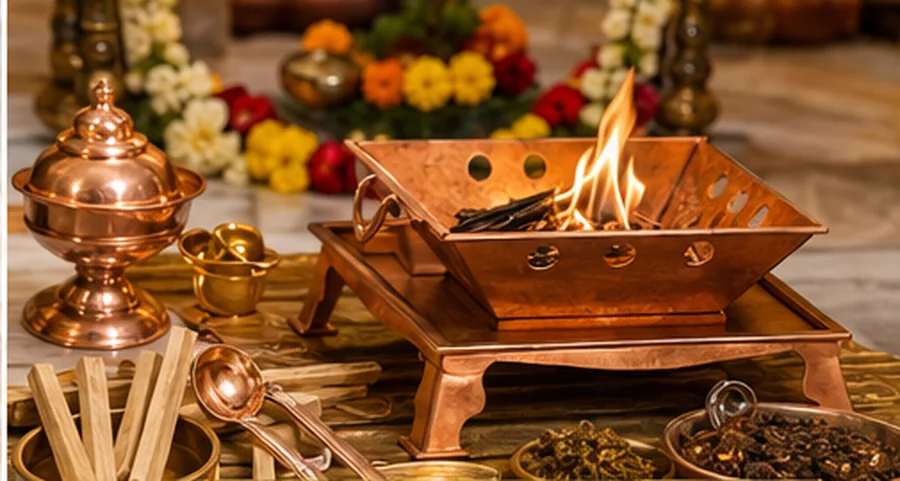
Havan kund, samidha (wood), ghee and havan samagri where the ceremony uses a sacred fire and the venue permits open flame.
Ceremony-specific additions
A wedding, Griha Pravesh, Satyanarayan puja, a sanskara or a Shraddha observance can each call for quite different items.
In practice
Prepared for the home or venue you are actually using.
- Fresh items — flowers, leaves, fruit and prasad ingredients — are planned close enough to the date to still be suitable on the day.
- Where a diya, camphor, incense or havan is planned, the venue’s rules on flame and smoke should be confirmed in advance, with a stable, heat-resistant setup where flame is permitted. A sacred fire is never assumed to be allowed.
- Many families already own vessels, lamps and cloths. Those are used rather than duplicated.
- If an item cannot be found, please ask before substituting. Some alternatives are acceptable within a tradition; others matter specifically to the rite.
Where a venue needs guidance on the sacred fire, see the sacred fire venue guide.
Prepared with care
The small details make the ceremony easier to begin.
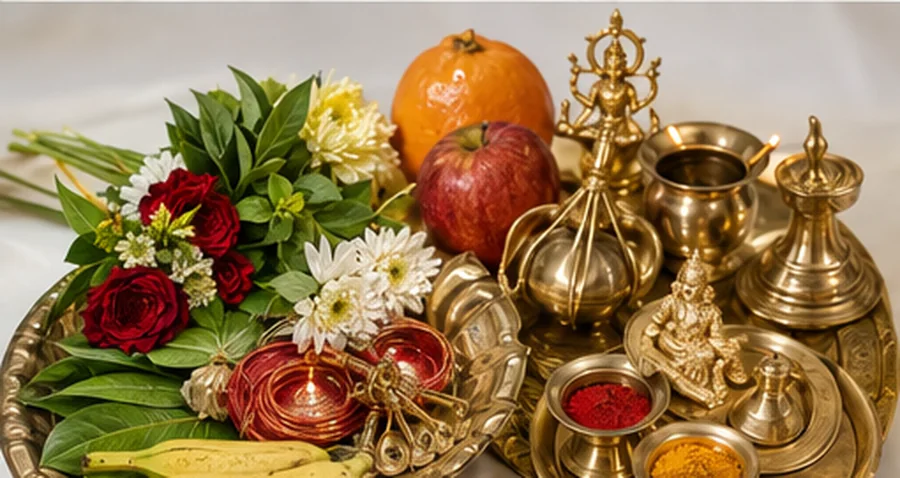
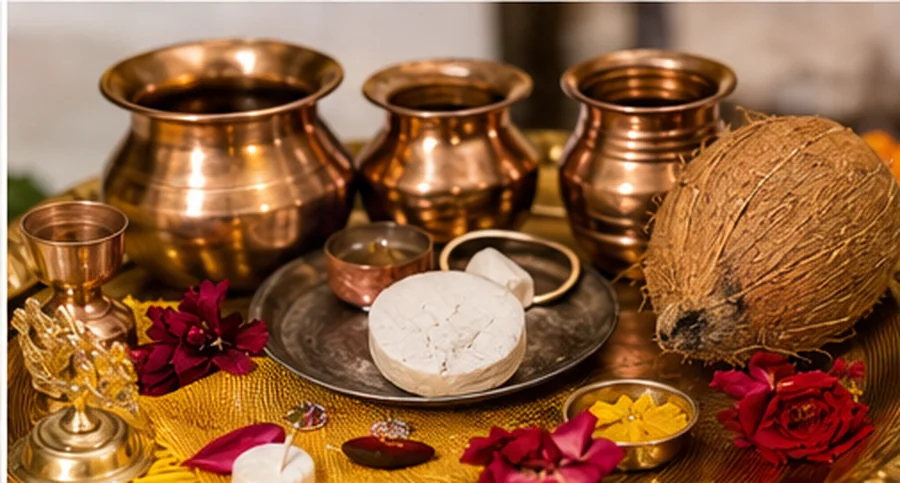
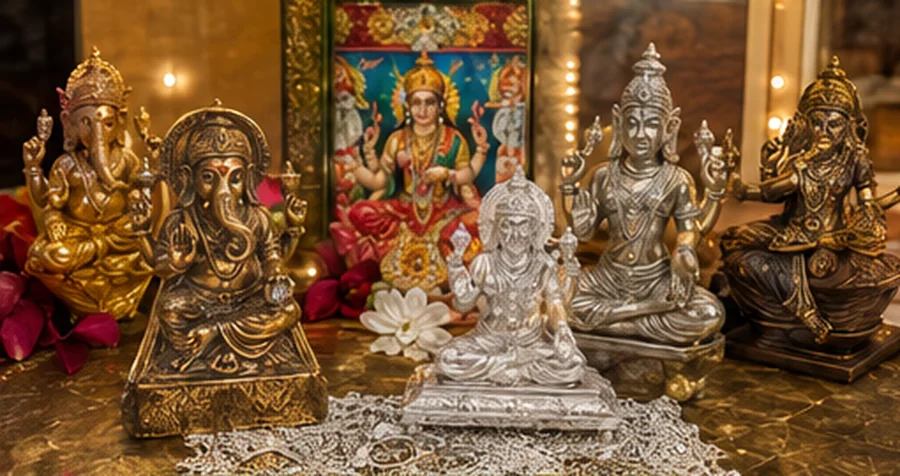
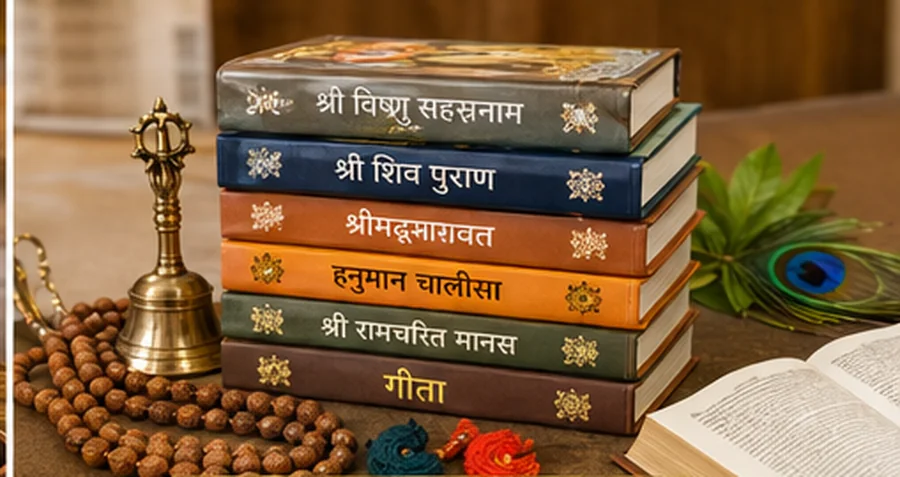
Illustrative editorial photography of ceremony materials. No supplier, family, ceremony or date is implied.
How it works
From the ceremony to the prepared list
- 01
Tell us the ceremony
The puja, sanskara or wedding you are planning, the date you have in mind, and who will be there.
- 02
Confirm tradition & venue
Your family custom and the setting — a home, a hall, a temple or a hired venue — shape what is needed and what is possible.
- 03
Receive the exact list
You are told plainly what the rite requires and which of it you may already have at home.
- 04
Sourced & prepared if you wish
Where you would like the materials arranged for you, the scope and cost are agreed before anything is bought — unless a service package already includes it.
Questions
Ceremony materials
Continue reading
- Pujas & SanskarasThe household pujas and life-stage rites these materials are for.
- Hindu WeddingsWedding samagri coordinated alongside the ceremony planning.
- Griha PraveshHouse-entering prayers, with their own list of requirements.
- Preparing Your HomeA practical guide to setting up the space before a puja.
Planning a ceremony?
Tell us the puja and the date.
We can confirm what is needed, what you may already have, and what you would like us to arrange.