Gita Jayanti
Gita Jayanti 2026: Puja on 20 December
Prayer, recitation and reflection on the Bhagavad Gita, prepared for your family or community and explained in English.
What is Gita Jayanti?
Gita Jayanti marks the teaching of the Bhagavad Gita by Krishna to Arjuna at Kurukshetra. Associated with Mokshada Ekadashi, it is an occasion to gather for devotion, read the teaching and reflect on its meaning; customs differ between families and traditions.
Pricing is on application.
Key points
- Gita Jayanti marks the teaching of the Bhagavad Gita by Krishna to Arjuna, and is associated with Mokshada Ekadashi.
- In 2026 Gita Jayanti falls on Sunday 20 December 2026; some calendars show Saturday 19 December, depending on location.
- Families mark it with prayers to Krishna, recitation of selected passages or chapters of the Gita, reflection and aarti.
- It can be held at home or in a community hall, with plain-English explanation alongside the traditional recitation.
- The reading, timings and samagri are agreed with you before anything is confirmed. Pricing is on application.
Gita Jayanti and Mokshada Ekadashi in 2026
The 2026 observance falls on . Some calendars show Saturday 19 December 2026, a day earlier, depending on location. Families can confirm the date with Shastri Ji.
Puja and Gita path at home or in a hall
A Gita path is a reading or recitation of the Bhagavad Gita. Your gathering can include prayers to Krishna, offerings, selected passages or chapters, reflection and a closing aarti (the offering of light). The reading and sequence follow what your family or community wishes to observe; a complete recitation is not assumed.
At home, a quiet space and seating for listeners help everyone take part. For a community hall, discuss access, seating and any restrictions on flame or smoke. The samagri — materials used for the prayers — is agreed in advance.
Understanding the teaching in English
Shastri Ji explains the context and meaning in plain English alongside the traditional recitation, helping younger relatives and guests new to the text follow the gathering. Questions and the level of explanation can be discussed beforehand.
Arrange your Gita Jayanti gathering
Tell Shastri Ji what you are planning: your preferred date, location, family customs and whether you would like a household puja or a community reading. The calendar date, reading, timings, materials and travel are discussed before anything is confirmed.
What happens during the puja
A Gita Jayanti puja combines worship of Krishna with reading from the Bhagavad Gita and time to reflect on its meaning. This is a widely followed shape; the reading and sequence follow what your family or community wishes.
- 01
Preparing the space
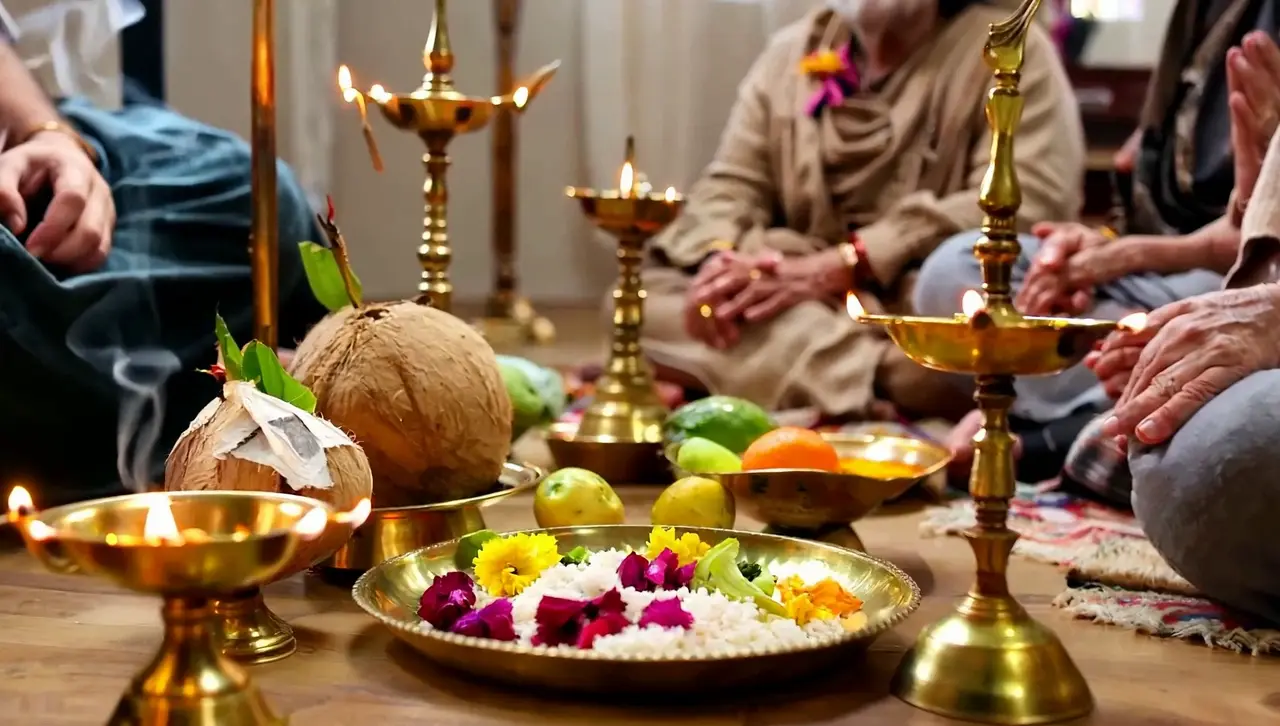
An image or murti of Krishna and a copy of the Bhagavad Gita are placed on a clean cloth, with lamps, flowers and a kalash.
- 02
Sankalp and Ganesh puja
The intention for the gathering is stated and Ganesha is honoured first, as at the start of most rites.
- 03
Krishna puja
Krishna is worshipped with mantras and offerings such as tulsi, flowers, fruit, butter or sweets, according to custom.
- 04
Gita path
Selected verses or chapters of the Bhagavad Gita are recited. A complete recitation is possible where agreed, but is not assumed.
- 05
Explanation and reflection
The meaning of the passages is explained in plain English, with time for questions where the family wishes.
- 06
Aarti and prasad
The gathering closes with aarti and the sharing of prasad among everyone present.
What to prepare at home or at the business
At home, a quiet room with space for everyone to sit and a small table for the shrine is usually all that is needed.
You are given a clear samagri list in advance, which usually includes an image of Krishna, a copy of the Gita, tulsi leaves, flowers, fruit, sweets, incense and diyas. Copies of the verses being read, or a translation, help guests follow. In a community hall or other shared venue, check the rules about lamps, incense and fire alarms beforehand, as well as access and seating.
See how puja samagri is arranged if you would rather the materials were prepared for you.
How long it takes and who should attend
The length depends mostly on how much of the Gita is read and how much explanation you would like, so it is agreed with you beforehand rather than fixed.
Gita Jayanti suits the whole family, including children and grandparents, and community groups often gather for it. Guests who are new to the text are very welcome; explanation in English is offered so they can follow. Those wishing to keep the Mokshada Ekadashi fast can do so according to their own tradition.
Choosing the muhurat
The muhurat for Gita Jayanti depends on the date and on where you are, because Ekadashi is calculated from the lunar calendar and local sunrise.
This is why some calendars show Saturday 19 December rather than Sunday 20 December 2026. No specific times are published here; Shastri Ji confirms the date and a suitable time for each family and location.
Questions
Gita Jayanti: common questions
Planning your Gita Jayanti gathering?
Tell us what you are planning.
Share the setting, the date you have in mind and the tradition your family keeps. Nothing is confirmed until you are comfortable with the arrangements.