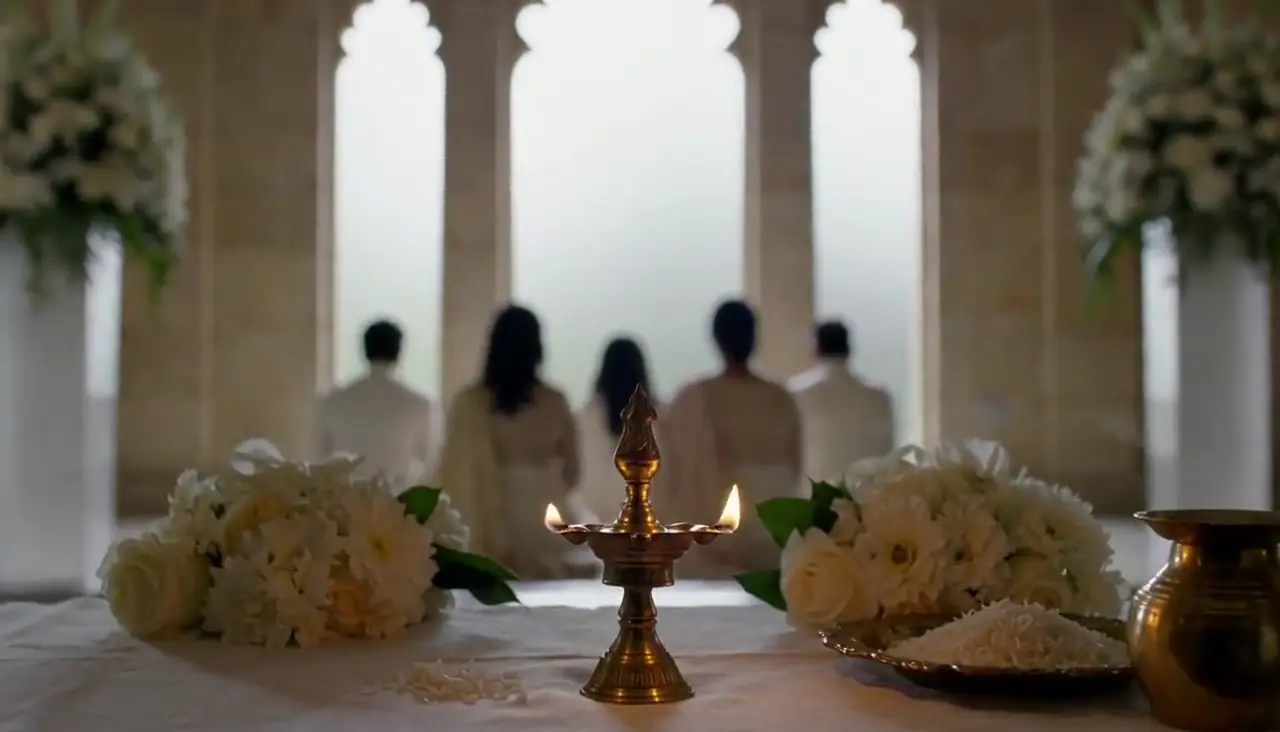
Funerals · Birmingham & West Midlands
Hindu funeral priest in Birmingham & the West Midlands
Shastri Ji leads Hindu funeral rites (Antim Sanskar) for families across Birmingham and the West Midlands, working alongside your chosen funeral director and explaining each step in Gujarati, Hindi or English. You can call at any time, day or night, even before anything is arranged.
Last reviewed
Speak with Shastri Ji, day or night
Calls to +44 (0) 7717 154 215 are answered at any time, day or night. You can also write on WhatsApp, or leave your number below and Shastri Ji will call you back. Share only what you know; nothing needs to be arranged first.
Request a call back about funeral support
Leave your name and number. Shastri Ji or a member of the family team will call you back as soon as possible.
Your details are used only to respond to this enquiry and to discuss your ceremony.
Hindu funerals in Birmingham and the West Midlands
If you have lost someone, we are very sorry. The days that follow a death ask a great deal of everyone. Shastri Ji Manishbhai Pandya is a Hindu priest who guides families across Birmingham and the West Midlands through Antim Sanskar, the Hindu last rites, from the first prayers at home to the service at the crematorium and the remembrance that follows.
He is the priest, not a funeral director. The practical arrangements stay with whichever funeral director your family chooses; Shastri Ji looks after the religious side, at a pace that suits you. Nothing needs to be decided before you call.
Hindu last rites differ between families, regions and sampradayas (traditions within Hinduism). Gujarati, Punjabi, North Indian and South Indian households in the region may each keep their own sequence, so what your family observes is asked about rather than assumed.
Antim Sanskar
What Shastri Ji does at a Hindu funeral
The rites usually take place in three settings. Families keep them differently, so the sequence is agreed with you rather than fixed in advance.
- 01
Prayers at home
Where the family wishes, the rites can begin at home in Birmingham or elsewhere in the West Midlands: at the bedside, or before the funeral when the coffin is brought home for Antim Darshan, the final viewing. Shastri Ji explains what you may wish to prepare, such as a lamp, Gangajal (water from the Ganga) and tulsi (holy basil), and guides the chief mourner, the relative who leads the rites.
- 02
At the funeral home
Many families hold most of the prayers at the funeral director’s chapel, where there is more time than at the crematorium. Where the funeral director allows it, close family may wash and dress the body, and the final offerings and farewells can be made without hurry before the journey to the crematorium.
- 03
At the crematorium
Crematorium chapel slots are usually short, so the essential mantras are recited and each step is explained quietly as it happens. The chief mourner makes the final offerings before the committal. Where a crematorium does not permit open flame, the prayers are adapted to what it allows.
Working with your funeral director
Families looking for Hindu funeral services in Birmingham are often looking for two people: a funeral director for the practical arrangements, and a priest for the rites. Your funeral director cares for your loved one, completes the paperwork with you, provides the coffin and transport, and books the crematorium. Shastri Ji guides the prayers and the Antim Sanskar itself.
He works alongside any funeral director your family chooses in the West Midlands, whether they arrange Hindu funerals often or only occasionally. With your agreement, he can speak with them directly about timings, how long the prayers need and what will happen in the chapel, so you are not left passing messages between the two.
It helps to check the priest’s availability before a crematorium time is confirmed, so the family is not asked to choose between the two. If a funeral director has not yet been appointed, that is fine; the ceremony side can be discussed first.
If you are looking for a Hindu funeral director or an Indian funeral director in Birmingham, note that Shastri Ji is the priest, not the funeral director. He works alongside any funeral director your family chooses, and you can ask them to call him directly on +44 (0) 7717 154 215. If you have not chosen one yet, he can recommend trusted funeral directors through the partner network.
Funeral directors are welcome to call about a family they are supporting, or to get in touch about working together.
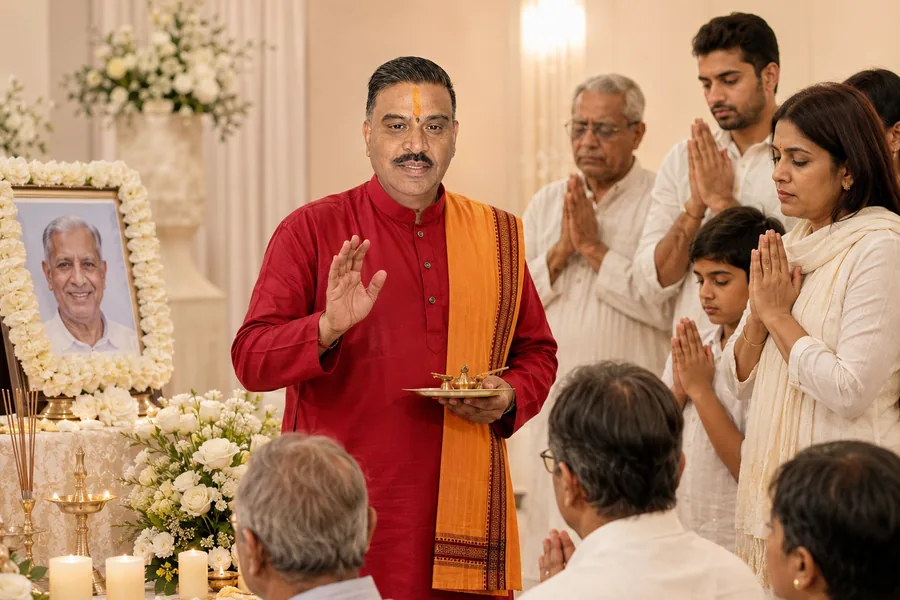
Rites explained in Gujarati, Hindi or English
The mantras are recited in Sanskrit, as tradition asks. Around them, Shastri Ji explains what is happening and why in Gujarati, Hindi or English, whichever the family is most comfortable with, and often in more than one language at the same funeral.
This matters in families where grandparents and grandchildren speak different first languages. Younger relatives born and raised in Britain can follow each step and take part with understanding, and friends or colleagues from other backgrounds can be told quietly what to expect, without the ceremony becoming a lecture.
Short-notice support
A death rarely comes at a convenient time, and many Hindu families hope for the cremation to take place soon. Calls are answered at any time, day or night, and short-notice requests from Birmingham and the West Midlands are always considered.
What is possible depends on the date, the distance and the rites your family wishes to observe, so attendance and timings are agreed personally on the call rather than promised in advance. If the funeral is close, please telephone rather than use a form. Your town or postcode and any times the funeral director has offered are helpful, but you can call before anything is arranged.
The 13-day rites
After the cremation, many families keep a period of mourning that closes with rites on or around the 10th, 12th or 13th day. These can include offerings of pinda (rice balls) for the departed, prayers for their onward journey, a havan (sacred fire ceremony) or a reading at home, and a gathering that marks the end of the most intense period of mourning.
Which days are observed, and how, differs between regions and families. Shastri Ji can explain what your tradition keeps and help plan the rites around work, travel and relatives coming from elsewhere, without losing what matters.
Each stage is described in Hindu funeral rites explained.
After the funeral: Shraddh and Asthi Visarjan
Remembrance continues after the first weeks. Shraddh honours the departed on the anniversary of their death and during Pitru Paksha, the fortnight dedicated to the ancestors. Asthi Visarjan gives the ashes to flowing water, soon after the cremation or later, in the UK or in India.
For families in the West Midlands who choose a UK river or coastal location, access, environmental and safety rules differ from place to place, so the relevant authority or landowner is asked before anything is arranged. Both rites can be discussed whenever your family is ready.
- Shraddh ceremony — remembrance prayers and offerings for those who have died.
- Asthi Visarjan in the UK — prayers for the immersion of ashes in flowing water.
Service areas
Areas we cover in the West Midlands
Shastri Ji travels to families across Birmingham and the wider West Midlands, including:
- Birmingham
- West Bromwich
- Wolverhampton
- Solihull
- Coventry
- Leamington Spa
- Warwick
- Redditch
- Bromsgrove
- Tamworth
- Cannock
- Walsall
- Dudley
- Sandwell
These are service areas, not office locations. If your town is not listed, please call with your postcode; travel is agreed for each family. For weddings, pujas and other ceremonies, see Hindu priest in Birmingham; for funerals elsewhere, see Hindu funeral priest in the UK.
Fees for a Hindu funeral priest in Birmingham
No prices are published. The priest’s fee is on application and is always explained in advance, before anything is confirmed. It depends on the rites your family chooses, the travel distance within the West Midlands, and how many ceremonies are involved, such as home prayers, the crematorium service and later Shraddh or Asthi Visarjan.
Funeral director and crematorium charges are separate and are set by them. If ceremony materials (samagri) are needed, these can be arranged at an additional cost and discussed at the same time.
Questions
Hindu funerals in Birmingham
Continue reading
- Hindu funeral priest in the UKFuneral rites and remembrance support across the United Kingdom.
- Hindu funeral rites explainedAntim Sanskar step by step, and what each rite means.
- When a Hindu loved one diesThe first hours, registration and the funeral director.
- Shraddh ceremonyRemembrance rites for those who came before.
- Asthi Visarjan in the UKArranging the immersion of ashes.
- Hindu priest in BirminghamWeddings, pujas and family ceremonies in the same area.
Need guidance now?
Tell us where you are in the process.
Calls are answered at any time, day or night. Nothing is confirmed until your family is comfortable with the arrangements.
Prefer to write? Send a short funeral enquiry.