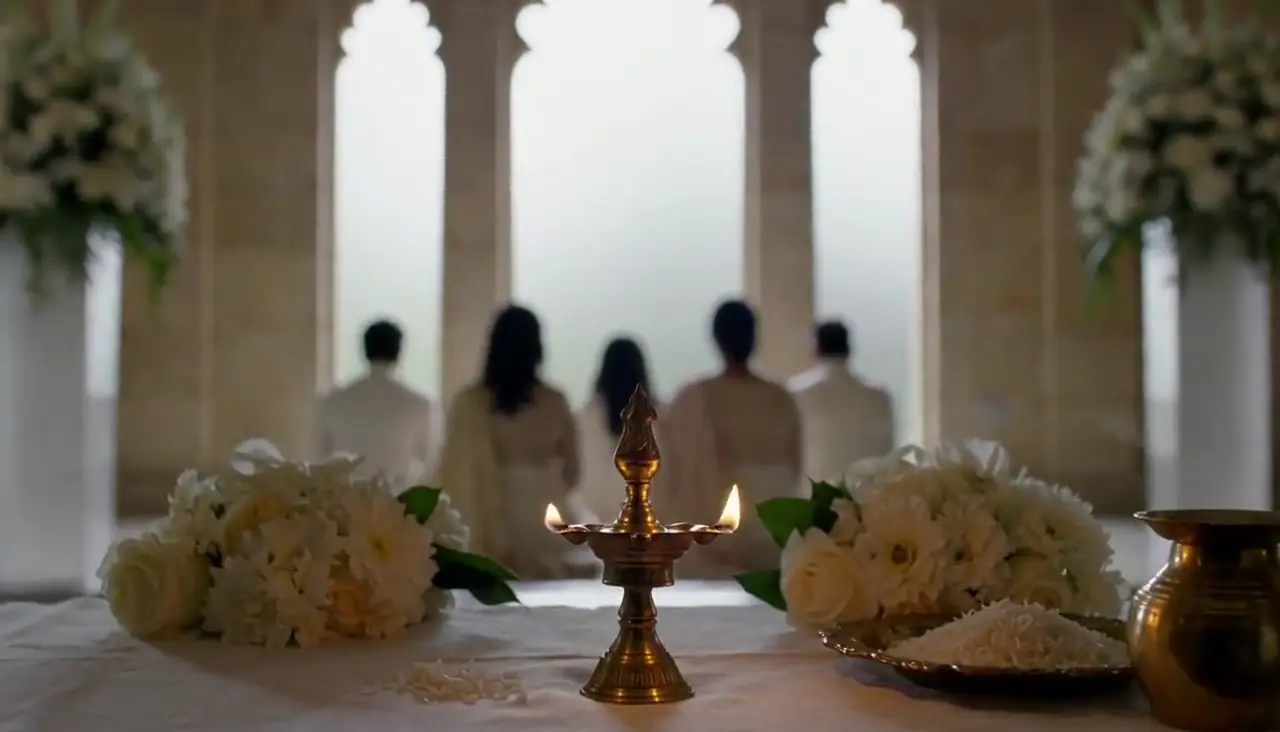
Funerals · West Yorkshire
Hindu funeral priest in Leeds, Bradford & West Yorkshire
Shastri Ji guides Hindu funeral rites (Antim Sanskar) for families in Leeds, Bradford and across West Yorkshire, working alongside your funeral director and explaining each step in English, Gujarati or Hindi. You can call at any time, day or night.
Last reviewed
Speak with Shastri Ji, day or night
Calls to +44 (0) 7717 154 215 are answered at any time, day or night. You can also write on WhatsApp, or leave your number below and Shastri Ji will call you back. Share only what you know; nothing needs to be arranged first.
Request a call back about funeral support
Leave your name and number. Shastri Ji or a member of the family team will call you back as soon as possible.
Your details are used only to respond to this enquiry and to discuss your ceremony.
When a Hindu loved one dies in West Yorkshire
We are very sorry for your loss. Families in Leeds, Bradford and the towns between them often find that the first question after a death is simply who to call. For the religious side, you can call Shastri Ji Manishbhai Pandya. He explains what Antim Sanskar involves, what needs deciding soon and what can wait, and supports the family through the rites at a pace that feels right.
If your loved one died in hospital or a hospice, staff will guide you through the next steps and registration; if the death was at home, the GP or out-of-hours service is usually contacted first. Your funeral director then arranges the crematorium. There is no need to have anything booked before you speak to a priest.
West Yorkshire’s Hindu families include Gujarati, Punjabi, North Indian and South Indian households, each with customs of their own. Shastri Ji asks about your family’s tradition and follows it, rather than presenting one order as universal.
Antim Sanskar
What Shastri Ji does at a Hindu funeral
The rites usually take place in three settings. Families keep them differently, so the sequence is agreed with you rather than fixed in advance.
- 01
Prayers at home
Where the family wishes, the rites can begin at home in Leeds, Bradford or nearby: prayers at the bedside, or before the funeral when the coffin is brought home for Antim Darshan, the final viewing. Shastri Ji explains what to prepare and guides the chief mourner, the relative who leads the rites.
- 02
At the funeral director’s chapel
Holding the longer prayers at the funeral director’s chapel gives the family unhurried time. Where it is permitted, close family may wash and dress the body, offer flowers, rice and sandalwood, and say their farewells before the journey to the crematorium.
- 03
At a local crematorium
Local crematoria in West Yorkshire give each funeral a set chapel time. The essential mantras are recited within it and each step is explained quietly as it happens. The chief mourner makes the final offerings before the committal, and the rites are adapted if open flame is not permitted.
Working with your funeral director
Shastri Ji is the priest, not a funeral director. The Hindu funeral director your family chooses in Leeds, Bradford or elsewhere in West Yorkshire cares for your loved one, completes the paperwork with you, provides the coffin and transport and books the crematorium. Shastri Ji leads the Antim Sanskar.
He works with any funeral director the family prefers. With your agreement he can contact them directly to agree the timing of home and chapel prayers, what will be brought to the crematorium and how long the service needs.
If you are still choosing a funeral director, the ceremony side can be discussed first. Checking the priest’s availability before accepting a crematorium time helps the two fit together.
If you are looking for a Hindu funeral director or an Indian funeral director in Leeds and Bradford, note that Shastri Ji is the priest, not the funeral director. He works alongside any funeral director your family chooses, and you can ask them to call him directly on +44 (0) 7717 154 215. If you have not chosen one yet, he can recommend trusted funeral directors through the partner network.
Funeral directors are welcome to call about a family they are supporting, or to get in touch about working together.
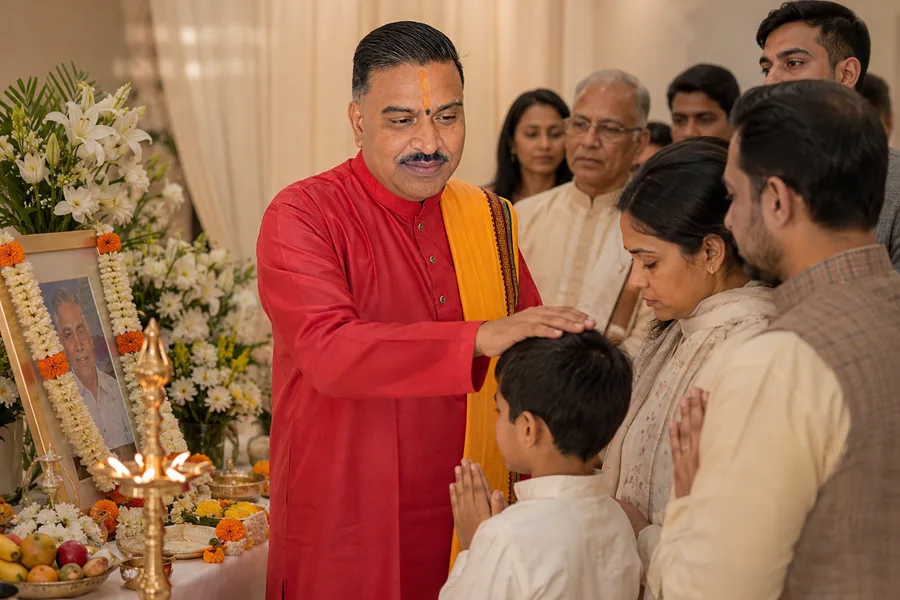
Rites explained in Gujarati, Hindi or English
The mantras are recited in Sanskrit. Shastri Ji explains them in English, Gujarati or Hindi, depending on who is present, so that elders hear the familiar words and younger relatives understand what each step means.
He explains the order of Antim Sanskar as it happens: honouring and preparing the body, the offerings, the chief mourner’s circling of the coffin, the closing prayers and the committal. Friends from other faiths can follow respectfully without needing to know the rites in advance.
Short-notice support
Calls are answered at any time, day or night, and short-notice requests from Leeds, Bradford and the rest of West Yorkshire are always considered. Because travel and timings depend on the date, distance and rites chosen, attendance is agreed personally on the call rather than promised in advance.
What to have ready when you phone: the name of the person who has died, where they are now (at home, in hospital, in a hospice or already with a funeral director), your town or postcode in West Yorkshire, the name of the funeral director if one has been chosen, any crematorium date and time you have been offered, and anything you know about the family’s tradition or region of origin. None of this is required; if you have none of it yet, simply call and it can be worked through together.
The 13-day rites
After the cremation, many families keep mourning that closes with rites on or around the 10th, 12th or 13th day: offerings of pinda (rice balls), prayers for the departed, sometimes a havan (sacred fire ceremony) or a reading at home, and a family gathering.
Which days are kept, and how, varies between families. Shastri Ji explains what your tradition observes and helps plan it around work, travel and relatives coming from elsewhere.
Each stage is described in Hindu funeral rites explained.
After the funeral: Shraddh and Asthi Visarjan
Shraddh honours the departed on the anniversary of their death and during Pitru Paksha, the fortnight for the ancestors. Asthi Visarjan gives the ashes to flowing water, soon after the cremation or later, in the UK or in India.
For a UK river or coastal location, access and safety rules differ from place to place, so the relevant authority or landowner is asked first. Both rites can be discussed whenever your family is ready.
- Shraddh ceremony — remembrance prayers and offerings for those who have died.
- Asthi Visarjan in the UK — prayers for the immersion of ashes in flowing water.
Service areas
Areas we cover in West Yorkshire
Shastri Ji travels to families across Leeds, Bradford and the wider county, including:
- Leeds
- Bradford
- Huddersfield
- Halifax
- Wakefield
- Dewsbury
- Batley
- Keighley
- Shipley
- Pudsey
- Morley
- Bingley
These are service areas, not office locations. If your town is not listed, please call with your postcode; travel is agreed for each family. For weddings, pujas and other ceremonies, see Hindu priest in Leeds; for funerals elsewhere, see Hindu funeral priest in the UK.
Fees for a Hindu funeral priest in Leeds and Bradford
No prices are published. The priest’s fee is on application and is always explained in advance, before anything is confirmed. It depends on the rites your family chooses, the travel distance within West Yorkshire, and how many ceremonies are involved, such as home prayers, the crematorium service and later Shraddh or Asthi Visarjan.
Funeral director and crematorium charges are separate and are set by them. If ceremony materials (samagri) are needed, these can be arranged at an additional cost and discussed at the same time.
Questions
Hindu funerals in Leeds and Bradford
Continue reading
- Hindu funeral priest in the UKFuneral rites and remembrance support across the United Kingdom.
- Hindu funeral rites explainedAntim Sanskar step by step, and what each rite means.
- When a Hindu loved one diesThe first hours, registration and the funeral director.
- Shraddh ceremonyRemembrance rites for those who came before.
- Asthi Visarjan in the UKArranging the immersion of ashes.
- Hindu priest in LeedsWeddings, pujas and family ceremonies in the same area.
Need guidance now?
Tell us where you are in the process.
Calls are answered at any time, day or night. Nothing is confirmed until your family is comfortable with the arrangements.
Prefer to write? Send a short funeral enquiry.