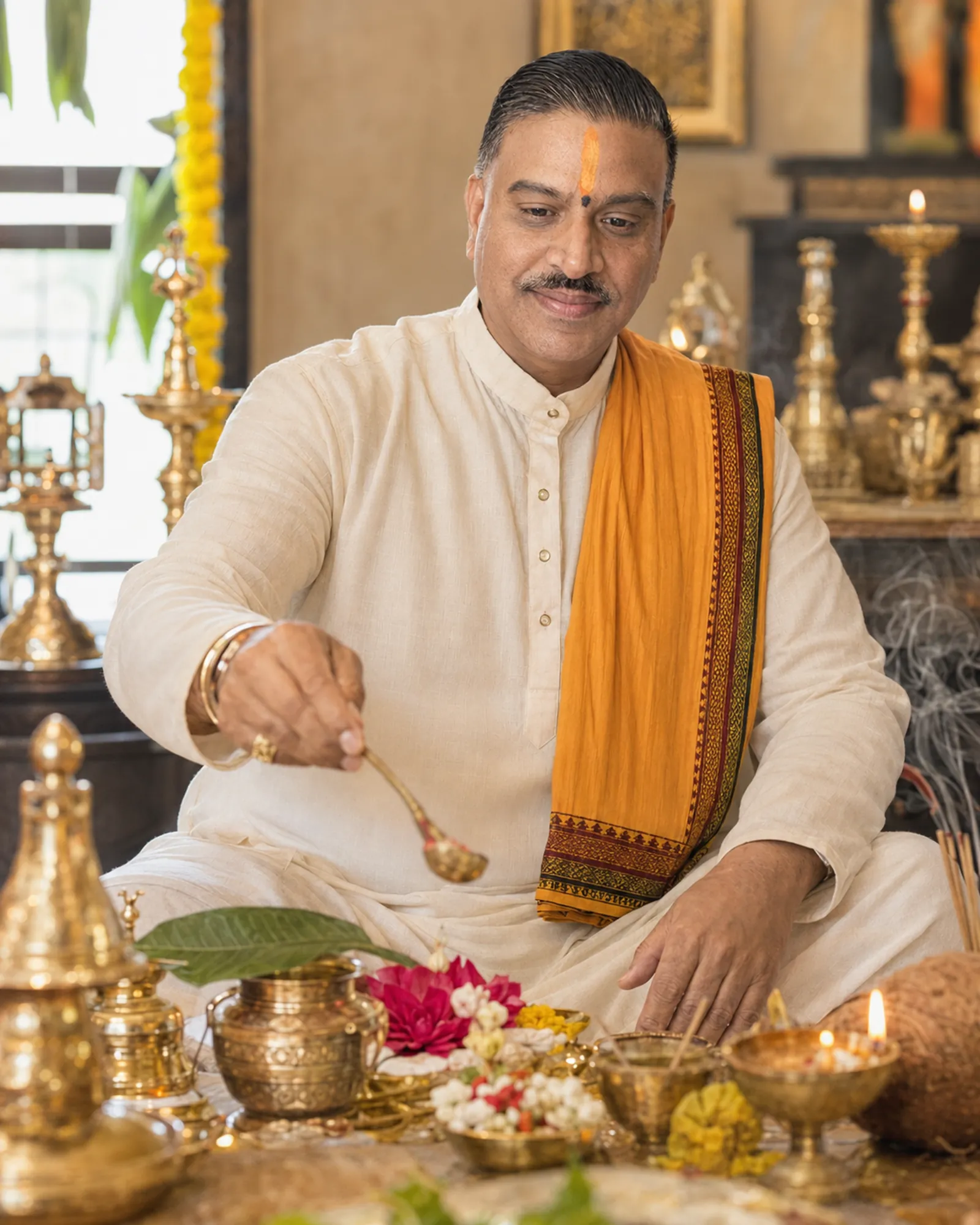
Ceremony planning
Sacred Fire & Venue Planning
The sacred fire sits at the centre of a Hindu wedding. Whether it is possible at your venue is a question for the venue — and one worth asking long before the booking is confirmed.
In Hindu tradition the fire, Agni, is the witness to the marriage, which is why the havan — the sacred fire ritual — sits at the centre of the mandap. It is also an area venues may have practical questions about.
Whether an open flame is permitted, in which room, and under what conditions, is determined by the venue itself, the rules that apply to it, and the fire-safety professionals responsible for the building. Our part is to help you ask the right questions early, and to plan the ceremony properly around whatever answer you receive.
Last reviewed:
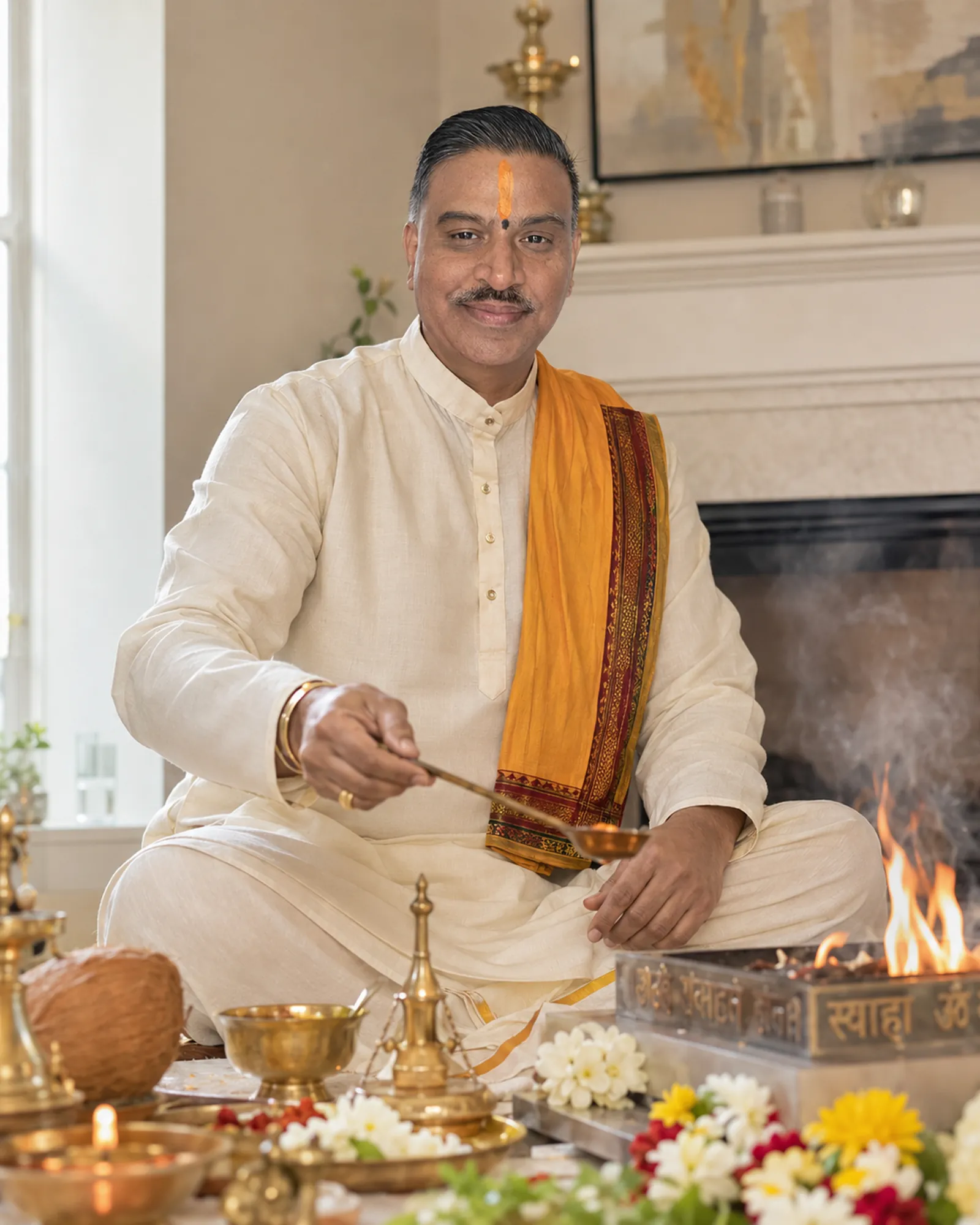
The sacred fire is small, contained and controlled. Venues that have not hosted a Hindu ceremony before are often reassured once they can see what is actually involved.
Ask early
Eight questions for your venue
Take these to your venue as soon as it is on your shortlist. Written answers are more useful than remembered ones.
Step 1: Is an open flame permitted at all?
The first question to ask. Policies differ between venues, and between rooms within the same venue. Ask for the answer in writing where you can.
Step 2: Which room, and where within it?
A venue may permit a fire in one space and not another, or only in a particular position. That affects the mandap, the seating and the sight-lines for both families.
Step 3: How does the venue handle fire alarms?
Some venues have a defined process for ceremonies involving flame. What that process is, who operates it and what it requires from you are questions for the venue, not for us.
Step 4: What surface or floor protection is required?
Venues often specify what must sit beneath the ceremony area, particularly on carpet or timber. Ask what they require rather than assuming what is acceptable.
Step 5: What about ventilation and smoke?
A havan produces smoke. Ventilation, air handling and guest comfort are matters the venue understands for its own rooms, and the answer shapes the arrangement.
Step 6: Is any supervision or attendance required?
Some venues require a member of their own team to be present, or ask for particular arrangements during the ceremony. Establish this early so it is not a surprise.
Step 7: What access and timings are needed?
Setting up, laying out the samagri and clearing afterwards all need time in the room. Agree the access window alongside the ceremony window.
Step 8: Who at the venue approves the plan?
Identify the person who actually signs the arrangement off — often not the first contact you spoke to. Knowing the approver early can reduce unnecessary back-and-forth.
Worth knowing
How this fits the ceremony
Who decides whether a sacred fire is possible?
The venue, within the rules that apply to it. A priest cannot grant permission for an open flame in someone else’s building, and no promise is made on a venue’s behalf.
What do we do with the venue’s answer?
Bring it into the ceremony conversation. If a fire is permitted, the position, access and timings are planned around it. If it is not, the ceremony is adapted respectfully and in good time.
Should our planner be involved?
Yes, and usually early. Planners deal with venue policies regularly, and the ceremony requirements are easier to reconcile with the floor plan while it is still a draft.
Is this fire-safety advice?
No. This page is ceremony-planning information. It gives no technical specifications and is not fire-safety certification, a risk assessment or legal advice.
Involve your venue
Early conversations, calmer weddings
Sacred-fire conversations are easier to resolve when they happen early. Raised in good time, it is simply a practical matter: the venue explains what it permits, the ceremony is planned accordingly, and the family knows what to expect.
If it helps, the ceremony requirements can be discussed directly with your venue coordinator or planner, so they are hearing them from the priest rather than second hand. The guide written for planners and photographers covers the same ground from their side.
For a ceremony abroad, the same questions apply to the destination venue — see destination Hindu weddings.
Important venue and fire-safety note
This page provides ceremony-planning information only. It is not fire-safety certification, a risk assessment, an approval, or legal advice. Permissions, controls and any equipment or supervision required are determined by your venue, the rules applying to the building, and the responsible fire-safety professionals. Always follow your venue’s instructions.
Questions
Sacred fire and venues
Continue reading
- Hindu WeddingsThe ceremony journey, from proposed date to the sacred fire.
- For Planners, Venues & PhotographersWorking smoothly and respectfully around a Hindu wedding ceremony.
- Destination Hindu WeddingsVenue and sacred-fire planning for a ceremony abroad.
- Wedding SamagriThe materials each rite needs, listed or arranged for you.
- The Ceremony, Stage by StageWhere the havan sits within the wider ceremony.
A personal invitation
Talk it through before you book the room
Tell us the date you have in mind and the venue you are considering. The sacred fire question, and everything around it, is far easier to settle now.