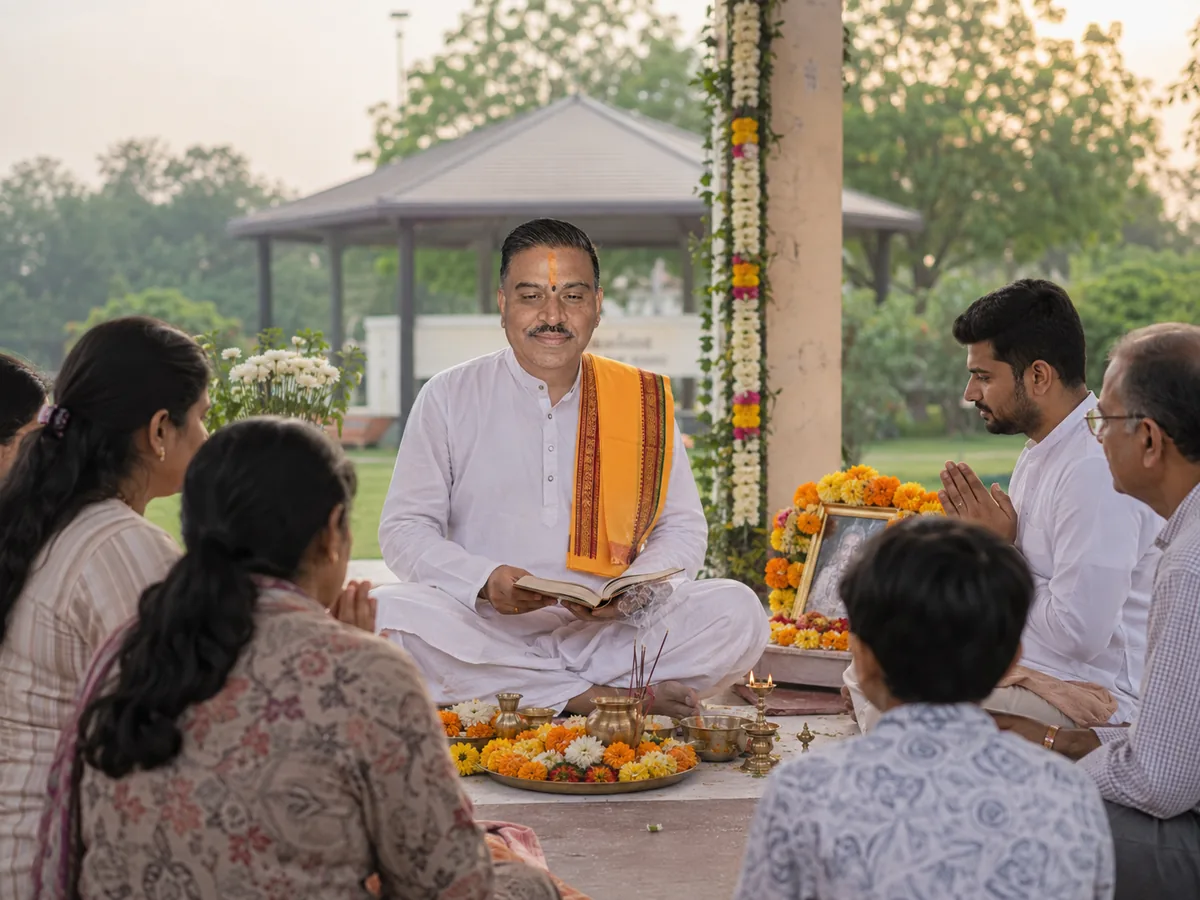
Remembrance
Shraddha, tarpan and pind daan
Remembering someone who has died is a quiet duty, and it should not feel complicated. The rites are performed in the tradition your family follows, and explained as gently as the occasion asks for.
Support through a bereavement
Nothing here is a sales process. It is simply what usually needs to happen, written down so you do not have to hold it all in mind.
Immediate support
A call answered gently, with the first practical steps set out simply.
Rites at home or the funeral home
The rites your family observes, arranged around the funeral director’s timings.
Antim Sanskar
The final rites conducted with care, at a pace that allows the family to be present.
The days that follow
Shraddha and remembrance observances, explained when you are ready to think about them.
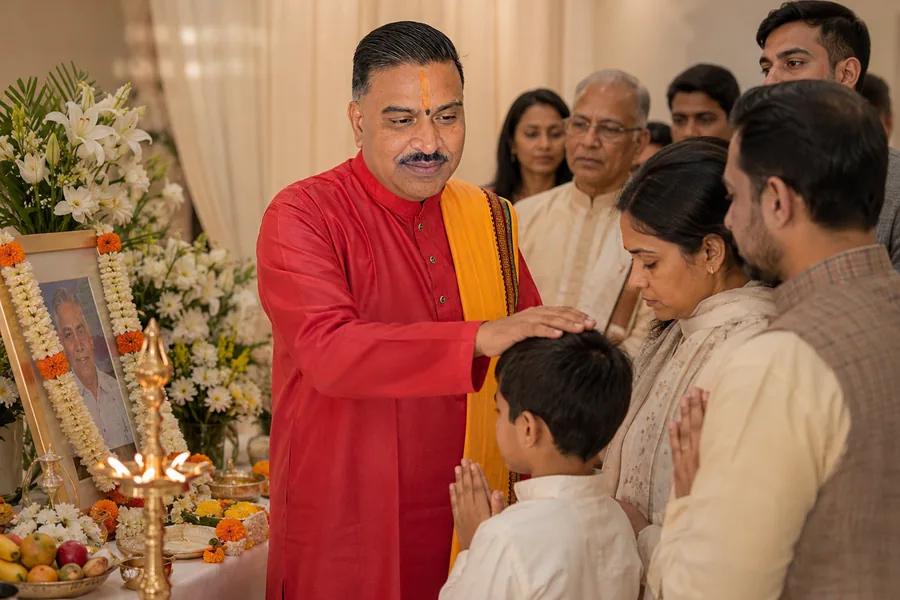
Choose the right bereavement guidance
This page is about remembrance: shraddha, tarpan, pind daan and related ancestral rites. If a death has just happened and the funeral or crematorium rites still need arranging, please telephone, and see Hindu funeral rites — that page covers the arrangements themselves.
If you are planning ahead — shraddha, tarpan, pind daan or related remembrance prayers — an enquiry is perfectly fine and we will reply personally.
Quick answers
Shraddha, briefly
The questions families most often ask before anything else.
What is shraddha?
Shraddha is the Hindu observance of remembrance for someone who has died. Offerings are made in their name and prayers said for their onward journey — understood in tradition as an act of gratitude and duty towards one’s ancestors.
How is the day decided?
By the tradition your own family keeps. Some households hold the observance on a particular day of the Hindu calendar and others during the fortnight set aside for ancestors. Tell us what your family observes and the prayers are planned around it.
What we are asked for
The observances families arrange
Not every family observes all of these, and none of them is required of you. We will explain what your tradition usually includes and let you decide.
Shraddha — remembrance for the departed
Offerings are made in the name of someone who has died and the family gathers to remember them, in the tradition your own household follows.
Tarpan — the offering of water
Water is offered with sesame seeds, kusha grass and rice while the ancestors are remembered by name. It can be performed on its own or as part of a wider shraddha.
Pind daan
Rice and barley offerings shaped by hand and offered for the departed. Where a family cannot travel to a sacred river, the observance is performed at home in the traditional manner.
Pitru Shanti Puja
Prayers offered for peace for the ancestors, understood in tradition as an act of gratitude and duty rather than a request for anything in return.
Remembrance at home or at a temple
The ceremony is arranged wherever suits your family — at home, at a temple, or at a place that held meaning for the person you have lost.
Preparing
What we will go through together
Four short conversations, in whatever order suits you.
01
Tell us about the person
Their name, and anything your family always observes when remembering them. If your household keeps a particular day for the observance, tell us and we will work around it.
02
Decide who will perform the rites
Traditionally a son performs shraddha, though the shastras allow others in the family where there is no son. Daughters, widows and grandchildren perform these rites in many families, and we will guide whoever is doing so.
03
Choose the place and time
Shraddha is usually performed in the middle part of the day. We will agree the place, the timing and how long to set aside.
04
Materials
You will be given a clear list of what is needed. If you would rather not gather it yourself, the samagri can be arranged for you. Costs are discussed once the ceremony requirements and location are understood.
Questions
Shraddha and ancestral rites
Prefer to speak with someone? +44 (0) 7717 154 215
Related
- Funerals & remembranceLast rites and the observances of the days that follow.
- Pujas & sanskarasHousehold prayers and life-stage rites.
- Hindu funeral rites explainedThe rites, the ashes and the remembrance that follows.
- What is Shraddha?Purpose, timing and who performs it — a plain-English guide.
- Pind Daan, explainedThe offering to the ancestors at the heart of the rite.
When you are ready
Speak with us about remembrance prayers
Telephone if that is easier, or send a short message. There is no obligation, and a bereavement enquiry is never followed by marketing of any kind.