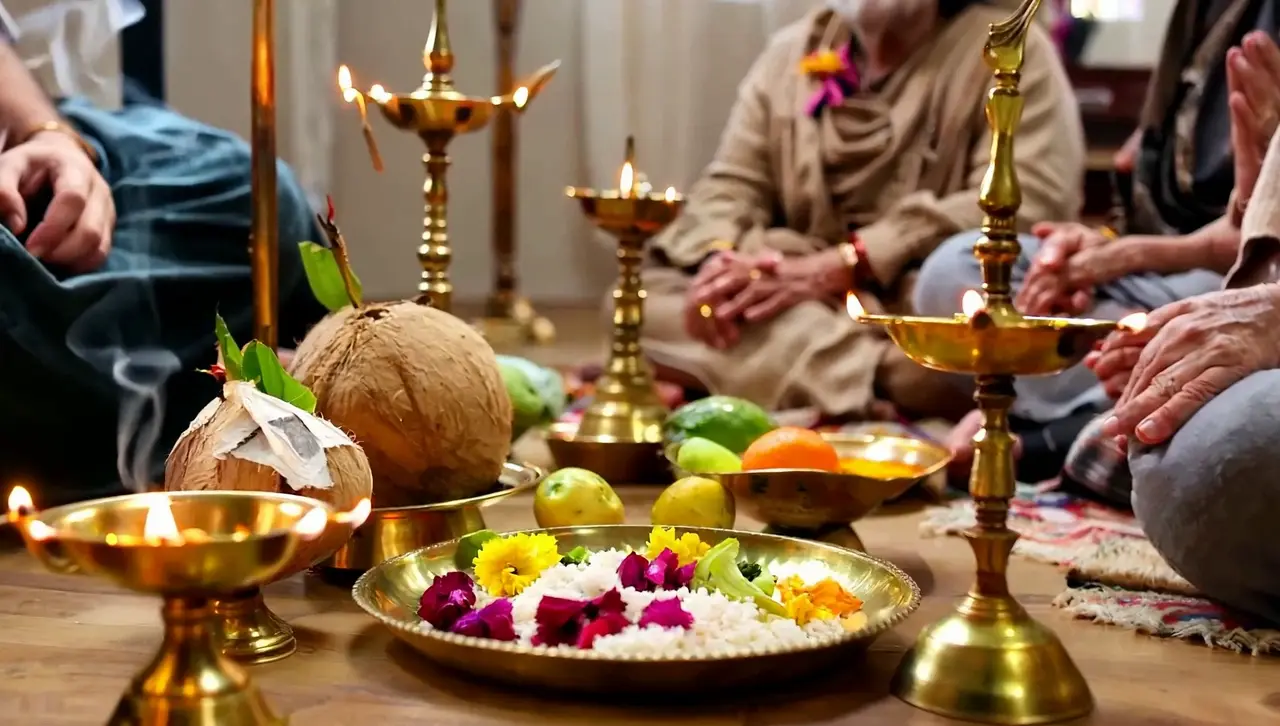
Pujas & Ceremonies
Gujarati Pujas & Traditional Ceremonies
Traditional Gujarati Vedic vidhi, kept as your own family keeps it and explained plainly for everyone present.
Quick answer
Gujarati ceremonies, briefly
What can be arranged?
Satyanarayan Puja, Griha Pravesh, havan and Grah Shanti, Mata Ji and Randal Mata observances where a family keeps them, the family sanskaras, and Gujarati wedding vidhi — at home, at a temple or at a hall across the United Kingdom.
Who leads them?
Shastri Ji Manishbhai Pandya, who comes from a Brahmin family that has served as priests for generations and specialises in traditional Gujarati Vedic ceremonies and vidhi, grounded in Sanatan Dharma.
Observances
What Gujarati families most often ask for
These are customs a family may keep rather than universal practice. Whichever yours follows is respected and prepared with you.
Satyanarayan Puja
A household prayer of gratitude with the katha read for the family and its guests, kept by many Gujarati households after a happy occasion.
Griha Pravesh
Prayer on entering a new home, adapted honestly to the property — a house, a flat or a rented address.
Mata Ji & Randal Mata
Household observances kept in particular Gujarati families rather than by all, prepared with the family over the day.
Havan & Grah Shanti
Prayers with the sacred fire, and pre-wedding or household Grah Shanti where a family observes it. Venue rules on flame and smoke are checked first.
Family sanskaras
Naamkaran, Annaprashan, Mundan and Vidyarambh, held simply and at a pace that suits a young child.
Wedding vidhi
Gujarati Vivah Sanskar with Mandap Muhurat, Ganesh Sthapana, Mangal Fera and Saptapadi, explained as they happen.
How it is kept
Vedic mantras
Recited in Sanskrit, as shared across Hindu traditions.
Your family’s vidhi
The sequence, offerings and household customs you keep.
Gujarati, Hindi, Punjabi or English
Explanation in whichever suits the family.
Explained as it happens
So elders recognise each step and younger family understand it.
Questions
Gujarati pujas & ceremonies
In their own words
A Gujarati family, in their own words
Shared with each family’s permission, in their own words. No ratings are collected, so none are shown.
Read more family experiences“We particularly appreciated your understanding of our Gujarati traditions and the way you explained everything in a language that both the older and younger generations could understand. Nothing felt complicated or overly formal. It was traditional and respectful, and at the same time very easy for the entire family to participate in. Highly recommended.”
Kasum SonniGujarati ceremonies
A personal invitation
Tell us what you are planning
Every family is different. Share a few details and we will talk through the ceremony, your customs and what is needed — before anything is confirmed.