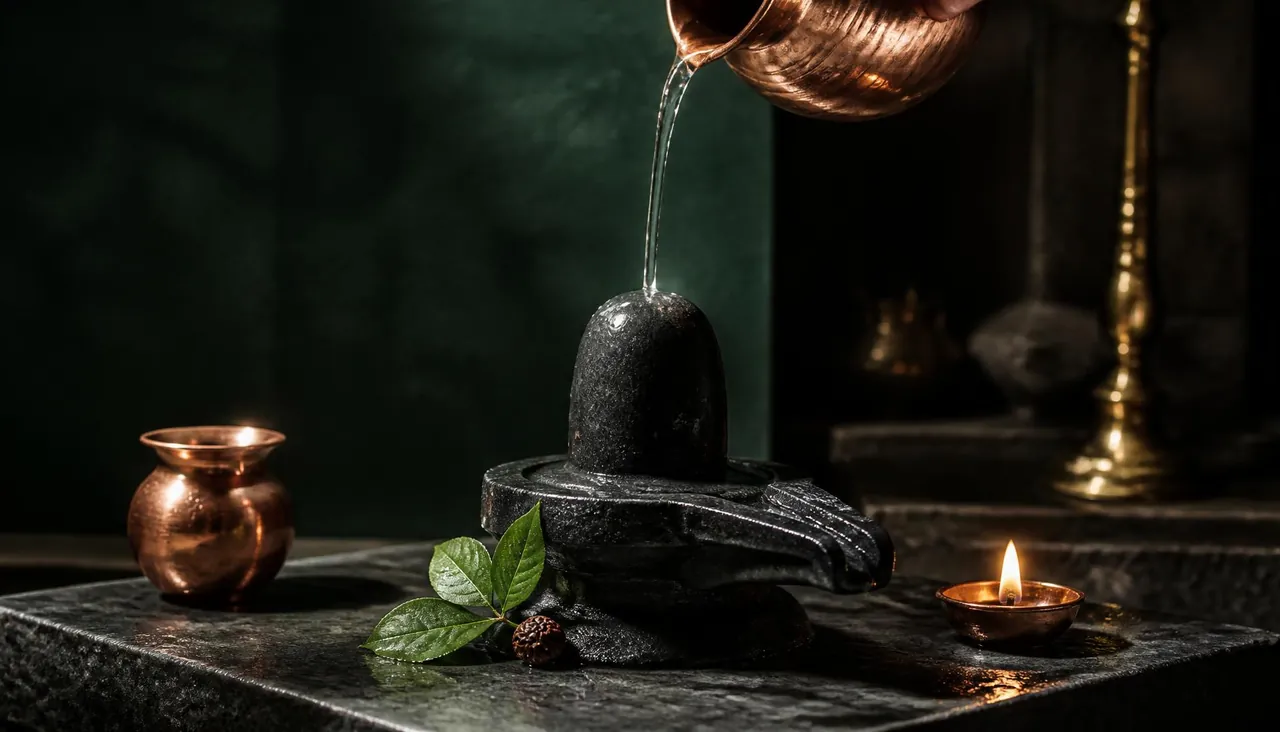
Abhishek, mantra & devotion

Shiv Puja & Rudrabhishek in the UK

Choose a simple household Shiv Puja or the fuller Rudrabhishek with extended Rudri recitation. Each is prepared around your family’s tradition and explained before the first offering is made.

Quick answer

Rudrabhishek, briefly

What is Shiv Puja and Rudrabhishek?

Devotional worship of Lord Shiva. In Rudrabhishek the Shiv Ling is bathed with water, milk, honey and other traditional offerings while the Rudri is recited. It is performed for its traditional spiritual purpose, with no outcome promised.

Where and when is it held?

At home, at a temple or at a hall, anywhere in the United Kingdom. Many families observe it on a Monday, during Shravan or at Maha Shivratri; others hold it for a family occasion. The timing and duration are agreed with you.

Two forms

Household Shiv Puja and full Rudrabhishek

The same devotion, at different depths. Families usually know which they keep; where they do not, the difference is explained before anything is decided.

Household Shiv Puja

A shorter devotional puja to Lord Shiva at the home shrine — abhishek with water and milk, bilva leaves, a diya and the chanting of “Om Namah Shivaya”. Often held on a Monday or during Shravan, and easily accommodated in a small space.

Rudrabhishek

The fuller Vedic rite. The Shiv Ling is bathed in sequence with water, milk, curd, honey, ghee and other traditional dravyas while the Rudri — passages from the Yajurveda — is recited. Longer, more formal, and prepared with a specific samagri list.

Laghu Rudra and beyond

Some families observe the Rudri in multiples — Laghu Rudra and larger forms — over several hours or with supporting priests. Whether this applies, and how it is arranged, is agreed with your family beforehand.

The sequence

How the puja usually unfolds

Offered as guidance rather than a fixed order of service. Sequence and emphasis differ between families and sampradayas.

  1. Step 1: Sankalp

    The intention is stated at the outset, naming the family and the purpose for which the prayers are offered.

  2. Step 2: Ganesh Puja

    Prayer to Lord Ganesha before the main rites, so the puja begins in the traditional order.

  3. Step 3: Abhishek of the Shiv Ling

    The ritual bathing of the Shiv Ling — water, milk, honey and other traditional offerings — accompanied by Vedic mantras.

  4. Step 4: Rudri paath

    Recitation of the Rudri, in the number of repetitions your family observes, agreed with you beforehand so the timing is clear.

  5. Step 5: Shringar, aarti & prasad

    The Ling is dressed with bilva leaves, flowers and chandan, and the prayers close with aarti and prasad shared among those present.

What is offered

  • Water and milk

    Poured over the Shiv Ling during the abhishek.

  • Bilva leaves

    Placed on the Ling with flowers as the shringar.

  • Chandan

    Sandalwood paste, part of the shringar.

  • A lit diya

    With the chanting of “Om Namah Shivaya”.

  • The day

    Often a Monday, or during Shravan.

Preparation

What a family can expect to prepare

What should we have ready at home?

A clean, quiet space near the shrine with a low table; a tray or vessel beneath the Shiv Ling to collect the abhishek offerings; and the items on the list you are given. The samagri can be arranged for you, or sourced from an itemised list.

What happens to the abhishek offerings afterwards?

The collected water and milk are treated respectfully — traditionally offered to a plant or to the garden rather than poured down a drain. Shastri Ji explains what is customary in your family’s practice before the puja begins.

Questions

Shiv Puja & Rudrabhishek

The ritual bathing — abhishek — of the Shiv Ling with water, milk, honey and other traditional offerings, accompanied by recitation of the Rudri. It is an act of devotion to Lord Shiva, performed for its traditional spiritual purpose. Families also write it as Rudra Abhishek or Shiva Abhishek.

A household Shiv Puja is a shorter devotional offering at the home shrine, often on a Monday or in Shravan. Rudrabhishek is the fuller Vedic rite, with the sequence of abhishek dravyas and the recitation of the Rudri, and takes longer to prepare and perform. Both are held by families across the UK; which is right depends on the occasion and your family’s practice.

Yes. It is held at home, at a temple or at a hall. A quiet space, a small table, a vessel to collect the abhishek offerings and the ability to make water offerings are usually all that is needed; the practical details are agreed with you first.

It depends on the form your family observes and the number of Rudri recitations included. A household Shiv Puja is brief; a full Rudrabhishek is considerably longer. The likely duration is agreed in advance so the day can be planned around it.

Many families observe it on Mondays, during the month of Shravan or at Maha Shivratri. Others hold it for a family occasion. Whichever applies, the timing is discussed with you.

No. It is performed as devotion to Lord Shiva for its traditional spiritual purpose. No health, financial or personal outcome is guaranteed, and none is implied.

A ceremony-specific samagri list is provided — the Shiv Ling if the household does not have one, the abhishek dravyas, bilva leaves, flowers, chandan and the items for aarti — and materials can be sourced and prepared for you if you prefer. Costs are discussed once the ceremony requirements and location are understood.

In their own words

After a Rudrabhishek at home

Shared with each family’s permission, in their own words. No ratings are collected, so none are shown.

Read more family experiences
  • “What a beautiful Shiv Puja and Rudrabhishek. The chanting, the explanation of the rituals and the peaceful atmosphere made the whole experience incredibly powerful for our family. Everyone, from the elders to the children, felt included. We came away feeling genuinely uplifted. Thank you for conducting it with so much devotion and care.”

    Nileshbhai & FamilyShiv Puja & Rudrabhishek

A personal invitation

Discuss a Shiv Puja

Every family is different. Share a few details and we will talk through the ceremony, your customs and what is needed — before anything is confirmed.